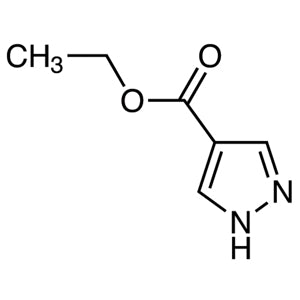
Ethyl Pyrazole-4-carboxylate (TCI E0871) is a chemical compound widely used as a building block in the synthesis of heterocyclic compounds. This material plays a crucial role in organic chemistry laboratories, where it is employed to construct complex molecular structures. Its versatility makes it an essential reagent for researchers working on the development of new compounds, including pharmaceuticals, industrial chemicals, and functional materials. Due to its structural characteristics, it is frequently used in reactions that require precise control over chemical environments.
Ethyl Pyrazole-4-carboxylate is valued for its chemical stability under controlled conditions, making it a reliable reagent for various synthetic processes. However, it is sensitive to moisture and air exposure, which necessitates careful handling and storage. These properties make it ideal for applications that require controlled reaction conditions, such as controlled synthesis and functional group manipulation. Its reactivity and specificity also make it a preferred choice for researchers aiming to achieve high-purity results.
In Indonesian laboratories, Ethyl Pyrazole-4-carboxylate is commonly used in academic and research settings. It supports the development of new chemical compounds and is integral to the work of scientists and educators. Its availability and consistent quality make it a go-to reagent for both teaching and research purposes. The compound is frequently used in projects related to drug discovery, material science, and chemical synthesis.
Related TCI products
- TCI M2444 15366-34-4 Methyl Pyrazole-3-carboxylate
- TCI E0965 5932-27-4 Ethyl Pyrazole-3-carboxylate
- TCI D6462 657428-42-7 tert-Butyl 4,6-Dihydropyrrolo[3,4-c]pyrazole-5(1H)-carboxylate
- TCI T3668 1040377-03-4 1-(Tetrahydro-2H-pyran-4-yl)-4-(4,4,5,5-tetramethyl-1,3,2-dioxaborolan-2-yl)-1H-pyrazole
- TCI T3408 449758-17-2 1-(Tetrahydro-2H-pyran-2-yl)-1H-pyrazole
- TCI B5404 63874-95-3 1-Benzyl-1H-pyrazole-4-carboxaldehyde
- Used in pharmaceutical research for the synthesis of pyrazole-based compounds due to its structural versatility and reactivity.
- Applied in organic chemistry experiments for the construction of heterocyclic frameworks, which are essential in drug development.
- Employed in functional material synthesis to create compounds with specific chemical and physical properties.
- Utilized in academic teaching to demonstrate the principles of heterocyclic chemistry and synthetic methodologies.
- Integrated into industrial chemical processes for the production of specialty chemicals requiring controlled synthetic pathways.
| Brand | TCI |
|---|---|
| CAS number | 37622-90-5 |
| Molecular formula | — |
| Purity | — |
| Category | Chemistry > Building Blocks > Heterocyclic Building Blocks |
| Pack sizes | Available in various quantities as per supplier specifications |
| Physical form | Solid or liquid, depending on the specific product variant |
| Storage | Requires dry, cool, and airtight storage conditions |
Ethyl Pyrazole-4-carboxylate should be stored in a dry, cool, and well-ventilated area away from moisture and direct sunlight. It is recommended to use airtight containers made of glass or high-density polyethylene to prevent exposure to air and humidity. Due to its sensitivity, it should be handled with care, using appropriate personal protective equipment such as gloves and safety goggles. The compound should be kept in a secure location to prevent accidental spills or contamination. Regular monitoring of storage conditions is advised to ensure the integrity of the material. Proper labeling and documentation are essential for safe laboratory practices.
—
Produk Terkait
-
MethylPyrazole-3-carboxylate TCI M2444
Regular price Rp 1.220.100,00Regular price -
EthylPyrazole-3-carboxylate TCI E0965
Regular price From Rp 1.060.500,00Regular price -
tert-Butyl4,6-Dihydropyrrolo[3,4-c]pyrazole-5(1H)-carboxylate TCI D6462
Regular price From Rp 2.174.550,00Regular price -
1-(Tetrahydro-2H-pyran-4-yl)-4-(4,4,5,5-tetramethyl-1,3,2-dioxaborolan-2-yl)-1H-pyrazole TCI T3668
Regular price From Rp 769.650,00Regular price -
1-(Tetrahydro-2H-pyran-2-yl)-1H-pyrazole TCI T3408
Regular price From Rp 743.400,00Regular price -
1-Benzyl-1H-pyrazole-4-carboxaldehyde TCI B5404
Regular price From Rp 1.273.650,00Regular price -
5-Amino-1-(p-tolyl)pyrazole-4-carbonitrile TCI A3039
Regular price Rp 3.312.750,00Regular price -
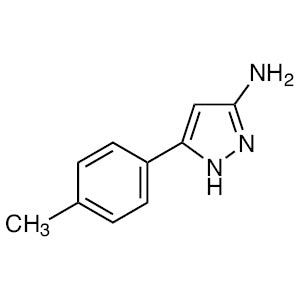
5-Amino-3-(4-methylphenyl)pyrazole TCI A2954
Regular price From Rp 2.625.000,00Regular price


![tert-Butyl 4,6-Dihydropyrrolo[3,4-c]pyrazole-5(1H)-carboxylate (CAS 657428-42-7) - TCI D6462 - AMI Scientific](http://amiscientific.com/cdn/shop/files/TCI2510D6462.jpg?v=1767110245&width=533)