TCI E0892 3-Ethynylthiophene is an organic compound formed by joining a thiophene ring to an ethynyl group — a terminal alkyne — at the third position of the ring. In organic synthesis laboratories, this material serves as a heterocyclic building block that bridges two worlds of reactivity at once: the electron richness of the sulfur-bearing thiophene ring, and the versatility of a terminal alkyne that is ready to participate in a wide range of carbon–carbon and carbon–nitrogen bond-forming reactions. Its role is usually not that of a finished product, but rather that of a starting framework which is extended into more complex target molecules, whether for materials research or for the screening of active compounds.
The characteristic that makes this compound a frequent choice is the presence of an acetylenic hydrogen at the end of the alkyne, which makes it an ideal partner for Sonogashira coupling reactions with aryl halides, as well as for the copper-catalysed azide–alkyne cycloaddition commonly known as click chemistry. The thiophene ring itself contributes attractive electronic properties: it conjugates readily, is relatively stable under common reaction conditions, and is frequently used as a constituent unit of conjugated systems in semiconducting polymers. Together, these two features allow a single reagent to open several synthetic routes rather than only one.
In Indonesian laboratories, 3-ethynylthiophene is typically encountered in university and institutional research settings where organic synthesis, medicinal chemistry, and organic electronics work is carried out. It is generally purchased in research quantities rather than bulk, because it is consumed in exploratory coupling steps and in the preparation of intermediates for further study. Groups working on conjugated materials and on the assembly of heterocyclic compound libraries are the most common users of this building block.
TCI brochures (PDF)
- Reagent for Incorporating a Protecting Group (Ph2P(O)) into Terminal Acetylenes 2025-06-03 · p. 2
- Click Chemistry 2026-09-08 · p. 15
- Thiophenes 2026-06-29 · p. 8
Related TCI products
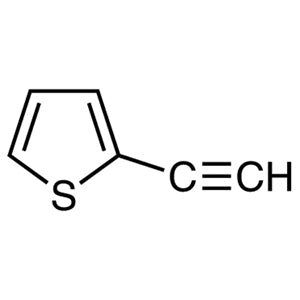
- TCI E0915 4298-52-6 2-Ethynylthiophene
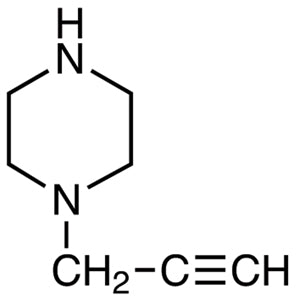
- TCI P2228 52070-67-4 1-(2-Propynyl)piperazine
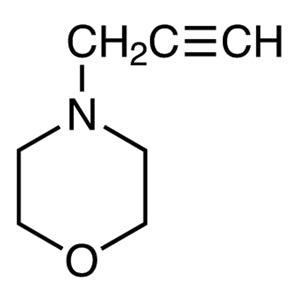
- TCI P2170 5799-76-8 4-(2-Propyn-1-yl)morpholine
- TCI P1624 6089-04-9 2-(2-Propynyloxy)tetrahydropyran
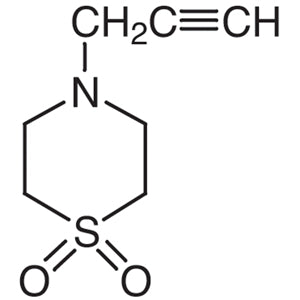
- TCI P1469 10442-03-2 4-Propargylthiomorpholine 1,1-Dioxide
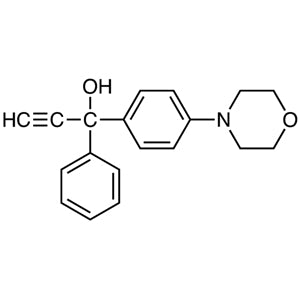
- TCI M3184 194940-93-7 1-(4-Morpholinophenyl)-1-phenylprop-2-yn-1-ol
- Sonogashira cross-coupling — the terminal acetylenic hydrogen allows direct palladium- and copper-mediated coupling with aryl halides to extend the molecular framework in a single step.
- Copper-catalysed azide–alkyne cycloaddition (click chemistry) — the free alkyne terminus reacts reliably with organic azides, making this a convenient handle for building triazole-linked heterocyclic structures.
- Synthesis of conjugated systems for organic electronics — the readily conjugated thiophene ring makes this compound a useful monomer-type unit for constructing semiconducting polymer and small-molecule architectures.
- Preparation of heterocyclic intermediates for compound screening — the material functions as an early-stage scaffold that is elaborated into more complex target molecules for biological activity screening.
- General carbon–carbon and carbon–nitrogen bond formation studies — the combination of an electron-rich sulfur heterocycle with a reactive alkyne makes it a practical substrate for methodology development work.
| Brand | TCI (Tokyo Chemical Industry) |
|---|---|
| CAS number | 67237-53-0 |
| Molecular formula | — |
| Purity | — |
| Category | Chemistry > Building Blocks > Heterocyclic Building Blocks |
| Pack sizes | available in standard TCI research-scale pack sizes; please confirm the currently offered pack size when ordering. |
| Physical form | — |
| Storage | store according to the storage condition stated on the manufacturer's label and safety data sheet for this catalogue item. |
- Catalogue code: E0892
Store this reagent in its original tightly closed manufacturer container, kept in a cool, dry, well-ventilated place away from heat, open flame, and direct sunlight, and follow the specific storage temperature stated on the product label and safety data sheet. Terminal alkynes and sulfur-containing heterocycles are best kept sealed to limit exposure to air and moisture, so re-close the container promptly after each use and avoid prolonged transfers in open air. Handle in a fume hood while wearing safety glasses, chemically resistant gloves, and a laboratory coat, keep the material away from strong oxidising agents, and dispose of residues and contaminated materials through your institution's chemical waste procedures. Always consult the manufacturer's safety data sheet before first use.
—
Product Categories
Produk Terkait
-
2-Ethynylthiophene TCI E0915
Regular price From Rp 2.545.200,00Regular price -
1-(2-Propynyl)piperazine TCI P2228
Regular price From Rp 2.650.200,00Regular price -
4-(2-Propyn-1-yl)morpholine TCI P2170
Regular price From Rp 505.050,00Regular price -
2-(2-Propynyloxy)tetrahydropyran TCI P1624
Regular price Rp 2.942.100,00Regular price -
4-Propargylthiomorpholine1,1-Dioxide TCI P1469
Regular price From Rp 3.630.900,00Regular price -
1-(4-Morpholinophenyl)-1-phenylprop-2-yn-1-ol TCI M3184
Regular price From Rp 875.700,00Regular price -
GlycidylPropargylEther TCI G0445
Regular price From Rp 980.700,00Regular price -
9-(4-Ethynylphenyl)carbazole TCI E1055
Regular price From Rp 3.180.450,00Regular price