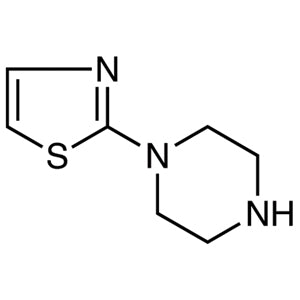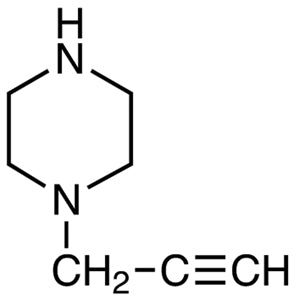
1-(2-Propynyl)piperazine is a chemical compound widely used in laboratory settings as a building block for the synthesis of heterocyclic compounds. Its unique structure, derived from piperazine with a propynyl group, makes it highly versatile in organic chemistry applications. This compound plays a crucial role in the development of complex molecules with specific biological activities, supporting research in pharmacology and medicinal chemistry. Its ability to react with various functional groups allows scientists to design and synthesize new compounds with tailored properties.
The compound is known for its chemical stability under controlled conditions, although it exhibits reactivity in the presence of heavy metals or polar compounds. It dissolves well in organic solvents such as ethyl acetate and acetone, making it suitable for a range of synthetic reactions. Its reactivity enables participation in nucleophilic, electrophilic, and substitution reactions, which are essential in the creation of bioactive molecules. This reactivity, combined with its solubility, makes it a preferred choice for researchers seeking to explore diverse chemical pathways.
In Indonesian laboratories, 1-(2-Propynyl)piperazine is commonly used in organic chemistry and pharmacology research. It is a key component in the development of new compounds with potential therapeutic applications. Its availability through AMI Scientific ensures that researchers can access this essential building block for their experimental needs. The compound’s role in creating complex molecules with biological activity underscores its importance in both academic and industrial research settings.
TCI brochures (PDF)
- Click Chemistry 2026-09-08 · p. 15
Related TCI products
- Organic synthesis applications benefit from this compound's reactivity and ability to form diverse heterocyclic structures.
- Pharmacological research utilizes it to develop compounds with potential therapeutic effects in drug discovery.
- Medicinal chemistry projects rely on its structural versatility for designing bioactive molecules with targeted properties.
- Chemical research laboratories use it as a building block for creating complex molecules with specific functional groups.
- Analytical chemistry applications may employ it as a standard or reagent in various spectroscopic and chromatographic analyses.
| Brand | TCI |
|---|---|
| CAS number | 52070-67-4 |
| Molecular formula | — |
| Purity | — |
| Category | Chemistry > Building Blocks > Heterocyclic Building Blocks |
| Pack sizes | — |
| Physical form | — |
| Storage | Store in a cool, dry place away from light and incompatible materials |
This compound should be stored in a cool, dry place, away from direct light and incompatible substances such as strong oxidizers or heavy metals. It is recommended to use sealed containers made of glass or high-density polyethylene to prevent contamination and maintain stability. Due to its reactivity, it should be handled in a well-ventilated area, and appropriate personal protective equipment should be worn. Avoid exposure to moisture and ensure that storage conditions are consistent to maintain its chemical integrity. Proper labeling and safe handling practices are essential to ensure the safety of laboratory personnel and the integrity of the compound.
—
Product Categories
Produk Terkait
-
TriethyleneGlycolMono(2-propynyl)Ether TCI T3114
Regular price From Rp 2.464.350,00Regular priceRp 1.738.800,00Sale price From Rp 2.464.350,00 -
N-(2-Propynyl)succinimide TCI P2191
Regular price From Rp 2.994.600,00Regular priceRp 2.109.450,00Sale price From Rp 2.994.600,00 -
N-(2-Aminoethyl)piperazine TCI A0304
Regular price From Rp 557.550,00Regular priceRp 405.300,00Sale price From Rp 557.550,00 -
1-(o-Tolyl)piperazine TCI T3404
Regular price From Rp 1.723.050,00Regular priceRp 1.220.100,00Sale price From Rp 1.723.050,00 -
1-(2-Thiazolyl)piperazine TCI T3273
Regular price Rp 1.378.650,00Regular priceRp 979.650,00Sale price Rp 1.378.650,00 -
1-(p-Tolyl)piperazine TCI T2956
Regular price From Rp 1.351.350,00Regular priceRp 960.750,00Sale price From Rp 1.351.350,00 -
1-(Tetrahydro-2-furoyl)piperazine TCI T2617
Regular price From Rp 822.150,00Regular priceRp 590.100,00Sale price From Rp 822.150,00 -
1-(m-Tolyl)piperazine TCI T2260
Regular price From Rp 1.483.650,00Regular priceRp 1.053.150,00Sale price From Rp 1.483.650,00