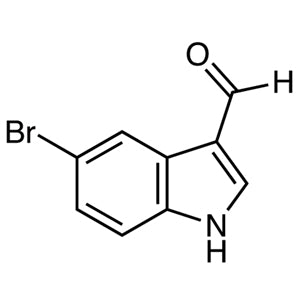
Ethyl 3-Bromoindole-2-carboxylate is a chemical compound widely used in organic reactions, particularly in the synthesis of heterocyclic compounds. This material plays a crucial role in laboratory settings where the construction of complex molecular structures is required. Its unique structure, featuring a bromo group and a carboxylate group, makes it highly valuable for researchers working on indole derivatives. Due to its reactivity, it is frequently employed in substitution and condensation reactions, contributing to the development of new compounds with potential applications in pharmacology and biochemistry.
The compound is preferred for its high reactivity and structural specificity, which enable it to participate in a variety of synthetic pathways. Its stability under certain conditions also simplifies storage and handling, making it a reliable choice for laboratory use. The presence of both bromo and carboxylate functionalities allows for versatile chemical transformations, supporting the synthesis of a wide range of organic molecules. This combination of reactivity and stability ensures that it remains a key component in many research projects focused on heterocyclic chemistry.
In Indonesian laboratories, Ethyl 3-Bromoindole-2-carboxylate is commonly used in both fundamental and applied chemical research. Researchers in pharmaceutical and biochemical fields frequently utilize this compound to develop new drugs and bioactive molecules. Its role in the synthesis of indole-based compounds aligns with the growing interest in natural product derivatives and targeted drug development in the region.
Related TCI products
- Organic synthesis of indole derivatives due to its bromo and carboxylate functionalities, enabling diverse chemical transformations.
- Development of pharmaceutical compounds as a building block for creating bioactive molecules with therapeutic potential.
- Research in heterocyclic chemistry for the design of complex molecular structures with specific functional groups.
- Biochemical studies involving indole-based compounds for understanding their biological activity and interactions.
- Academic and industrial research projects requiring reliable and reactive starting materials for synthetic pathways.
| Brand | TCI |
|---|---|
| CAS number | 91348-45-7 |
| Molecular formula | — |
| Purity | — |
| Category | Chemistry > Building Blocks > Heterocyclic Building Blocks |
| Pack sizes | — |
| Physical form | — |
| Storage | Store in a cool, dry place away from light and incompatible materials |
Ethyl 3-Bromoindole-2-carboxylate should be stored in a cool, dry environment to maintain its stability and prevent degradation. It is recommended to keep the compound in a tightly sealed container to minimize exposure to moisture and air. Suitable storage containers include glass or high-density polyethylene vessels that are resistant to chemical reactions. Laboratory personnel should handle the compound with care, using appropriate personal protective equipment such as gloves and safety goggles. It is important to ensure that the compound is stored away from incompatible substances like strong oxidizers or acids. Proper labeling of storage containers is essential for safe handling and easy identification. Regular inspection of storage conditions is advised to maintain the integrity of the compound throughout its shelf life.
—
Produk Terkait
-
Ethyl5-Bromoindole-2-carboxylate TCI E0698
Regular price Rp 848.400,00Regular priceRp 609.000,00Sale price Rp 848.400,00 -
5-Bromoindole-3-carboxaldehyde TCI B4840
Regular price Rp 769.650,00Regular priceRp 553.350,00Sale price Rp 769.650,00 -
5-Bromoindole-3-carboxylicAcid TCI B4790
Regular price Rp 2.942.100,00Regular priceRp 2.072.700,00Sale price Rp 2.942.100,00 -
6-Bromoindole-2-carboxylicAcid TCI B4334
Regular price Rp 2.491.650,00Regular priceRp 1.757.700,00Sale price Rp 2.491.650,00 -
5-Bromoindole-2-carboxylicAcid TCI B3836
Regular price Rp 2.464.350,00Regular priceRp 1.738.800,00Sale price Rp 2.464.350,00 -
7-Bromoindole TCI B2873
Regular price Rp 1.643.250,00Regular priceRp 1.164.450,00Sale price Rp 1.643.250,00 -
6-Bromoindole-3-carboxaldehyde TCI B2778
Regular price Rp 1.510.950,00Regular priceRp 1.072.050,00Sale price Rp 1.510.950,00 -
4-Bromoindole-3-carboxaldehyde TCI B2773
Regular price Rp 1.696.800,00Regular priceRp 1.202.250,00Sale price Rp 1.696.800,00