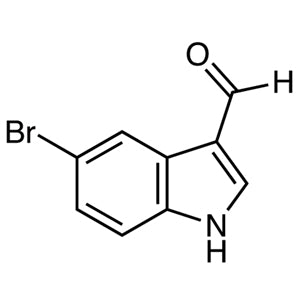
Ethyl 5-Bromoindole-2-carboxylate is a chemical compound widely used in organic synthesis reactions, particularly in the formation of heterocyclic compounds. This compound plays a crucial role in laboratories where researchers are engaged in the development of bioactive molecules, including pharmaceuticals and pharmacological agents. Its unique chemical structure, featuring a bromo group and an ester functional group attached to an indole ring, makes it a versatile building block for complex molecule synthesis. The compound's reactivity allows it to participate in various substitution and catalytic reactions, making it a valuable tool in synthetic chemistry.
The compound is preferred due to its chemical stability under controlled conditions and its solubility in organic solvents such as ethyl acetate and acetone. These properties make it easier to handle and incorporate into reaction mixtures. Its ability to form complex structures through chemical reactions is a key factor in its popularity among chemists. Additionally, its sensitivity to moisture and UV light necessitates careful handling and storage, which further highlights its importance in specialized laboratory settings.
In Indonesian laboratories, Ethyl 5-Bromoindole-2-carboxylate is commonly used in organic chemistry research, especially in academic institutions and research centers. Its role in the synthesis of bioactive compounds makes it a sought-after material for scientists working on drug development and other advanced chemical studies. The compound's versatility and reactivity contribute to its widespread use in various scientific applications.
Related TCI products
- Organic synthesis of heterocyclic compounds due to its reactive bromo and ester groups, making it ideal for substitution and catalytic reactions.
- Development of bioactive molecules, including pharmaceuticals, as it serves as a key intermediate in complex molecule synthesis.
- Research in pharmacological studies where the compound is used to create compounds with potential therapeutic applications.
- Academic and industrial research projects focused on creating new chemical structures with specific functional groups.
- Chemical reaction optimization in laboratories requiring precise control over reactivity and structural modifications.
| Brand | TCI |
|---|---|
| CAS number | 16732-70-0 |
| Molecular formula | — |
| Purity | — |
| Category | Chemistry > Building Blocks > Heterocyclic Building Blocks |
| Pack sizes | — |
| Physical form | — |
| Storage | Requires storage away from moisture and UV light exposure |
Ethyl 5-Bromoindole-2-carboxylate should be stored in a cool, dry place, away from direct sunlight and sources of moisture. It is recommended to use airtight containers made of glass or high-density polyethylene to prevent exposure to humidity and UV light. The compound is sensitive to both moisture and light, so it should be handled in a controlled environment to maintain its chemical integrity. In laboratory settings, it is advisable to store the compound in a refrigerator if long-term storage is required. Proper labeling and secure storage are essential to ensure safety and prevent accidental exposure. Always use appropriate personal protective equipment when handling this compound to minimize risks associated with its reactivity and sensitivity.
—
Produk Terkait
-
Ethyl3-Bromoindole-2-carboxylate TCI E0927
Regular price From Rp 980.700,00Regular price -
5-Bromoindole-3-carboxaldehyde TCI B4840
Regular price From Rp 717.150,00Regular price -
5-Bromoindole-3-carboxylicAcid TCI B4790
Regular price From Rp 2.889.600,00Regular price -
6-Bromoindole-2-carboxylicAcid TCI B4334
Regular price From Rp 2.439.150,00Regular price -
5-Bromoindole-2-carboxylicAcid TCI B3836
Regular price Rp 2.411.850,00Regular price -
7-Bromoindole TCI B2873
Regular price From Rp 1.590.750,00Regular price -
6-Bromoindole-3-carboxaldehyde TCI B2778
Regular price From Rp 1.458.450,00Regular price -
4-Bromoindole-3-carboxaldehyde TCI B2773
Regular price From Rp 1.644.300,00Regular price