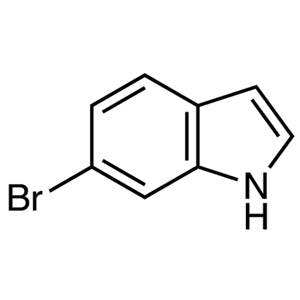
4-Bromoindole-3-carboxaldehyde is a chemical compound widely used in laboratory settings as a building block for the synthesis of complex molecules. It belongs to the category of heterocyclic compounds, specifically indole derivatives, which are known for their structural versatility and reactivity. This compound contains a bromo group at the 4-position and a carboxaldehyde group at the 3-position, making it a valuable intermediate in organic chemistry. Its unique structure allows it to participate in various chemical reactions, making it a key component in the development of pharmaceutical and biochemical compounds.
The compound's high reactivity and functional group versatility make it a preferred choice for researchers. It can undergo nucleophilic substitution, condensation, and other chemical transformations, enabling the synthesis of a wide range of derivatives. Its stability under controlled conditions further enhances its usability in laboratory environments. The presence of both bromo and carboxaldehyde functionalities also allows for multiple synthetic pathways, offering flexibility in molecular design. These properties make it an essential tool for chemists working on drug discovery and molecular modification.
In Indonesian laboratories, 4-Bromoindole-3-carboxaldehyde is commonly used in research focused on pharmaceutical development and organic synthesis. It plays a crucial role in the creation of compounds with potential therapeutic applications, such as antitumor, antibacterial, and antidepressant agents. Its availability through AMI Scientific ensures that researchers have access to this important reagent for their scientific investigations.
Related TCI products
- Pharmaceutical research utilizes this compound for the synthesis of bioactive molecules due to its functional group versatility and reactivity.
- Organic chemistry experiments benefit from its ability to participate in nucleophilic substitution and condensation reactions, enabling the creation of complex structures.
- Drug discovery projects employ it as a building block for the development of novel compounds with therapeutic potential, including antitumor agents.
- Biochemical studies use it to explore molecular interactions and develop compounds with specific biological activities.
- Academic research in Indonesia leverages its availability and chemical properties for the advancement of scientific knowledge in medicinal chemistry.
| Brand | TCI |
|---|---|
| CAS number | 98600-34-1 |
| Molecular formula | — |
| Purity | — |
| Category | Chemistry > Building Blocks > Heterocyclic Building Blocks |
| Pack sizes | Available in various quantities as per supplier specifications |
| Physical form | Solid, crystalline appearance |
| Storage | Store in a cool, dry place away from light and moisture |
This compound should be stored in a cool, dry environment, away from direct light and moisture to maintain its stability and reactivity. It is recommended to use airtight containers to prevent exposure to air and humidity, which could affect its chemical integrity. Due to its reactivity, it should be handled with appropriate laboratory safety measures, such as using gloves and a fume hood when necessary. Proper labeling and storage conditions ensure the compound remains suitable for use in chemical synthesis and research applications. Always follow standard laboratory safety protocols when working with reactive organic compounds.
—
Produk Terkait
-
5-Bromoindole-3-carboxaldehyde TCI B4840
Regular price From Rp 769.650,00Regular priceRp 553.350,00Sale price From Rp 769.650,00 -
6-Bromoindole-3-carboxaldehyde TCI B2778
Regular price From Rp 1.510.950,00Regular priceRp 1.072.050,00Sale price From Rp 1.510.950,00 -
5-Bromoindole-3-carboxylicAcid TCI B4790
Regular price From Rp 2.942.100,00Regular priceRp 2.072.700,00Sale price From Rp 2.942.100,00 -
6-Bromoindole-2-carboxylicAcid TCI B4334
Regular price From Rp 2.491.650,00Regular priceRp 1.757.700,00Sale price From Rp 2.491.650,00 -
5-Bromoindole-2-carboxylicAcid TCI B3836
Regular price Rp 2.464.350,00Regular priceRp 1.738.800,00Sale price Rp 2.464.350,00 -
7-Bromoindole TCI B2873
Regular price From Rp 1.643.250,00Regular priceRp 1.164.450,00Sale price From Rp 1.643.250,00 -
4-Bromoindole TCI B1797
Regular price From Rp 1.033.200,00Regular priceRp 738.150,00Sale price From Rp 1.033.200,00 -
6-Bromoindole TCI B1794
Regular price From Rp 1.801.800,00Regular priceRp 1.275.750,00Sale price From Rp 1.801.800,00