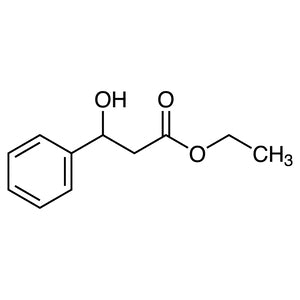
Ethyl 3-Hydroxy-3-phenylpropanoate is a beta-hydroxy ester carrying a hydroxyl group on the third carbon, which also bears a phenyl ring. It is supplied by TCI under catalogue code E1490 and is classified as a non-heterocyclic building block. The compound is widely recognised because its structure is the characteristic product of an aldol reaction between an acetate ester and benzaldehyde, and it is equally the reduction product of ethyl benzoylacetate. This dual origin places it at a well-mapped junction of organic transformations.
Because of its strategic position on the map of organic transformations, the compound is used both as a synthetic starting material and as a reference compound in reaction methodology development. The characteristic that drives its selection is the presence of two different functional groups separated by an ideal distance for further transformation. The secondary hydroxyl group can be esterified, oxidised to a ketone, substituted, or protected, while the ester group can be reduced to a diol, hydrolysed to the acid, or converted to an amide. The 1,3 spacing between the two groups allows intramolecular formation of lactones and other oxygen-containing rings. In addition, the carbon bearing the hydroxyl group is a stereogenic centre, which makes the compound a standard substrate for assessing the success of stereoselective methods.
In Indonesian laboratories, this building block is typically used in university and institutional research groups working on synthetic organic chemistry, as well as in industrial research units developing intermediates. It serves in the preparation of target molecules that require a benzylic alcohol and an ester handle in the same framework, and it is a convenient model substrate when a group needs a known, well-behaved compound to benchmark a newly developed catalyst or reaction protocol.
Related TCI products
- TCI M3475 614-27-7 Methyl 3-Oxo-3-phenylpropanoate
- TCI M3461 31508-44-8 Methyl 2-Phenylpropanoate
- TCI E1577 2510-99-8 Ethyl 2-Phenylpropanoate
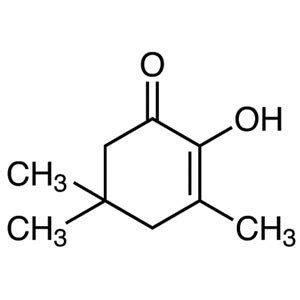
- TCI T2723 4883-60-7 2-Hydroxy-3,5,5-trimethyl-2-cyclohexen-1-one
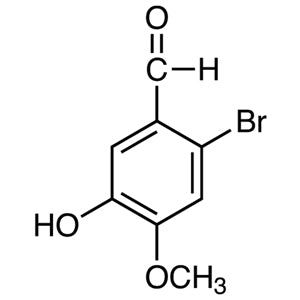
- TCI B4681 2973-59-3 2-Bromo-5-hydroxy-4-methoxybenzaldehyde
- TCI B3229 2208-15-3 4-Bromo-3-hydroxy-2-naphthoic Acid
- Aldol methodology benchmarking — as the classic product of an acetate ester and benzaldehyde, it serves as the authentic reference against which newly developed aldol protocols are compared.
- Asymmetric reduction studies — since the hydroxyl-bearing carbon is a stereogenic centre, the compound is a standard substrate for measuring the stereoselectivity of catalysts and reducing systems.
- Lactone and oxygen heterocycle synthesis — the 1,3 spacing between the hydroxyl and ester groups permits intramolecular cyclisation to lactones and other oxygen-containing ring systems.
- Selective functional group transformation practice — the two different functional groups allow chemists to demonstrate esterification, oxidation, substitution, or protection of the alcohol without disturbing the ester.
- Multistep intermediate preparation — the ester group can be reduced to a diol, hydrolysed to the corresponding acid, or converted to an amide for onward synthesis.
| Brand | TCI, catalogue code E1490 |
|---|---|
| CAS number | 5764-85-2 |
| Molecular formula | — |
| Purity | — |
| Category | Chemistry > Building Blocks > Non-Heterocyclic Building Blocks |
| Pack sizes | available in the standard research pack sizes offered by TCI for this catalogue item |
| Physical form | — |
| Storage | keep in the closed original container under the conditions stated on the manufacturer label |
- Chemical class: beta-hydroxy ester, non-heterocyclic building block
Store the container tightly closed in a cool, dry, well-ventilated place away from direct sunlight, ignition sources, and incompatible materials, following the conditions printed on the manufacturer label. Keep the compound in its original TCI container, or transfer it to a clean, chemically compatible, clearly labelled vessel that can be sealed. Handle the material in a fume hood using safety glasses, gloves, and a laboratory coat. Avoid contact with skin and eyes and avoid inhaling vapours. Close the container promptly after use to limit moisture uptake, return it to its designated storage location, and consult the manufacturer safety data sheet before first use and before disposal of residues.
—
Produk Terkait
-
Methyl3-Oxo-3-phenylpropanoate TCI M3475
Regular price Rp 3.922.800,00Regular price -
Methyl2-Phenylpropanoate TCI M3461
Regular price Rp 2.730.000,00Regular price -
Ethyl2-Phenylpropanoate TCI E1577
Regular price Rp 2.386.650,00Regular price -
2-Hydroxy-3,5,5-trimethyl-2-cyclohexen-1-one TCI T2723
Regular price Rp 1.273.650,00Regular price -
2-Bromo-5-hydroxy-4-methoxybenzaldehyde TCI B4681
Regular price Rp 4.293.450,00Regular price -
4-Bromo-3-hydroxy-2-naphthoicAcid TCI B3229
Regular price From Rp 2.174.550,00Regular price -
7-Bromo-3-hydroxy-2-naphthoicAcid TCI B3180
Regular price From Rp 769.650,00Regular price -
2-Hydroxy-6-methylbenzoicAcid TCI M3737
Regular price From Rp 2.332.050,00Regular price