7-Bromo-3-hydroxy-2-naphthoic Acid is a chemical compound widely used in synthetic reactions within laboratory settings. As a building block in organic chemistry, it serves as a fundamental component for the synthesis of more complex molecules. This compound is particularly valuable in research involving aromatic and heterocyclic compounds, making it a key reagent in pharmaceutical and organic chemistry studies. Its unique structural features enable it to participate in various chemical transformations, contributing to the development of new compounds and materials.
The compound’s high reactivity and molecular stability make it a preferred choice for laboratory applications. The presence of bromo and hydroxyl functional groups enhances its versatility in chemical reactions such as esterification, hydrolysis, and substitution. These properties allow it to be used in a wide range of synthetic pathways, ensuring its relevance in both academic and industrial research. Its purity and consistency further support its use in experiments requiring precise and reproducible results.
In Indonesian laboratories, 7-Bromo-3-hydroxy-2-naphthoic Acid is commonly utilized in organic chemistry, pharmacology, and chemical material research. It is frequently employed in the synthesis of new compounds and the characterization of chemical structures. Many research institutions and universities rely on this compound for experimental work that demands accuracy and reliability in chemical synthesis processes.
Related TCI products
- TCI B3229 2208-15-3 4-Bromo-3-hydroxy-2-naphthoic Acid
- TCI H0886 2437-17-4 6-Hydroxy-1-naphthoic Acid
- TCI H0783 6704-40-1 3-Hydroxy-2-naphthoic Acid 2-Chloroanilide
- TCI H0707 143355-56-0 3-Hydroxy-7-methoxy-2-naphthoic Acid
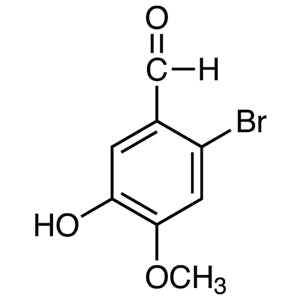
- TCI B4681 2973-59-3 2-Bromo-5-hydroxy-4-methoxybenzaldehyde
- TCI B4949 16650-55-8 4-Bromo-1-naphthoic Acid
- Organic synthesis experiments benefit from this compound due to its reactivity and structural versatility, enabling the creation of complex aromatic and heterocyclic compounds.
- Pharmaceutical research utilizes it as a building block for the development of new drugs, leveraging its functional groups for targeted chemical modifications.
- Chemical characterization studies use it to explore molecular interactions and reactivity patterns, supporting analytical and synthetic research efforts.
- Academic research institutions incorporate it into curriculum-based experiments to teach synthetic chemistry principles and reaction mechanisms.
- Industrial chemical development projects employ it for the synthesis of specialty chemicals, contributing to the production of advanced materials and compounds.
| Brand | TCI |
|---|---|
| CAS number | 1779-11-9 |
| Molecular formula | — |
| Purity | — |
| Category | Chemistry > Building Blocks > Non-Heterocyclic Building Blocks |
| Pack sizes | Available in standard laboratory quantities |
| Physical form | Solid powder |
| Storage | Store in a cool, dry place away from light and moisture |
This compound should be stored in a cool, dry environment, away from direct light and moisture to maintain its stability and purity. It is recommended to use airtight containers to prevent exposure to humidity and air. As a reactive chemical, it should be handled with appropriate personal protective equipment, such as gloves and safety goggles, to ensure laboratory safety. Avoid contact with incompatible substances and ensure proper ventilation when working with it. Regular monitoring of storage conditions is essential to maintain the integrity of the compound for use in research applications.
—
Produk Terkait
-
4-Bromo-3-hydroxy-2-naphthoicAcid TCI B3229
Regular price From Rp 2.227.050,00Regular priceRp 1.572.900,00Sale price From Rp 2.227.050,00 -
6-Hydroxy-1-naphthoicAcid TCI H0886
Regular price From Rp 5.803.350,00Regular priceRp 4.074.000,00Sale price From Rp 5.803.350,00 -
3-Hydroxy-2-naphthoicAcid2-Chloroanilide TCI H0783
Regular price Rp 3.153.150,00Regular priceRp 2.220.750,00Sale price Rp 3.153.150,00 -
3-Hydroxy-7-methoxy-2-naphthoicAcid TCI H0707
Regular price Rp 1.934.100,00Regular priceRp 1.368.150,00Sale price Rp 1.934.100,00 -
2-Bromo-5-hydroxy-4-methoxybenzaldehyde TCI B4681
Regular price Rp 4.293.450,00Regular priceRp 3.001.950,00Sale price Rp 4.293.450,00 -
4-Bromo-1-naphthoicAcid TCI B4949
Regular price From Rp 822.150,00Regular priceRp 590.100,00Sale price From Rp 822.150,00 -
6-Bromo-2-naphthoicAcid TCI B3823
Regular price From Rp 1.483.650,00Regular priceRp 1.053.150,00Sale price From Rp 1.483.650,00 -
1-Bromo-2-naphthoicAcid TCI B1617
Regular price Rp 662.550,00Regular priceRp 478.800,00Sale price Rp 662.550,00