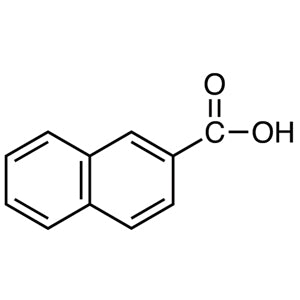
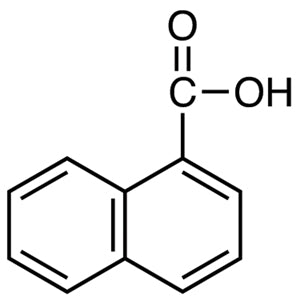
1-Bromo-2-naphthoic Acid is a chemical compound widely utilized in organic reactions for the synthesis of complex molecules. It serves as a fundamental building block in chemical laboratories, enabling the creation of a variety of compounds through its reactivity with different reagents. This compound plays a crucial role in halogen substitution reactions, contributing to the development of aromatic and heterocyclic compounds. Its presence in laboratory settings is essential for researchers aiming to explore new chemical pathways and synthesize novel materials.
The compound is known for its stable molecular structure and high reactivity, making it a preferred choice for various chemical processes. It is suitable for reactions such as halogenation, esterification, and nucleophilic substitution. Its consistent chemical properties ensure reliable results in experimental setups, which is vital for scientific research. The ease of handling and availability in solid form further enhance its practicality for use in laboratory environments.
In Indonesian laboratories, 1-Bromo-2-naphthoic Acid is commonly used in scientific research, particularly in the fields of organic chemistry and the synthesis of complex compounds. Many educational and research institutions in Indonesia rely on this compound for experimental work and the development of new chemical products. Its versatility and reliability make it an essential component in both academic and industrial research settings.
- Organic Synthesis: This compound is ideal for creating complex organic molecules due to its reactivity and versatility in various chemical reactions.
- Halogen Substitution Reactions: Its bromine functionality makes it a key reagent in substitution reactions, enabling the formation of aromatic and heterocyclic compounds.
- Esterification Processes: The carboxylic acid group allows it to participate in esterification, which is important in the production of ester-based compounds.
- Nucleophilic Substitution Reactions: Its structure supports participation in nucleophilic reactions, making it valuable in synthetic pathways.
- Research and Development: It is widely used in R&D for developing new chemical products and exploring novel synthetic methods.
| Brand | TCI |
|---|---|
| CAS number | 20717-79-7 |
| Molecular formula | — |
| Purity | — |
| Category | Chemistry > Building Blocks > Non-Heterocyclic Building Blocks |
| Pack sizes | Available in various quantities as per standard laboratory supply |
| Physical form | Solid |
| Storage | Store in a cool, dry place away from light and moisture |
1-Bromo-2-naphthoic Acid should be stored in a cool, dry place away from direct light and moisture to maintain its stability and reactivity. It is recommended to use airtight containers to prevent exposure to air and humidity, which could affect its chemical properties. In laboratory settings, it is important to handle the compound with appropriate personal protective equipment, such as gloves and safety goggles, to ensure safety during handling. The compound should be kept in a well-ventilated area to minimize inhalation risks. Proper labeling of storage containers is essential for safe handling and to prevent accidental exposure. Always follow standard laboratory safety protocols when working with this reactive chemical.
—
Produk Terkait
-
4-Bromo-1-naphthoicAcid TCI B4949
Regular price From Rp 822.150,00Regular priceRp 590.100,00Sale price From Rp 822.150,00 -
6-Bromo-2-naphthoicAcid TCI B3823
Regular price From Rp 1.483.650,00Regular priceRp 1.053.150,00Sale price From Rp 1.483.650,00 -
4-Bromo-3-hydroxy-2-naphthoicAcid TCI B3229
Regular price From Rp 2.227.050,00Regular priceRp 1.572.900,00Sale price From Rp 2.227.050,00 -
7-Bromo-3-hydroxy-2-naphthoicAcid TCI B3180
Regular price From Rp 822.150,00Regular priceRp 590.100,00Sale price From Rp 822.150,00 -
6-Acetoxy-2-naphthoicAcid TCI A0970
Regular price From Rp 1.696.800,00Regular priceRp 1.202.250,00Sale price From Rp 1.696.800,00 -
2-NaphthoicAcid TCI N0025
Regular price From Rp 795.900,00Regular priceRp 572.250,00Sale price From Rp 795.900,00 -
1-NaphthoicAcid TCI N0024
Regular price Rp 1.378.650,00Regular priceRp 979.650,00Sale price Rp 1.378.650,00 -
4-Methoxy-1-naphthoicAcid TCI M2763
Regular price From Rp 875.700,00Regular priceRp 627.900,00Sale price From Rp 875.700,00