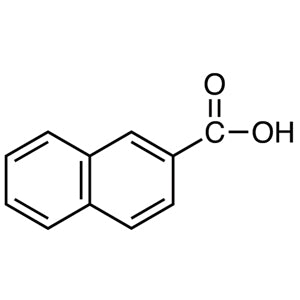
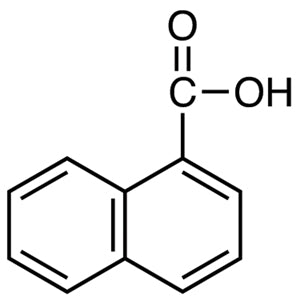
4-Bromo-1-naphthoic Acid is a chemical compound widely used as a foundational material in various laboratory reactions. It serves as a building block in organic synthesis, offering versatility in chemical transformations. Its aromatic structure contributes to its reactivity, making it a valuable reagent in synthetic pathways. This compound is commonly utilized in research settings to develop complex molecules, including pharmaceuticals and industrial chemicals. Its presence in laboratory workflows highlights its importance in advancing chemical innovation.
The compound’s reactivity stems from its bromo group, which influences its chemical behavior. This group enhances its participation in substitution and electrophilic reactions, making it suitable for hydrolysis, esterification, and nucleophilic substitution. Its stability under specific conditions ensures reliable performance in controlled environments. These properties make it a preferred choice for chemists seeking to synthesize compounds with tailored functionalities.
In Indonesian laboratories, 4-Bromo-1-naphthoic Acid is frequently used in organic chemistry research, particularly in projects involving the synthesis of bioactive compounds. It is also found in pharmacological and food chemistry studies due to its potential in developing compounds with specific biological activities. Its role in laboratory research underscores its significance as a key reagent in chemical innovation.
- Organic synthesis projects benefit from this compound’s reactivity and structural versatility, enabling the creation of complex molecules.
- Pharmaceutical research utilizes its ability to participate in substitution reactions, aiding in the development of new drug compounds.
- Food chemistry studies leverage its potential in synthesizing compounds with specific functional properties.
- Bioactive compound synthesis relies on its reactivity, making it ideal for creating molecules with targeted biological effects.
- Industrial chemical production benefits from its stability and reactivity, supporting the development of various chemical products.
| Brand | TCI |
|---|---|
| CAS number | 16650-55-8 |
| Molecular formula | — |
| Purity | — |
| Category | Chemistry > Building Blocks > Non-Heterocyclic Building Blocks |
| Pack sizes | Available in standard laboratory quantities |
| Physical form | Solid |
| Storage | Store in a cool, dry place away from direct sunlight |
This compound should be stored in a cool, dry environment to maintain its chemical stability. It is recommended to use airtight containers to prevent moisture exposure, which could affect its reactivity. Laboratory personnel should handle it with care, using appropriate personal protective equipment such as gloves and safety goggles. Due to its reactivity, it should be kept away from incompatible substances like strong oxidizers. Proper ventilation is essential when working with this material to minimize inhalation risks. Following these guidelines ensures safe and effective use in laboratory settings.
—
Produk Terkait
-
6-Bromo-2-naphthoicAcid TCI B3823
Regular price From Rp 1.483.650,00Regular priceRp 1.053.150,00Sale price From Rp 1.483.650,00 -
4-Bromo-3-hydroxy-2-naphthoicAcid TCI B3229
Regular price From Rp 2.227.050,00Regular priceRp 1.572.900,00Sale price From Rp 2.227.050,00 -
7-Bromo-3-hydroxy-2-naphthoicAcid TCI B3180
Regular price From Rp 822.150,00Regular priceRp 590.100,00Sale price From Rp 822.150,00 -
1-Bromo-2-naphthoicAcid TCI B1617
Regular price Rp 662.550,00Regular priceRp 478.800,00Sale price Rp 662.550,00 -
6-Acetoxy-2-naphthoicAcid TCI A0970
Regular price From Rp 1.696.800,00Regular priceRp 1.202.250,00Sale price From Rp 1.696.800,00 -
2-NaphthoicAcid TCI N0025
Regular price From Rp 795.900,00Regular priceRp 572.250,00Sale price From Rp 795.900,00 -
1-NaphthoicAcid TCI N0024
Regular price Rp 1.378.650,00Regular priceRp 979.650,00Sale price Rp 1.378.650,00 -
4-Methoxy-1-naphthoicAcid TCI M2763
Regular price From Rp 875.700,00Regular priceRp 627.900,00Sale price From Rp 875.700,00