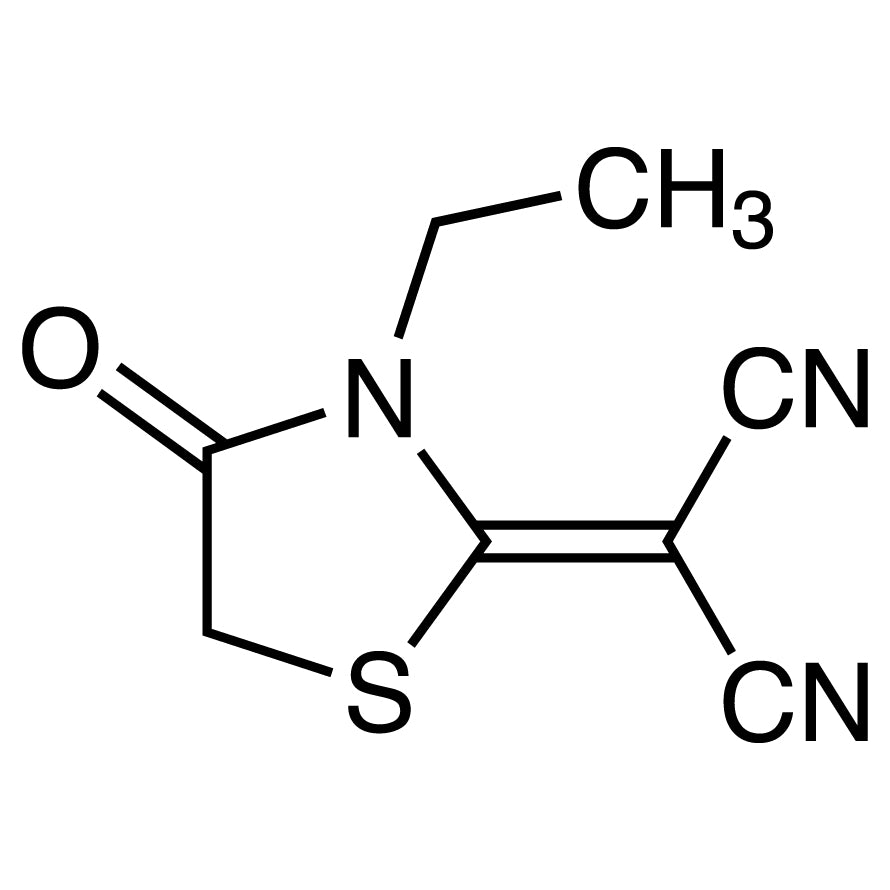
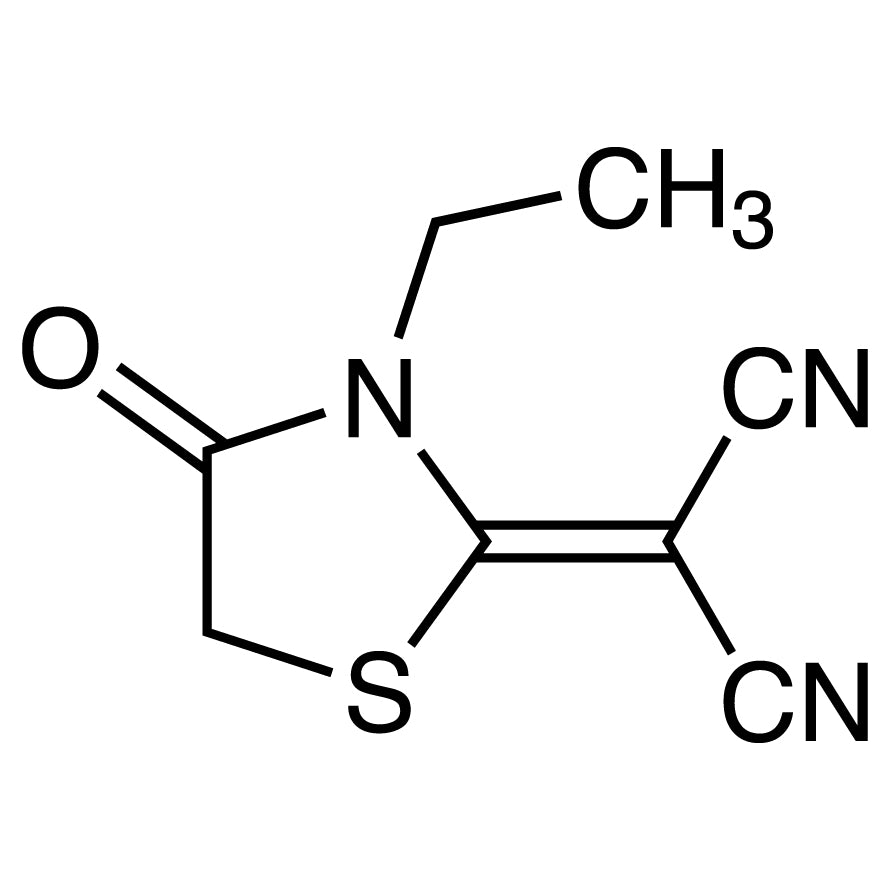
TCI E1549 2-(3-Ethyl-4-oxothiazolidin-2-ylidene)malononitrile is a small molecule semiconductor building block that joins a thiazolidinone ring to a malononitrile group through an exocyclic double bond. The combination of a sulfur-containing ring, a carbonyl group, and two nitrile groups makes this molecule strongly electron-poor, so it functions as a powerful acceptor unit in the assembly of conjugated organic materials. In materials science laboratories, the compound is used to construct molecules with acceptor-donor-acceptor architectures, which form the backbone of organic solar cells, organic field-effect transistors, and functional dyes.
The properties that make this compound a preferred choice are its electron-withdrawing strength combined with its ease of reaction. The methylene position on the thiazolidinone ring is acidic, so it readily undergoes Knoevenagel condensation with a wide range of aromatic aldehydes, forming long conjugated systems through a single simple reaction step. The double nitrile groups effectively lower the molecular orbital energy levels, allowing researchers to tune the band gap and energy level positions of the final material in a directed manner. The ethyl group on the ring nitrogen contributes to the handling behaviour of the building block in synthetic work.
In Indonesian laboratories, this building block is typically used in university and institutional materials science groups working on organic electronics and functional dye chemistry. It is normally handled at the bench scale for exploratory synthesis, where a researcher condenses the acceptor unit with a donor aldehyde and then characterises the resulting conjugated product. Because the compound serves as a starting point rather than a finished device material, it is usually purchased in small research quantities and consumed across a series of synthetic trials.
Advantages (TCI brochure)
- Electron-accepting building block for charge transport materials
- Marked as New in the brochure
TCI brochures (PDF)
- Electron-Accepting Building Blocks for Charge Transport Materials 2023-10-20 · p. 1
- Building Blocks for Organic Semiconductor 2026-03-24 · p. 34
Related TCI products
- TCI D5945 2197167-50-1 (5,6-Dichloro-3-oxo-2,3-dihydro-1H-inden-1-ylidene)malononitrile
- TCI D5815 2083617-82-5 (5,6-Difluoro-3-oxo-2,3-dihydro-1H-inden-1-ylidene)malononitrile
- TCI T4113 23051-44-7 2-(3,5,5-Trimethylcyclohex-2-en-1-ylidene)malononitrile
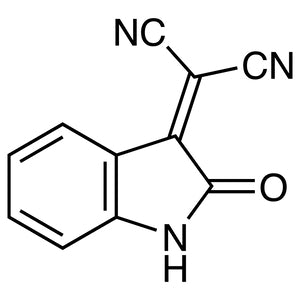
- TCI O0670 6623-89-8 2-(2-Oxoindolin-3-ylidene)malononitrile
- TCI B5474 1335150-10-1 2-[(7-Bromo-2,1,3-benzothiadiazol-4-yl)methylene]malononitrile
- TCI B5458 704890-84-6 2-[(5'-Bromo-[2,2'-bithiophen]-5-yl)methylene]malononitrile
- Organic photovoltaic material synthesis: the strong electron-accepting character of the dicyano unit helps build acceptor-donor-acceptor molecules used as active layer components in organic solar cell research.
- Organic field-effect transistor development: the compound lowers molecular orbital energy levels, which supports the design of conjugated semiconductors with charge transport behaviour suitable for transistor studies.
- Knoevenagel condensation chemistry: the acidic methylene position on the thiazolidinone ring reacts readily with aromatic aldehydes, giving researchers a single-step route to extended conjugated systems.
- Functional dye preparation: extending conjugation from this electron-poor acceptor produces strongly absorbing chromophores, making it useful for laboratories preparing dyes with tailored optical properties.
- Band gap engineering studies: because the two nitrile groups shift energy levels predictably, the building block lets researchers adjust band gap and energy level positions in target materials.
From the TCI brochure
- Organic photovoltaics: p-type and n-type materials
- Perovskite solar cells: hole transport materials
| Brand | TCI |
|---|---|
| CAS number | 623558-68-9 |
| Molecular formula | — |
| Purity | — |
| Category | Materials Science > Material Building Blocks > Small Molecule Semiconductor Building Blocks |
| Pack sizes | available in standard research-scale catalogue pack sizes; please confirm the current option when ordering |
| Physical form | — |
| Storage | keep in the closed original container under the conditions stated on the manufacturer label |
- Chemical name: 2-(3-Ethyl-4-oxothiazolidin-2-ylidene)malononitrile
Data from the TCI brochure
| PCE | 17.54% (Perovskite solar cell using CI-B3 (dopant-free hole transport material)) |
|---|
Source: TCI brochure FF165 (2023-10-20)
Store the material in its original tightly closed container, kept in a cool, dry, and well-ventilated area away from direct sunlight, moisture, and incompatible chemicals. Glass or the supplier's original packaging is suitable for storage, and containers should be resealed promptly after each use to limit exposure to air and humidity. Handle the solid in a fume hood using a laboratory coat, chemical-resistant gloves, and safety glasses, and avoid generating dust during weighing and transfer. Always consult the manufacturer safety data sheet before use, and dispose of residues and contaminated materials according to institutional chemical waste procedures.
—
Produk Terkait
-
(5,6-Dichloro-3-oxo-2,3-dihydro-1H-inden-1-ylidene)malononitrile TCI D5945
Regular price Rp 6.996.150,00Regular price -
(5,6-Difluoro-3-oxo-2,3-dihydro-1H-inden-1-ylidene)malononitrile TCI D5815
Regular price Rp 9.539.250,00Regular price -
2-(3,5,5-Trimethylcyclohex-2-en-1-ylidene)malononitrile TCI T4113
Regular price From Rp 3.419.850,00Regular price -
2-(2-Oxoindolin-3-ylidene)malononitrile TCI O0670
Regular price Rp 5.990.250,00Regular price -
2-[(7-Bromo-2,1,3-benzothiadiazol-4-yl)methylene]malononitrile TCI B5474
Regular price Rp 2.889.600,00Regular price -
2-[(5'-Bromo-[2,2'-bithiophen]-5-yl)methylene]malononitrile TCI B5458
Regular price From Rp 1.298.850,00Regular price -
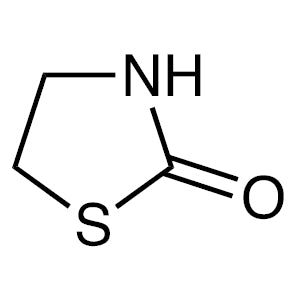
Thiazolidin-2-one TCI T3926
Regular price From Rp 1.060.500,00Regular price -
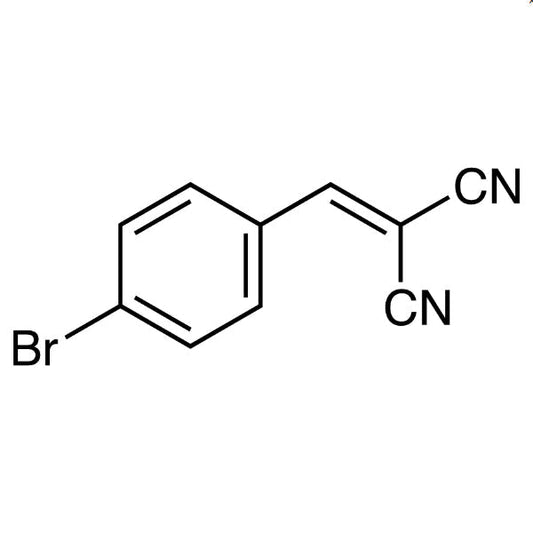
2-(4-Bromobenzylidene)malononitrile TCI B4712
Regular price Rp 4.506.600,00Regular price


![1335150-10-1 2-[(7-Bromo-2,1,3-benzothiadiazol-4-yl)methylene]malononitrile - AMI Scientific](http://amiscientific.com/cdn/shop/files/TCI2510B5474.jpg?v=1768815799&width=533)
![1335150-10-1 2-[(7-Bromo-2,1,3-benzothiadiazol-4-yl)methylene]malononitrile - AMI Scientific](http://amiscientific.com/cdn/shop/files/TCI2510B5474_266c3220-72f5-45b0-a7e8-a41d6e5805a7.jpg?v=1772180895&width=533)
![704890-84-6 2-[(5'-Bromo-[2,2'-bithiophen]-5-yl)methylene]malononitrile - AMI Scientific](http://amiscientific.com/cdn/shop/files/TCI2510B5458.jpg?v=1769180182&width=533)