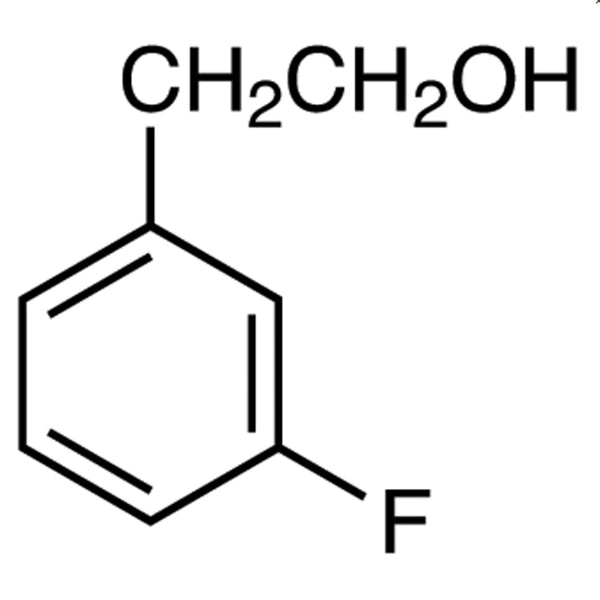
TCI F0776 2-(3-Fluorophenyl)ethanol is a primary alcohol with a characteristic aroma, built around a benzene ring that carries a fluorine substituent at the meta position, connected through a two-carbon bridge to a terminal hydroxyl group. The compound is widely used in laboratories as a building block for introducing a fluorinated phenylethyl fragment into target molecules. Its free hydroxyl group provides a readily directed point of modification, while the position of the fluorine on the ring is fixed from the outset, so researchers do not need to carry out a selective fluorination step that is normally difficult to control.
The property that makes this material a frequent choice is the balance it strikes between reactivity and stability. The primary alcohol on the side chain reacts smoothly in esterification, etherification, and oxidation, as well as in conversion into leaving groups such as mesylates or tosylates, without any significant steric hindrance. At the same time, the fluorine atom on the aromatic ring is strongly bound and not easily displaced, so it survives a wide range of reaction conditions. The meta substitution pattern gives an electronic and conformational profile distinct from that of the ortho and para isomers, which is why the compound is often used to compare the influence of substituent position.
In Indonesian laboratories, TCI F0776 is typically kept as a synthetic intermediate on the shelves of organic chemistry, medicinal chemistry, and materials research groups, both in universities and in industrial R&D units. It is drawn upon whenever a fluorinated phenylethyl fragment has to be carried into a larger structure, and it is also used in structure-activity comparison studies where the ortho, meta, and para isomers are examined side by side under the same reaction conditions.
TCI brochures (PDF)
- Fluorination Reagents, Fluorinated Building Blocks 2026-03-18 · p. 13
Related TCI products
- TCI F0778 50919-06-7 2-(2-Fluorophenyl)ethanol
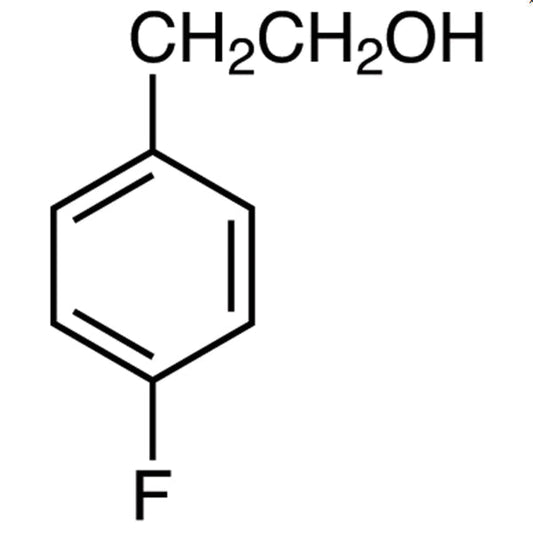
- TCI F0624 7589-27-7 2-(4-Fluorophenyl)ethanol
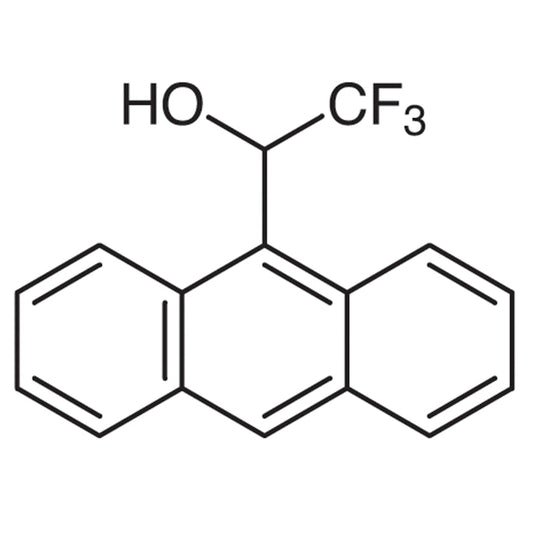
- TCI T1522 65487-67-4 2,2,2-Trifluoro-1-(9-anthryl)ethanol
- TCI T0791 433-27-2 Trifluoroacetaldehyde Ethyl Hemiacetal (contains ca. 10% Ethanol)
- TCI P1225 2192-55-4 2-(Pentafluorophenoxy)ethanol
- TCI P0925 830-50-2 1-(Pentafluorophenyl)ethanol
- Fluorinated building block in multi-step organic synthesis, since the meta fluorine is already installed on the ring and removes the need for a separate, hard-to-control selective fluorination step.
- Preparation of esters and ethers, because the unhindered primary alcohol on the side chain couples smoothly with acylating and alkylating partners under standard laboratory conversions.
- Conversion into activated leaving groups such as mesylates or tosylates, giving an electrophilic handle that carries the fluorinated phenylethyl fragment into nucleophilic substitution chemistry.
- Controlled oxidation studies of the primary alcohol, where the side-chain hydroxyl serves as the reactive site while the strongly bound aromatic fluorine remains untouched throughout.
- Comparative substituent-position studies in medicinal and materials chemistry, where the meta isomer is set against ortho and para analogues to probe electronic and conformational effects.
| Brand | TCI (Tokyo Chemical Industry) |
|---|---|
| CAS number | 52059-53-7 |
| Molecular formula | — |
| Purity | — |
| Category | Chemistry > Building Blocks > Fluorinated Building Blocks |
| Pack sizes | available in standard TCI research-scale packaging; please confirm the size required when ordering |
| Physical form | liquid primary alcohol with a characteristic aroma |
| Storage | keep in a tightly closed container, in a cool, dry, well-ventilated place away from direct sunlight |
- Chemical Name: 2-(3-Fluorophenyl)ethanol
Store the container tightly closed in a cool, dry, and well-ventilated area, protected from direct sunlight, heat sources, and open flame. The original manufacturer bottle is the preferred container; if transfer is necessary, use chemically compatible glassware with a tight closure and label it clearly. Handle the material inside a fume hood, as the compound has a characteristic odour, and wear standard personal protective equipment including safety goggles, a laboratory coat, and suitable chemical-resistant gloves. Keep the bottle closed when not in use to limit exposure to moisture and vapour loss, and follow institutional procedures for chemical waste collection and disposal. Always consult the manufacturer's Safety Data Sheet before first use.
—
Produk Terkait
-
2-(2-Fluorophenyl)ethanol TCI F0778
Regular price From Rp 1.220.100,00Regular price -
2-(4-Fluorophenyl)ethanol TCI F0624
Regular price Rp 1.298.850,00Regular price -
2,2,2-Trifluoro-1-(9-anthryl)ethanol TCI T1522
Regular price Rp 6.784.050,00Regular price -
TrifluoroacetaldehydeEthylHemiacetal(containsca.10%Ethanol) TCI T0791
Regular price Rp 3.763.200,00Regular price -
2-(Pentafluorophenoxy)ethanol TCI P1225
Regular price Rp 2.730.000,00Regular price -
1-(Pentafluorophenyl)ethanol TCI P0925
Regular price Rp 1.670.550,00Regular price -
(+/-)-1-(p-Trifluoromethylphenyl)ethanol TCI M3786
Regular price From Rp 1.881.600,00Regular price -
Benzyl4-FluorophenylKetone TCI B3213
Regular price Rp 2.359.350,00Regular price