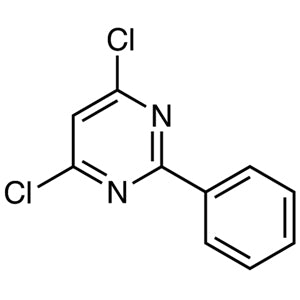
Fenclorim, with CAS number 3740-92-9, is a chemical compound widely used in laboratory experiments, particularly in organic chemistry and coordination chemistry. It serves as a ligand in the formation of functional metal complexes, playing a crucial role in various synthetic and analytical processes. Its unique chemical structure enables it to interact effectively with metal ions, making it a valuable tool for researchers exploring catalytic reactions and molecular interactions. Fenclorim is commonly employed in the synthesis of organic compounds and in studies focusing on the behavior of metal-ligand systems.
One of the key properties that make Fenclorim a preferred choice is its solubility in organic solvents such as ethyl acetate and chloroform. This characteristic allows it to be easily incorporated into reaction mixtures, facilitating efficient chemical processes. Additionally, Fenclorim has the ability to form highly stable metal complexes, which is essential for many scientific investigations. Its chemical stability under specific conditions further enhances its reliability in laboratory settings, although it remains sensitive to moisture and UV light.
In Indonesian laboratories, Fenclorim is frequently used in academic and industrial research, particularly in the fields of organic chemistry and coordination chemistry. It is commonly found in university-level chemistry laboratories where it supports both teaching and research activities. Its versatility and effectiveness make it a go-to material for a wide range of chemical experiments and studies.
- Organic Synthesis: Fenclorim is used to facilitate the synthesis of complex organic compounds due to its ability to form stable metal complexes.
- Coordination Chemistry Research: It plays a vital role in studying metal-ligand interactions and the formation of functional metal complexes.
- Catalytic Reactions: Its properties make it suitable for catalytic processes where metal-ligand interactions are essential for reaction mechanisms.
- Analytical Chemistry: It is employed in analytical techniques to study the behavior of metal ions and their interactions with ligands.
- Material Science Investigations: Fenclorim is used in the development of new materials by influencing the properties of metal-based compounds.
| Brand | TCI |
|---|---|
| CAS number | 3740-92-9 |
| Molecular formula | — |
| Purity | — |
| Category | Materials Science > Material Building Blocks > Ligands for Functional Metal Complexes |
| Pack sizes | Available in standard laboratory quantities |
| Physical form | Solid or powder, depending on the specific product variant |
| Storage | — |
Fenclorim should be stored in a cool, dry place away from moisture and direct sunlight to maintain its chemical stability. It is recommended to use airtight containers made of glass or polyethylene to prevent exposure to humidity and UV light. Due to its sensitivity, it should be handled in a well-ventilated area, and appropriate personal protective equipment should be worn. Avoid contact with skin and eyes, and ensure that spillage is cleaned up promptly. Proper storage conditions are essential to preserve its effectiveness and ensure safe usage in laboratory environments.
—
Produk Terkait
-
Bis(1,3-dibutylbarbituricAcid)TrimethineOxonol TCI B5593
Regular price From Rp 2.174.550,00Regular price -
2-(4-Bromophenyl)-4,6-diphenylpyrimidine TCI B5797
Regular price From Rp 1.565.550,00Regular price -
4-([1,1'-Biphenyl]-4-yl)-6-chloro-2-phenylpyrimidine TCI B5802
Regular price From Rp 3.312.750,00Regular price -
2-(4-Bromophenyl)pyrimidine TCI B5806
Regular price From Rp 1.008.000,00Regular price -
2-(3-Bromophenyl)-4,6-diphenylpyrimidine TCI B5814
Regular price From Rp 2.439.150,00Regular price -
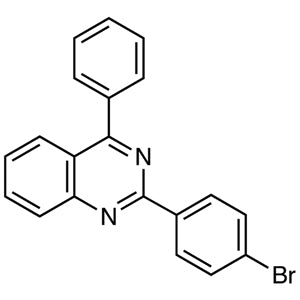
2-(4-Bromophenyl)-4-phenylquinazoline TCI B5829
Regular price From Rp 1.458.450,00Regular price -
SB239063 TCI B5898
Regular price From Rp 5.034.750,00Regular price -
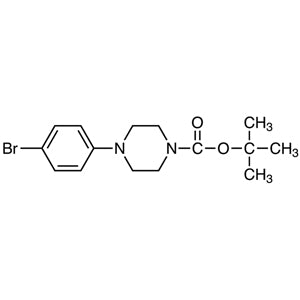
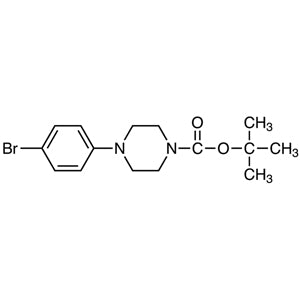
tert-Butyl4-(4-Bromophenyl)piperazine-1-carboxylate TCI B5941
Regular price From Rp 903.000,00Regular price

![4-([1,1'-Biphenyl]-4-yl)-6-chloro-2-phenylpyrimidine (CAS 1689538-58-6) - TCI B5802 - AMI Scientific](http://amiscientific.com/cdn/shop/files/TCI2510B5802.jpg?v=1768815900&width=533)