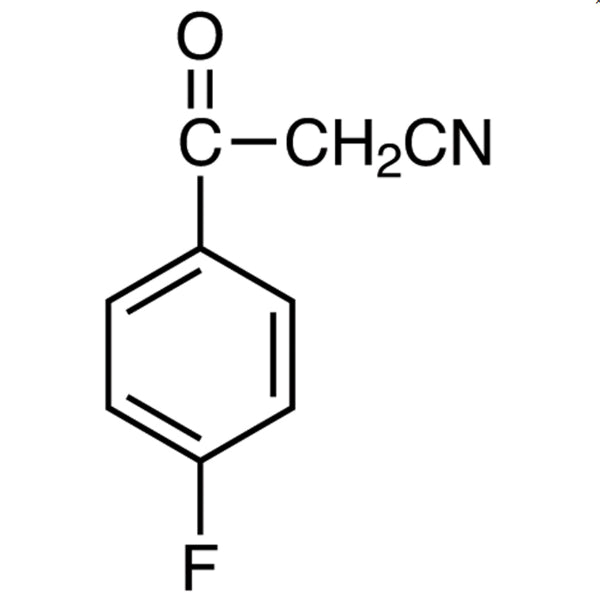
4-Fluorobenzoylacetonitrile is a chemical compound widely used in organic synthesis as a building block for creating complex molecules with fluorinated structures. This compound is essential in laboratories where researchers aim to develop compounds with specific functional groups or molecular frameworks. Its unique chemical structure allows it to participate in various synthetic pathways, making it a versatile tool for chemists working in diverse fields. Due to its stability and reactivity, it is frequently employed in the synthesis of bioactive compounds and industrial chemicals.
The compound's fluorinated nature contributes to its high reactivity and selectivity in chemical reactions. Its ability to form stable intermediates and participate in nucleophilic substitution reactions makes it a preferred choice for synthetic chemists. The presence of both nitrile and fluorine groups enhances its compatibility with a range of reaction conditions, enabling the synthesis of complex organic molecules with high precision. These properties make it particularly valuable in the development of pharmaceuticals and advanced materials.
In Indonesian laboratories, 4-Fluorobenzoylacetonitrile is commonly used in research related to pharmaceuticals, material science, and organic chemistry. Local researchers rely on its availability and quality to support their work in creating new compounds with potential applications in medicine and industry. Its role in academic and industrial research underscores its importance in the chemical supply chain within the region.
TCI brochures (PDF)
- Fluorination Reagents, Fluorinated Building Blocks 2026-03-18 · p. 16
Related TCI products
- TCI T1868 157373-08-5 2,3,4-Trifluorobenzoyl Chloride
- TCI T1855 94695-48-4 2,3,4,5-Tetrafluorobenzoyl Chloride
- TCI T1653 88419-56-1 2,4,5-Trifluorobenzoyl Chloride
- TCI F0476 149437-76-3 4-(4-Fluorobenzoyl)butyric Acid
- TCI F0472 63131-29-3 Methyl (4-Fluorobenzoyl)acetate
- TCI F0435 1999-00-4 Ethyl (4-Fluorobenzoyl)acetate
- Organic synthesis for creating fluorinated compounds due to its reactivity and structural versatility.
- Pharmaceutical research for developing bioactive molecules with specific functional groups.
- Material science applications in the production of advanced polymers and coatings.
- Academic research in fluorinated chemistry for exploring new synthetic methodologies.
- Industrial chemical production for manufacturing compounds with specialized properties.
| Brand | TCI |
|---|---|
| CAS number | 4640-67-9 |
| Molecular formula | — |
| Purity | — |
| Category | Chemistry > Building Blocks > Fluorinated Building Blocks |
| Pack sizes | Available in various quantities as per standard chemical supply practices |
| Physical form | Liquid |
| Storage | Store in a cool, dry place away from light and incompatible materials |
4-Fluorobenzoylacetonitrile should be stored in a cool, dry environment, away from direct sunlight and sources of heat. It is recommended to use airtight containers made of materials compatible with its chemical properties, such as glass or high-density polyethylene. Due to its reactivity, it should be kept away from strong oxidizing agents and moisture. Always ensure proper ventilation when handling the compound to minimize exposure. Laboratory personnel should wear appropriate personal protective equipment, including gloves and safety goggles, to ensure safe handling and prevent accidental contact.
—
Produk Terkait
-
2,3,4-TrifluorobenzoylChloride TCI T1868
Regular price Rp 1.856.400,00Regular price -
2,3,4,5-TetrafluorobenzoylChloride TCI T1855
Regular price From Rp 477.750,00Regular price -
2,4,5-TrifluorobenzoylChloride TCI T1653
Regular price Rp 1.167.600,00Regular price -
4-(4-Fluorobenzoyl)butyricAcid TCI F0476
Regular price From Rp 769.650,00Regular price -
Methyl(4-Fluorobenzoyl)acetate TCI F0472
Regular price Rp 717.150,00Regular price -
Ethyl(4-Fluorobenzoyl)acetate TCI F0435
Regular price From Rp 584.850,00Regular price -
3-(4-Fluorobenzoyl)propionicAcid TCI F0379
Regular price From Rp 1.035.300,00Regular price -
3-FluorobenzoylChloride TCI F0277
Regular price From Rp 795.900,00Regular price