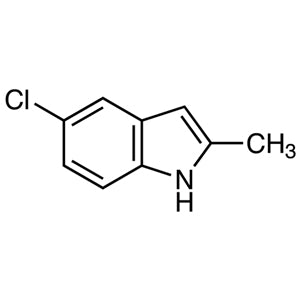
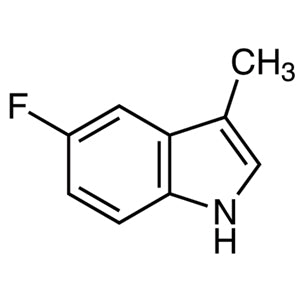
5-Fluoro-2-methylindole is a chemical compound widely used in synthetic reactions to produce complex molecules with heterocyclic structures. As a building block in organic chemistry, it plays a crucial role in the development of compounds with biological activity. This compound is part of the indole family, known for its stable core structure, which makes it an essential tool in the synthesis of new chemical entities. Its unique electronic properties, particularly due to the fluorine atom at the 5-position, enable it to participate in various substitution and aromatic reactions. These characteristics make it a valuable resource in both academic and industrial research settings.
The compound’s stability under specific chemical conditions and its ability to undergo a range of reaction types contribute to its popularity among chemists. The presence of fluorine imparts unique electronic properties that can be fine-tuned during synthetic processes, allowing for greater control over the final product’s properties. This versatility makes 5-Fluoro-2-methylindole a preferred choice in laboratories aiming to develop compounds with specific functional groups or biological activities. Its reliability and chemical behavior ensure consistent results in synthetic applications.
In Indonesian laboratories, 5-Fluoro-2-methylindole is commonly used in chemical and pharmaceutical research. Researchers rely on this compound to synthesize new molecules with potential therapeutic or industrial applications. Its specific properties make it an essential component in laboratories focused on drug discovery, material science, and advanced chemical synthesis. Its role in creating compounds with tailored properties underscores its importance in modern chemical research.
- Organic synthesis applications benefit from 5-Fluoro-2-methylindole due to its stable core and ability to participate in aromatic substitution reactions.
- Pharmaceutical research utilizes this compound to develop new drugs with targeted biological activities and improved pharmacological profiles.
- Material science studies incorporate this building block to create advanced polymers and functional materials with unique electronic properties.
- Chemical research laboratories use it as a versatile intermediate in the synthesis of heterocyclic compounds with diverse applications.
- Drug discovery programs rely on its electronic properties to design molecules with enhanced reactivity and specificity in biological systems.
| Brand | TCI |
|---|---|
| CAS number | 399-72-4 |
| Molecular formula | — |
| Purity | — |
| Category | Chemistry > Building Blocks > Heterocyclic Building Blocks |
| Pack sizes | Available in various quantities as per standard chemical supply practices |
| Physical form | Solid, typically in crystalline or powder form |
| Storage | Store in a cool, dry place away from light and moisture |
5-Fluoro-2-methylindole should be stored in a cool, dry environment to maintain its chemical stability. It is recommended to keep the compound in airtight containers to prevent exposure to moisture and air, which could lead to degradation. Suitable storage conditions include a controlled room temperature range of 15–25°C. Laboratory personnel should handle the compound with appropriate personal protective equipment, including gloves and safety goggles, to ensure safe handling. Due to its chemical nature, it should be stored away from incompatible substances such as strong oxidizers or acids. Regular inspection of storage conditions and container integrity is advised to maintain the compound’s quality and safety.
—
Produk Terkait
-
5-Bromo-2,3-dimethylindole TCI B5272
Regular price Rp 2.491.650,00Regular priceRp 1.757.700,00Sale price Rp 2.491.650,00 -
5-Chloro-2-methylindole TCI C1761
Regular price Rp 1.670.550,00Regular priceRp 1.183.350,00Sale price Rp 1.670.550,00 -
5-Fluoro-3-methylindole TCI F1053
Regular price Rp 1.272.600,00Regular priceRp 905.100,00Sale price Rp 1.272.600,00 -
2,3,3,5-Tetramethylindolenine TCI T3458
Regular price Rp 1.856.400,00Regular priceRp 1.313.550,00Sale price Rp 1.856.400,00 -
5-Amino-2-methylindole TCI A1539
Regular price Rp 1.405.950,00Regular priceRp 998.550,00Sale price Rp 1.405.950,00 -
2,3,3-Trimethylindolenine TCI T0766
Regular price Rp 1.458.450,00Regular priceRp 1.035.300,00Sale price Rp 1.458.450,00 -
4-Methylindole TCI M1745
Regular price Rp 1.351.350,00Regular priceRp 960.750,00Sale price Rp 1.351.350,00 -
7-Methylindole TCI M1702
Regular price Rp 875.700,00Regular priceRp 627.900,00Sale price Rp 875.700,00