

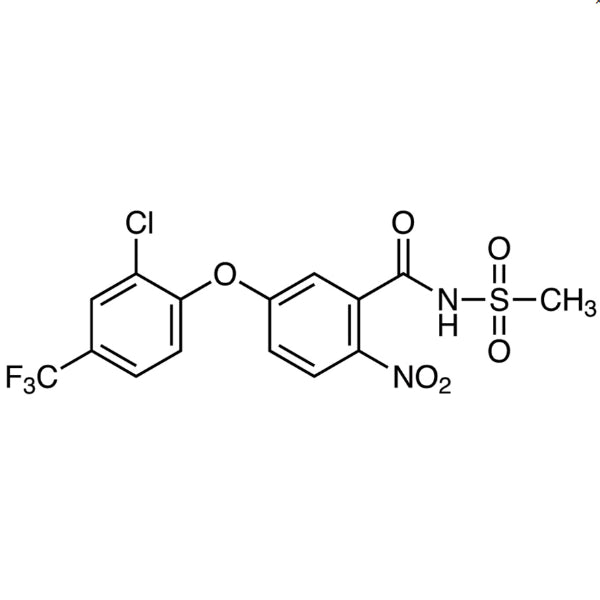
Fomesafen is a chemical compound widely used in cellular nutrition and cell biology research. It functions as an enzyme inhibitor, particularly effective in suppressing the activity of enzymes involved in cellular metabolic processes. In laboratory settings, fomesafen serves as a control agent to study how cells respond to various environmental factors. Its role in understanding cellular mechanisms makes it a valuable tool for researchers exploring the effects of chemical compounds on cell growth and function. This compound is essential for experiments that require controlled exposure to specific substances to observe their impact on biological systems.
Fomesafen is preferred due to its chemical stability under certain conditions, which simplifies storage and handling in diverse experimental setups. Its good solubility in organic solvents enhances its applicability across a range of analytical methods. Additionally, it is considered relatively safe for use in controlled exposure experiments, as it is non-toxic at specific dosages. These properties make it a reliable and versatile reagent for researchers aiming to conduct precise and reproducible studies.
In Indonesian laboratories, fomesafen is commonly used in research related to cellular nutrition, including studies on how cells respond to environmental stress and the effects of chemical compounds on metabolism. It is also utilized in experiments that require controlled exposure to specific agents, enabling scientists to analyze cellular responses accurately. Its versatility and stability make it a preferred choice for a wide range of research applications in both academic and industrial settings.
- Cellular Nutrition Research: Fomesafen is used to study how cells respond to environmental stressors and metabolic changes, providing insights into cellular adaptation mechanisms.
- Enzyme Inhibition Studies: Its ability to inhibit specific enzymes makes it ideal for investigating metabolic pathways and enzyme activity in controlled experiments.
- Metabolic Process Analysis: Researchers use fomesafen to examine the effects of chemical compounds on cellular metabolism, aiding in the development of targeted therapeutic approaches.
- Environmental Stress Response Studies: It helps in understanding how cells react to stress conditions, contributing to research in environmental and toxicological sciences.
- Controlled Exposure Experiments: Fomesafen is employed in experiments where precise dosing and controlled exposure to compounds are required to study their biological effects.
| Brand | TCI |
|---|---|
| CAS number | 72178-02-0 |
| Molecular formula | — |
| Purity | — |
| Category | Life Science > Cell Biology > Nutrition Research |
| Pack sizes | Available in various quantities as per standard laboratory supply |
| Physical form | Solid or powder, depending on the specific product variant |
| Storage | Store in a cool, dry place away from direct sunlight and moisture |
Fomesafen should be stored in a cool, dry environment, away from direct sunlight and moisture to maintain its chemical stability. It is recommended to use airtight containers to prevent contamination and degradation. When handling, researchers should wear appropriate personal protective equipment, such as gloves and safety goggles, to ensure safety. The compound is non-toxic at specified dosages, but caution should still be exercised during preparation and use. Proper labeling of containers is essential for safe handling and to prevent accidental exposure. Regular inspection of storage conditions ensures the integrity of the compound remains intact for reliable experimental results.
—
Produk Terkait
-
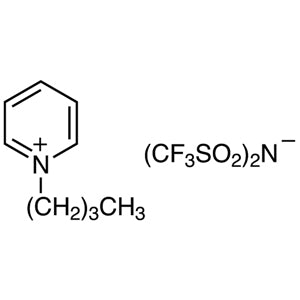
1-ButylpyridiniumBis(trifluoromethanesulfonyl)imide TCI B5571
Regular price From Rp 2.094.750,00Regular price -
2-(tert-Butyldimethylsilyl)-N,N-dimethyl-1H-imidazole-1-sulfonamide TCI B5658
Regular price From Rp 2.650.200,00Regular price -
3-Bromobenzenesulfonamide TCI B5734
Regular price From Rp 1.405.950,00Regular price -
1-Butyl-4-methylpyridiniumBis(trifluoromethanesulfonyl)imide TCI B5763
Regular price From Rp 903.000,00Regular price -
[3-(Bromomethyl)-1-tosylazetidin-3-yl]methanol TCI B5852
Regular price From Rp 1.378.650,00Regular price -
Belinostat TCI B5888
Regular price From Rp 2.306.850,00Regular price -
(-)-4-tert-Butyl-2,6-bis[(4S,5S)-4,5-tetramethylene-1-(2,4,6-trimethylbenzenesulfonyl)imidazolin-2-yl]phenol(contains5%Dichloromethaneatmaximum) TCI B6146
Regular price Rp 8.322.300,00Regular price


![[3-(Bromomethyl)-1-tosylazetidin-3-yl]methanol (CAS 1041026-55-4) - TCI B5852 - AMI Scientific](http://amiscientific.com/cdn/shop/files/TCI2510B5852_08c96097-28a8-4e07-aa20-fbef24394b16.jpg?v=1767863600&width=533)

![(-)-4-tert-Butyl-2,6-bis[(4S,5S)-4,5-tetramethylene-1-(2,4,6-trimethylbenzenesulfonyl)imidazolin-2-yl]phenol (contains 5% Dichloromethane at maximum) (CAS 2102316-91-4) - TCI B6146 - AMI Scientific](http://amiscientific.com/cdn/shop/files/TCI2510B6146.jpg?v=1767093225&width=533)