
![Formamidine Hydrobromide (99.99%, trace metals basis) [for Perovskite precursor] (CAS 146958-06-7) - TCI F1244 - AMI Scientific](http://amiscientific.com/cdn/shop/files/TCI2510F1244.jpg?v=1769056191&width=1946)
![Formamidine Hydrobromide (99.99%, trace metals basis) [for Perovskite precursor] (CAS 146958-06-7) - TCI F1244 - AMI Scientific](http://amiscientific.com/cdn/shop/files/TCI2510F1244.jpg?v=1769056191&width=1445)
Formamidine Hydrobromide (99.99%, trace metals basis) is a high-purity chemical compound used in laboratory research for perovskite materials. It serves as a critical component in the synthesis of perovskite precursors, which are essential for creating efficient solar cell structures. This material plays a key role in the development of perovskite solar cells by contributing to the formation of stable and optically active crystal structures. Its application is vital in materials science, particularly in the field of electronic materials for renewable energy technologies.
The exceptional purity level of 99.99% ensures minimal contamination from trace metals or other impurities, making it ideal for high-precision experiments. This purity standard is crucial in maintaining the integrity of the perovskite structure and ensuring consistent performance in photovoltaic applications. The material’s chemical stability and compatibility with other reagents further enhance its reliability in laboratory settings. These properties make it a preferred choice for researchers aiming to achieve reproducible and high-quality results.
In Indonesian laboratories, Formamidine Hydrobromide is widely utilized in the development of perovskite-based solar cell technologies. Researchers from academic institutions and research centers rely on this compound to advance their work in cost-effective and efficient photovoltaic materials. Its use supports ongoing efforts to innovate in renewable energy solutions, contributing to the growth of sustainable technologies in the region.
TCI brochures (PDF)
- Organic-Inorganic Perovskite Precursors 2026-09-01 · p. 5
- Solar Cell Materials 2026-04-21 · p. 7
Related TCI products
- TCI F1263 879643-71-7 Formamidine Hydroiodide (9999%, trace metals basis) [for Perovskite precursor]
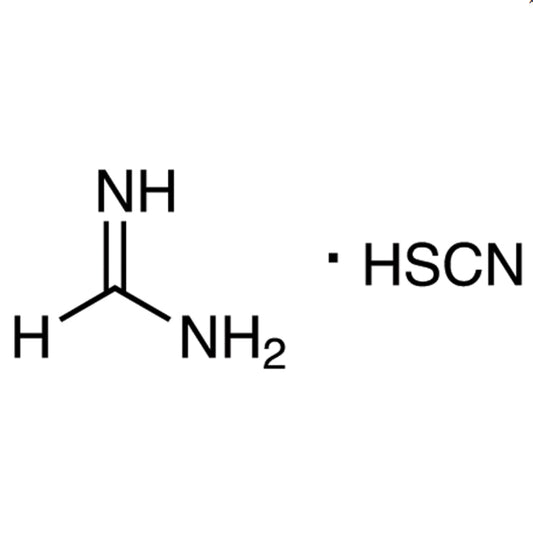
- TCI F1153 1821033-48-0 Formamidine Thiocyanate
- TCI F0974 879643-71-7 Formamidine Hydroiodide (Low water content)
- TCI F0973 146958-06-7 Formamidine Hydrobromide (Low water content)
- TCI F0103 6313-33-3 Formamidine Hydrochloride
- TCI F1152 2607106-18-1 Formamidinium Tetrafluoroborate
- Perovskite Solar Cell Fabrication: This compound is essential for synthesizing perovskite precursors, which are fundamental in creating high-performance solar cell structures.
- Material Characterization Studies: Its high purity allows for accurate analysis of optical and electronic properties, supporting advanced material research.
- Thin Film Deposition Processes: It is used in the preparation of perovskite thin films, which are critical for achieving efficient light-to-electricity conversion.
- Photovoltaic Device Testing: The compound contributes to the development of reliable and reproducible solar cell prototypes for performance evaluation.
- Research and Development in Renewable Energy: Its role in perovskite synthesis supports ongoing innovation in next-generation solar technologies.
| Brand | TCI |
|---|---|
| CAS number | 146958-06-7 |
| Molecular formula | — |
| Purity | — |
| Category | Materials Science > Electronic Materials > Perovskite Solar Cell (PSC) Materials |
| Pack sizes | — |
| Physical form | — |
| Storage | Store in a cool, dry place away from moisture and direct sunlight |
Formamidine Hydrobromide should be stored in a cool, dry environment to maintain its chemical stability and prevent degradation. It is recommended to use airtight containers to minimize exposure to moisture and air, which can affect its purity. Due to its high purity, it should be handled with care to avoid contamination. Laboratory personnel should wear appropriate personal protective equipment, such as gloves and safety goggles, when working with this compound. It is important to ensure good ventilation in the workspace to reduce any potential exposure. Proper storage and handling practices help preserve the material's integrity and ensure safe usage in research applications.
—
Produk Terkait
-
FormamidineHydroiodide(9999%,tracemetalsbasis)[forPerovskiteprecursor] TCI F1263
Regular price From Rp 1.776.600,00Regular priceRp 1.257.900,00Sale price From Rp 1.776.600,00 -
FormamidineThiocyanate TCI F1153
Regular price From Rp 1.563.450,00Regular priceRp 1.108.800,00Sale price From Rp 1.563.450,00 -
FormamidineHydroiodide(Lowwatercontent) TCI F0974
Regular price From Rp 1.618.050,00Regular priceRp 1.146.600,00Sale price From Rp 1.618.050,00 -
FormamidineHydrobromide(Lowwatercontent) TCI F0973
Regular price From Rp 1.246.350,00Regular priceRp 887.250,00Sale price From Rp 1.246.350,00 -
FormamidineHydrochloride TCI F0103
Regular price From Rp 1.378.650,00Regular priceRp 979.650,00Sale price From Rp 1.378.650,00 -
FormamidiniumTetrafluoroborate TCI F1152
Regular price From Rp 1.087.800,00Regular priceRp 775.950,00Sale price From Rp 1.087.800,00 -
Tin(II)Bromide[forPerovskiteprecursor] TCI T3573
Regular price From Rp 1.565.550,00Regular priceRp 1.094.100,00Sale price From Rp 1.565.550,00 -
Tin(II)Iodide[forPerovskiteprecursor] TCI T3449
Regular price From Rp 1.776.600,00Regular priceRp 1.257.900,00Sale price From Rp 1.776.600,00
![Formamidine Hydroiodide (99.99%, trace metals basis) [for Perovskite precursor] (CAS 879643-71-7) - TCI F1263 - AMI Scientific](http://amiscientific.com/cdn/shop/files/TCI2510F1263.jpg?v=1768819017&width=533)



![TCI T3573 10031-24-0 Tin(II) Bromide [for Perovskite precursor]](http://amiscientific.com/cdn/shop/files/TCI2510T3573_3ae7ea12-9e63-479b-a29c-9246db8da5d1.jpg?v=1792664202&width=533)
![10031-24-0 Tin(II) Bromide [for Perovskite precursor] - AMI Scientific](http://amiscientific.com/cdn/shop/files/TCI2510T3573.jpg?v=1767144219&width=533)
![TCI T3449 10294-70-9 Tin(II) Iodide [for Perovskite precursor]](http://amiscientific.com/cdn/shop/files/TCI2510T3449_ede5bb9e-0316-4d04-a928-4533ff446101.jpg?v=1792664122&width=533)
![10294-70-9 Tin(II) Iodide [for Perovskite precursor] - AMI Scientific](http://amiscientific.com/cdn/shop/files/TCI2510T3449.jpg?v=1767144112&width=533)