

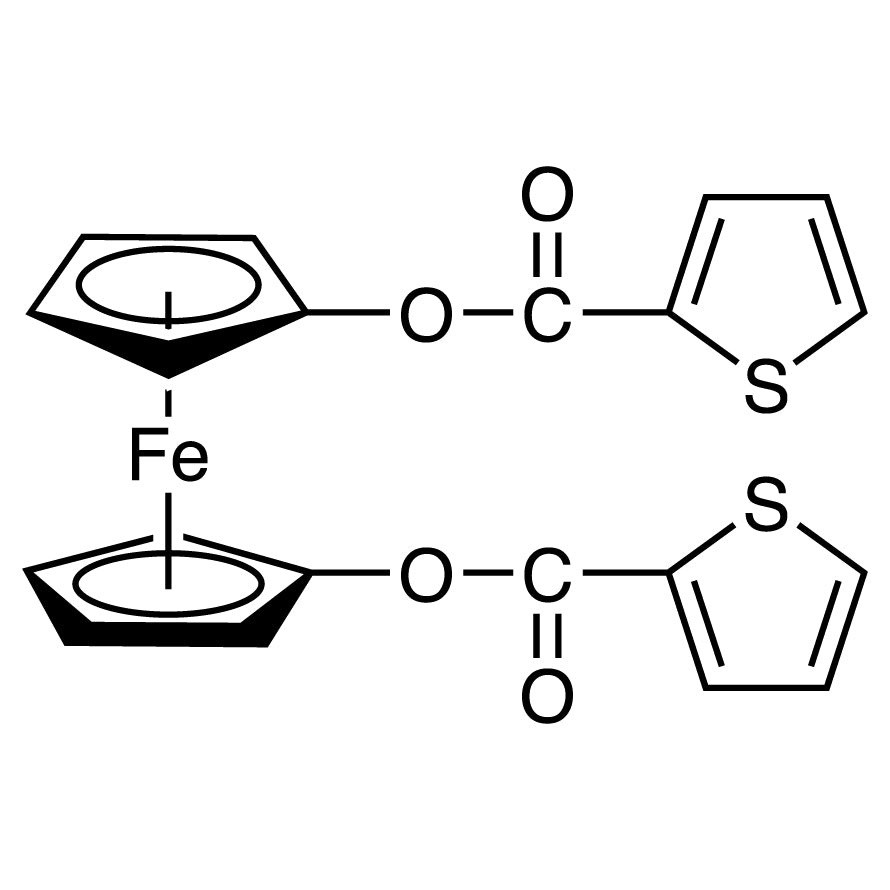
Ferrocenyl 1,1'-Bis(thiophene-2-carboxylate), with the CAS number 2999664-17-2, is a complex chemical compound widely utilized in scientific research, particularly in the fields of organic chemistry and materials science. This compound is known for its unique molecular structure, which allows it to participate in the synthesis of organic compounds with interesting electronic and optical properties. Its versatility makes it an essential component in various laboratory processes, supporting the development of advanced materials and functional compounds. Due to its chemical stability and ability to form complexes with different ligands, it is a valuable resource for researchers working on synthetic pathways and molecular design.
One of the key reasons this compound is preferred is its high chemical stability and excellent conductivity. These properties make it ideal for applications in organic conductors and chemical sensors. Its ability to interact with various ligands also enhances its utility in catalytic processes and molecular recognition studies. Additionally, the compound's optical properties are of significant interest in the development of photovoltaic materials and optoelectronic devices. These characteristics contribute to its growing importance in both academic and industrial research settings.
In Indonesian laboratories, Ferrocenyl 1,1'-Bis(thiophene-2-carboxylate) is commonly used in research focused on the development of new materials, especially in the fields of information technology and energy. It is frequently employed in studies related to organic electronics, sensor development, and advanced material synthesis. Its role in supporting scientific innovation is critical, particularly in institutions and research centers dedicated to advancing chemical and material sciences in Indonesia.
TCI brochures (PDF)
- Thiophenes 2026-06-29 · p. 9
Related TCI products
- TCI A1355 4506-71-2 Ethyl 2-Amino-4,5,6,7-tetrahydrobenzo[b]thiophene-3-carboxylate
- TCI M3001 98800-10-3 Methyl Thieno[3,2-b]thiophene-2-carboxylate
- TCI M2627 22913-26-4 Methyl Thiophene-3-carboxylate
- TCI E1040 1237479-38-7 2-Ethylhexyl 4,6-Dibromo-3-fluorothieno[3,4-b]thiophene-2-carboxylate
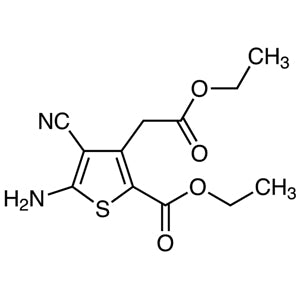
- TCI E0980 58168-20-0 Ethyl 5-Amino-4-cyano-3-(2-ethoxycarbonylmethyl)thiophene-2-carboxylate
- TCI T3604 20300-02-1 Thiophene-2-carbothioamide
- Organic electronics research benefits from this compound due to its conductivity and optical properties, enabling the development of advanced electronic materials.
- Photovoltaic material synthesis utilizes this compound to create compounds with enhanced light absorption and charge transport properties.
- Chemical sensor development leverages its conductivity and ligand-binding ability to detect and analyze various chemical species with high sensitivity.
- Organic conductor research employs this compound as a building block for creating materials with specific electronic behaviors and performance characteristics.
- Material science innovation uses this compound to design and test new materials with unique electronic and optical functionalities for industrial applications.
| Brand | TCI |
|---|---|
| CAS number | 2999664-17-2 |
| Molecular formula | — |
| Purity | — |
| Category | TCI |
| Pack sizes | 1 g, 5 g, 25 g |
| Physical form | Solid |
| Storage | Store in a cool, dry place away from light and moisture |
This compound should be stored in a cool, dry environment, away from direct light and moisture to maintain its chemical integrity. It is recommended to use airtight containers made of glass or high-density polyethylene to prevent contamination and degradation. Due to its chemical stability, it does not require refrigeration, but it should be kept in a secure location to avoid accidental exposure. In laboratory settings, it is essential to use appropriate personal protective equipment, such as gloves and safety goggles, when handling this material. Regular monitoring of storage conditions ensures that the compound remains effective for research applications. Proper labeling and storage practices help maintain safety and compliance in laboratory environments.
—
Produk Terkait
-
Ethyl2-Amino-4,5,6,7-tetrahydrobenzo[b]thiophene-3-carboxylate TCI A1355
Regular price Rp 3.100.650,00Regular price -
MethylThieno[3,2-b]thiophene-2-carboxylate TCI M3001
Regular price From Rp 3.048.150,00Regular price -
MethylThiophene-3-carboxylate TCI M2627
Regular price From Rp 1.988.700,00Regular price -
2-Ethylhexyl4,6-Dibromo-3-fluorothieno[3,4-b]thiophene-2-carboxylate TCI E1040
Regular price Rp 4.213.650,00Regular price -
Ethyl5-Amino-4-cyano-3-(2-ethoxycarbonylmethyl)thiophene-2-carboxylate TCI E0980
Regular price From Rp 689.850,00Regular price -
Thiophene-2-carbothioamide TCI T3604
Regular price From Rp 8.560.650,00Regular price -
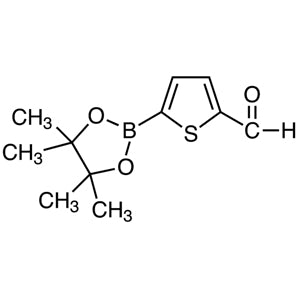
5-(4,4,5,5-Tetramethyl-1,3,2-dioxaborolan-2-yl)thiophene-2-carboxaldehyde TCI T3485
Regular price Rp 1.961.400,00Regular price -
Thieno[3,2-b]thiophene-2-carbonitrile TCI T3221
Regular price From Rp 2.199.750,00Regular price
![4506-71-2 Ethyl 2-Amino-4,5,6,7-tetrahydrobenzo[b]thiophene-3-carboxylate - AMI Scientific](http://amiscientific.com/cdn/shop/files/TCI2510A1355.jpg?v=1767081225&width=533)
![98800-10-3 Methyl Thieno[3,2-b]thiophene-2-carboxylate - AMI Scientific](http://amiscientific.com/cdn/shop/files/TCI2510M3001.jpg?v=1767127592&width=533)

![2-Ethylhexyl 4,6-Dibromo-3-fluorothieno[3,4-b]thiophene-2-carboxylate (CAS 1237479-38-7) - TCI E1040 - AMI Scientific](http://amiscientific.com/cdn/shop/files/TCI2510E1040.jpg?v=1768818773&width=533)

![40985-58-8 Thieno[3,2-b]thiophene-2-carbonitrile - AMI Scientific](http://amiscientific.com/cdn/shop/files/TCI2510T3221.jpg?v=1769058181&width=533)