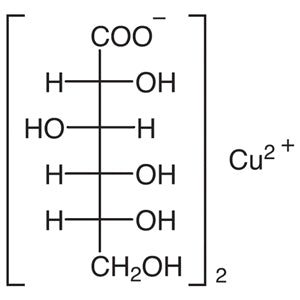
Copper(II) Gluconate is the copper salt of gluconic acid, a coordination compound in which the copper ion is held by the carboxylate and hydroxyl groups of an oxidised sugar backbone. This combination yields a water-soluble copper source that behaves far more gently than simple inorganic copper salts. In the laboratory, the material serves as a catalyst precursor, as a metal-ion source in culture media and assay formulations, and as a reference material in mineral nutrition research and copper content analysis.
The characteristics that make this compound a widely preferred choice include good water solubility, a coloured solid form that is easy to recognise and weigh accurately, and a gluconate ligand that acts as a chelator and therefore stabilises the copper ion in solution. This chelating behaviour reduces the tendency toward hydroxide precipitation at near-neutral pH, a genuine advantage when researchers work in buffered aqueous systems. In a catalysis context, divalent copper is a highly productive transition metal for coupling, oxidation, and azide-alkyne cycloaddition reactions, and the gluconate form offers a precursor alternative that is relatively straightforward to handle.
In Indonesia, the material is widely used across academic, industrial, and applied research laboratories that require a reliable, well-behaved copper source. Typical settings include university chemistry departments exploring transition metal catalysis, biological and microbiological laboratories preparing trace element supplements for culture media, and analytical laboratories that need a dependable copper reference for nutrition and mineral content studies.
TCI brochures (PDF)
- Transition Metal Catalysts 2026-04-10 · p. 15
- Reagents for Glyco Chemistry & Biology 5th Edition · p. 30
- Catalyst precursor preparation — divalent copper is highly productive in coupling, oxidation, and azide-alkyne cycloaddition chemistry, and the gluconate form is comparatively easy to handle.
- Trace metal supplementation of culture media — the water-soluble, chelated copper ion resists hydroxide precipitation at near-neutral pH, making it well suited to buffered biological systems.
- Assay and test formulation — good aqueous solubility allows accurate preparation of copper-containing working solutions without the harsher behaviour of simple inorganic copper salts.
- Mineral nutrition research — the compound serves as a reference copper source for studies investigating copper as a dietary and physiological trace element.
- Copper content analysis — the readily recognisable coloured solid can be weighed accurately, supporting its use as a reference material in analytical determinations of copper.
| Brand | TCI |
|---|---|
| CAS number | 527-09-3 |
| Molecular formula | — |
| Purity | — |
| Category | Chemistry > Catalysis and Inorganic Chemistry > Transition Elements [Catalysis and Inorganic Chemistry] |
| Pack sizes | — |
| Physical form | coloured solid, water soluble |
| Storage | store in a closed container in a cool, dry place; refer to the manufacturer's label and safety data sheet for the specific storage condition of the pack supplied |
- Catalogue reference: TCI G0275
Store Copper(II) Gluconate in a tightly closed container in a cool, dry, well-ventilated area, away from moisture and from direct sunlight. Original manufacturer containers or clean, well-sealed glass or chemically compatible plastic containers with clearly legible labels are suitable. Because the solid is hygroscopically sensitive to humid conditions, keep the container closed when not in active use and return it promptly after weighing. Handle in a laboratory setting with standard personal protective equipment, including gloves, safety goggles, and a laboratory coat, and weigh or transfer the powder in a way that limits dust generation, preferably in a fume hood or a suitably ventilated weighing area. Avoid contact with skin and eyes, avoid inhalation of dust, and wash hands thoroughly after handling. Keep separate from strong oxidising agents and incompatible materials, and follow the manufacturer's safety data sheet together with local institutional waste disposal procedures for any residue or spillage.
—
Product Categories
Produk Terkait
-
Zinc(II)Gluconate TCI G0277
Regular price From Rp 557.550,00Regular price -
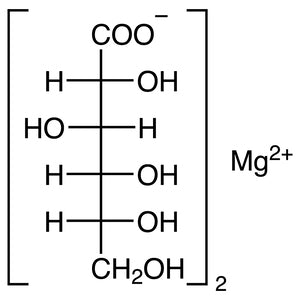
Magnesium(II)Gluconate TCI G0276
Regular price From Rp 848.400,00Regular price -
SodiumGluconate TCI G0041
Regular price From Rp 452.550,00Regular price -
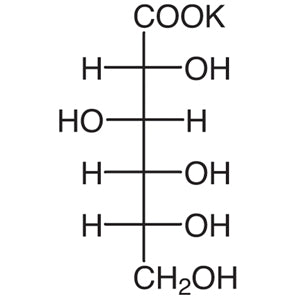
PotassiumGluconate TCI G0040
Regular price From Rp 452.550,00Regular price -
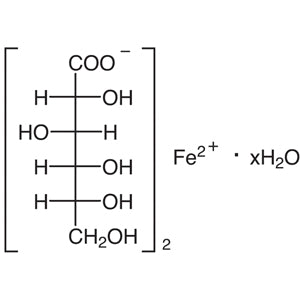
Iron(II)GluconateHydrate TCI G0038
Regular price From Rp 452.550,00Regular price -
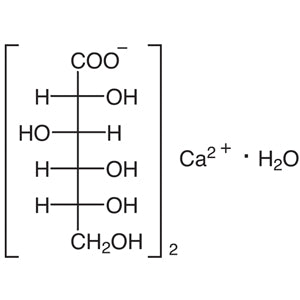
CalciumGluconateMonohydrate TCI G0037
Regular price From Rp 452.550,00Regular price -
Arbutin TCI A0522
Regular price From Rp 452.550,00Regular price -
Teniposide TCI T3109
Regular price From Rp 1.485.750,00Regular price