

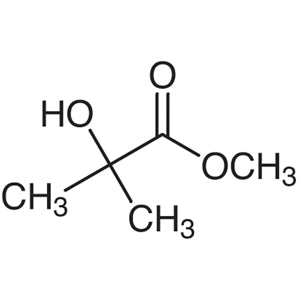
Methyl 2-Hydroxyisobutyrate is a chemical compound widely used in laboratory settings for the synthesis of complex molecules. It serves as a building block in organic chemistry, enabling the creation of esters and other functional groups. This compound plays a crucial role in the development of new chemical structures and molecular modifications. Its stability and reactivity make it a versatile tool for various chemical reactions.
The compound's chemical properties, including its solubility in organic solvents and its ability to react with different functional groups, make it a preferred choice for chemists. Its simple molecular structure facilitates processing and reaction efficiency. The compound is non-toxic and easy to handle, which enhances its safety profile in laboratory environments. These characteristics contribute to its widespread use in both research and industrial applications.
In Indonesian laboratories, Methyl 2-Hydroxyisobutyrate is commonly used in scientific research, particularly in organic chemistry and pharmaceutical studies. It is a key component in the synthesis of various compounds and is utilized by research institutions and universities. Its reliability and ease of use make it an essential material for experimental work in the field of chemistry.
- Organic synthesis applications benefit from Methyl 2-Hydroxyisobutyrate due to its reactivity and compatibility with various functional groups, enabling the creation of complex organic molecules.
- Pharmaceutical research utilizes this compound for the development of new drug compounds, as it can be modified to form different ester derivatives with therapeutic potential.
- Analytical chemistry laboratories use it as a standard reference material for qualitative and quantitative analysis of organic compounds.
- Teaching laboratories incorporate it into experiments to demonstrate basic organic reactions and molecular structure modifications.
- Industrial research and development projects rely on it for the production of specialty chemicals and intermediate compounds.
| Brand | TCI |
|---|---|
| CAS number | 2110-78-3 |
| Molecular formula | — |
| Purity | — |
| Category | Chemistry > Building Blocks > Non-Heterocyclic Building Blocks |
| Pack sizes | Available in various quantities as per supplier specifications |
| Physical form | Liquid or crystalline, depending on the specific product formulation |
| Storage | Store in a cool, dry place away from direct sunlight and incompatible materials |
Methyl 2-Hydroxyisobutyrate should be stored in a cool, dry environment to maintain its chemical stability. It is recommended to use airtight containers made of glass or high-density polyethylene to prevent contamination and evaporation. The compound should be kept away from strong oxidizing agents and incompatible substances to avoid unwanted reactions. Due to its non-toxic nature, it is generally safe to handle, but standard laboratory safety protocols should still be followed. Proper labeling of containers is essential to ensure safe handling and prevent accidental exposure. Regular inspection of storage conditions is advised to maintain the integrity of the compound over time.
—
Produk Terkait
-
Ethyl2-Hydroxyisobutyrate TCI H0255
Regular price Rp 2.147.250,00Regular price -
IsoamylIsobutyrate TCI I0676
Regular price From Rp 610.050,00Regular price -
PhenylIsobutyrate TCI I0482
Regular price Rp 2.625.000,00Regular price -
BenzylIsobutyrate TCI I0424
Regular price Rp 477.750,00Regular price -
p-TolylIsobutyrate TCI I0396
Regular price From Rp 875.700,00Regular price -
IsobutylIsobutyrate TCI I0316
Regular price From Rp 477.750,00Regular price -
ButylIsobutyrate TCI I0315
Regular price From Rp 477.750,00Regular price -
IsopropylIsobutyrate TCI I0109
Regular price Rp 1.670.550,00Regular price


