


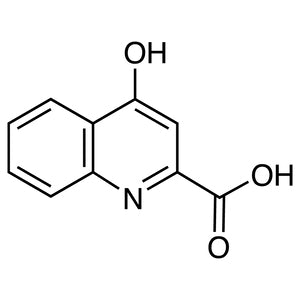
Kynurenic Acid is a chemical compound widely used in laboratory settings for its role in chemical experiments and scientific research. As a heterocyclic building block, it plays a crucial part in the synthesis of more complex molecules. Its unique molecular structure makes it a valuable tool for studying reaction mechanisms and molecular interactions. This compound is commonly found in pharmacological, biochemical, and organic chemistry research, where it helps in understanding the behavior of neurotransmitter receptors.
One of the key properties that make Kynurenic Acid a preferred choice is its chemical stability under certain conditions, which ensures reliable results in experiments. It is a white solid with varying solubility depending on the solvent used, making it versatile for different experimental setups. Its ability to act as a foundational component in the synthesis of complex compounds further enhances its utility in laboratory environments.
In Indonesian laboratories, Kynurenic Acid is utilized by researchers in various institutions, including universities and research organizations. It is often used in neuroscientific studies and drug development projects due to its potential to interact with specific neurotransmitter receptors. Its consistent performance and reliability make it a trusted material for scientific investigations in the region.
- Neuropharmacological research benefits from Kynurenic Acid due to its ability to modulate neurotransmitter receptors, aiding in the study of neurological disorders.
- Organic synthesis projects frequently use Kynurenic Acid as a building block for creating complex molecular structures with high precision.
- Biochemical experiments rely on this compound to investigate molecular interactions and reaction mechanisms in controlled environments.
- Drug development initiatives incorporate Kynurenic Acid to explore its potential in pharmaceutical applications and therapeutic research.
- Analytical chemistry applications use Kynurenic Acid to test solubility properties and chemical behavior under different conditions.
| Brand | TCI |
|---|---|
| CAS number | 492-27-3 |
| Molecular formula | — |
| Purity | — |
| Category | Chemistry > Building Blocks > Heterocyclic Building Blocks |
| Pack sizes | — |
| Physical form | Solid |
| Storage | Store in a cool, dry place away from light |
Kynurenic Acid should be stored in a cool, dry place away from direct light to maintain its chemical stability. It is recommended to use airtight containers to prevent moisture absorption, which could affect its purity and performance. As a solid, it should be handled with care to avoid contamination. Laboratory personnel should wear appropriate personal protective equipment when handling the compound to ensure safety. Due to its potential reactivity with certain substances, it should be stored separately from incompatible materials. Proper labeling and storage conditions are essential to maintain the integrity of the compound for reliable experimental results.
—
Produk Terkait
-
Melatonin TCI M1105
Regular price From Rp 1.988.700,00Regular priceRp 1.405.950,00Sale price From Rp 1.988.700,00 -
AcetylcholineIodide TCI A0085
Regular price Rp 2.942.100,00Regular priceRp 2.072.700,00Sale price Rp 2.942.100,00 -
AcetylcholineChloride TCI A0084
Regular price From Rp 1.405.950,00Regular priceRp 998.550,00Sale price From Rp 1.405.950,00 -
AcetylcholineBromide TCI A0083
Regular price Rp 2.464.350,00Regular priceRp 1.738.800,00Sale price Rp 2.464.350,00


