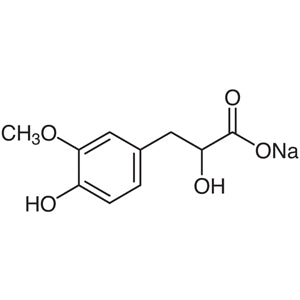
TCI H0538 Sodium 3-(4-Hydroxy-3-methoxyphenyl)lactate is the sodium salt of vanillactic acid, a phenolic compound that carries both hydroxyl and methoxy groups on its aromatic ring together with a lactic acid side chain. The compound is known as one of the metabolites associated with the metabolic pathways of aromatic amino acids and catecholamines, which is why it appears regularly in clinical biochemistry and metabolomics studies. As a non-heterocyclic building block, chemists also use this material as a starting material and as a reference compound in synthesis and analytical work involving guaiacol derivatives.
The sodium salt form is chosen because it offers far better water solubility than the corresponding free acid, so aqueous standard solutions can be prepared easily without organic solvents or complicated pH adjustment. This salt is generally supplied as a white to yellowish powder that remains stable under dry storage, although the phenolic group makes the compound susceptible to oxidation after prolonged exposure to air, light and moisture. The presence of a chiral centre on the lactate chain, combined with the reactive phenol group, makes it an attractive substrate for derivatisation studies as well as enzymatic reactions.
In Indonesian laboratories, materials of this type are typically found in university research groups, clinical biochemistry units and analytical service laboratories that study metabolite profiles. Its ready water solubility suits working conditions where aqueous standard solutions must be prepared quickly for chromatographic runs. Research teams working on guaiacol derivatives or on aromatic amino acid and catecholamine metabolism generally keep it on hand as a reference compound alongside their other non-heterocyclic building blocks.
Related TCI products
- TCI H1946 6100-74-9 1-(3-Hydroxy-4-methoxyphenyl)ethan-1-one
- TCI H1578 39604-68-7 2'-Hydroxy-4',6'-dimethoxy-2-(4-methoxyphenyl)acetophenone
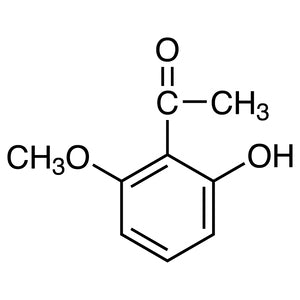
- TCI H1529 703-23-1 1-(2-Hydroxy-6-methoxyphenyl)ethanone
- TCI T2231 1323-03-1 Tetradecyl Lactate
- TCI L0121 616-09-1 Propyl Lactate
- TCI L0117 19329-89-6 Isoamyl Lactate
- Metabolomics profiling studies — the compound is a recognised metabolite linked to aromatic amino acid and catecholamine pathways, making it a relevant reference material for identifying and confirming metabolite peaks.
- Clinical biochemistry investigation — because vanillactic acid relates to catecholamine metabolism, this sodium salt supports biochemical studies where a well-defined, water-soluble reference form of the metabolite is required.
- Preparation of aqueous standard solutions — the sodium salt dissolves readily in water, so calibration standards can be made up directly without organic solvents or involved pH adjustment procedures.
- Organic synthesis as a building block — as a non-heterocyclic building block it serves as a starting material in synthetic routes that build on or modify guaiacol-type aromatic frameworks.
- Derivatisation and enzymatic reaction studies — the reactive phenol group and the chiral centre on the lactate side chain make the molecule a useful substrate for derivatisation chemistry and enzyme-mediated transformations.
| Brand | TCI |
|---|---|
| CAS number | 77305-02-3 |
| Molecular formula | — |
| Purity | — |
| Category | Chemistry > Building Blocks > Non-Heterocyclic Building Blocks |
| Pack sizes | available in the standard catalogue pack sizes offered for this TCI item; please confirm the size required when ordering |
| Physical form | generally a white to yellowish powder |
| Storage | keep dry and protected from air, light and moisture, as the phenolic group is prone to oxidation |
Store the container tightly closed in a cool, dry place away from direct light, since the phenolic group in this compound is vulnerable to oxidation during prolonged exposure to air, light and humidity. Keep the material in its original tightly sealed container, or transfer it to a clean amber glass bottle with a well-fitting cap for routine bench use. Weigh out portions promptly and reseal the container to limit moisture uptake by the powder. Handle in a well-ventilated area or fume hood, and wear standard laboratory personal protective equipment including gloves, safety glasses and a laboratory coat. Prepare aqueous solutions fresh where possible, and consult the supplier safety data sheet before first use.
—
Produk Terkait
-
1-(3-Hydroxy-4-methoxyphenyl)ethan-1-one TCI H1946
Regular price From Rp 1.115.100,00Regular price -
2'-Hydroxy-4',6'-dimethoxy-2-(4-methoxyphenyl)acetophenone TCI H1578
Regular price From Rp 1.776.600,00Regular price -
1-(2-Hydroxy-6-methoxyphenyl)ethanone TCI H1529
Regular price From Rp 1.087.800,00Regular price -
TetradecylLactate TCI T2231
Regular price Rp 848.400,00Regular price -
PropylLactate TCI L0121
Regular price Rp 2.545.200,00Regular price -
IsoamylLactate TCI L0117
Regular price Rp 1.353.450,00Regular price -
HexadecylLactate TCI H1159
Regular price From Rp 584.850,00Regular price -
Methyl3-(4-Hydroxy-3-methoxyphenyl)propionate TCI M1803
Regular price From Rp 4.664.100,00Regular price