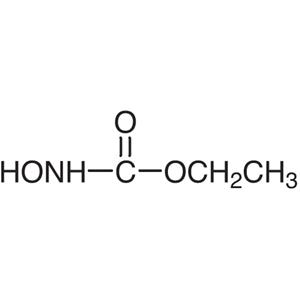
TCI H0618 N-Hydroxyurethane, also known as ethyl N-hydroxycarbamate, is a simple carbamate compound that carries an N–OH group on its nitrogen atom. Despite its compact structure, this small molecule plays a substantial role in organic synthesis laboratories as both a protected nitrogen source and a weakly acidic nucleophile. Researchers use it to introduce a hydroxylamine fragment into target molecules with the ethoxycarbonyl group already installed as a protecting group, so that subsequent reactions can be carried out under controlled conditions before that protecting group is removed at the final stage of the synthesis.
The property that makes this compound a preferred choice is the acidity of its N–OH group, which is sufficient to make it an excellent nucleophilic partner in Mitsunobu reactions. Both primary and secondary alcohols can therefore be converted into N-alkoxy or N-alkyl derivatives with predictable inversion of configuration. At the same time, the carbamate group tempers the excessive reactivity of the nitrogen centre, preventing the polyalkylation that so often complicates work with free amines. The compound also serves as a practical precursor to hydroxamic acids, nitrones, and electrophilic nitrogen transfer reagents. It is supplied as a solid with a low melting point.
In Indonesian laboratories, this building block is typically found in university and institutional organic synthesis groups, in medicinal chemistry and natural product research programmes, and in industrial R&D units that prepare nitrogen-containing intermediates. It is normally handled at the bench scale for multi-step synthetic routes, method development, and the preparation of reference compounds, where a reliably protected hydroxylamine equivalent removes the need to generate such a species in situ from less convenient starting materials.
- Mitsunobu reactions — the acidic N–OH group serves as the pronucleophile, allowing primary and secondary alcohols to be converted with predictable inversion of configuration at the reacting carbon centre.
- Protected hydroxylamine introduction — the ethoxycarbonyl group is already in place, letting chemists carry a masked hydroxylamine fragment through several synthetic steps before deprotecting at the end.
- Hydroxamic acid synthesis — the compound acts as a practical and readily available precursor for preparing hydroxamic acid derivatives in multi-step organic synthesis programmes.
- Nitrone preparation — as a nitrogen–oxygen building block it provides convenient access to nitrone intermediates used in cycloadditions and related bond-forming methodology work.
- Electrophilic nitrogen transfer chemistry — it serves as a precursor to reagents that deliver nitrogen electrophilically, supporting amination strategies where free amines would give unwanted polyalkylation.
| Brand | TCI (Tokyo Chemical Industry) |
|---|---|
| CAS number | 589-41-3 |
| Molecular formula | — |
| Purity | — |
| Category | Chemistry > Building Blocks > Non-Heterocyclic Building Blocks |
| Pack sizes | available in standard TCI research-scale packaging; please confirm the current pack size options when ordering |
| Physical form | solid with a low melting point |
| Storage | keep in a cool, dry place in the tightly closed original container |
- Chemical name: N-Hydroxyurethane (ethyl N-hydroxycarbamate)
Store the container tightly closed in a cool, dry, and well-ventilated area, away from direct sunlight, heat sources, moisture, and incompatible chemicals such as strong oxidising agents. The original supplier packaging is the most suitable container; if transfer is necessary, use clean, dry, chemically compatible glass or plastic vessels that are clearly labelled. Because this is a solid with a low melting point, avoid warm storage locations that could cause caking or partial melting. Handle the material inside a fume hood using standard laboratory personal protective equipment, including safety goggles, a laboratory coat, and suitable chemical-resistant gloves. Avoid generating or inhaling dust, prevent skin and eye contact, and wash hands thoroughly after handling. Always consult the manufacturer's Safety Data Sheet before use and dispose of residues and contaminated materials in accordance with applicable laboratory waste procedures.
—
Produk Terkait
-
Hydroxyurea TCI H0310
Regular price From Rp 1.060.500,00Regular price -
Phenylurethane TCI P1090
Regular price From Rp 557.550,00Regular price -
Phenylurethane TCI P0165
Regular price From Rp 505.050,00Regular price