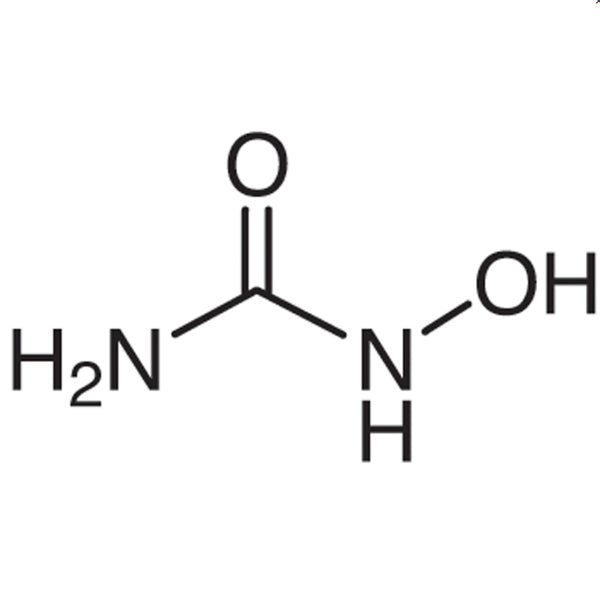
Hydroxyurea is a chemical compound widely used in various chemical experiments, particularly in the synthesis of organic compounds. As a fundamental building block, it plays a crucial role in the development of both heterocyclic and non-heterocyclic structures. Its simple molecular structure supports complex chemical transformations, making it an essential component in laboratory research. Hydroxyurea is valued for its versatility in different chemical reactions, including nucleophilic and electrophilic processes. Its ability to participate in diverse synthetic pathways makes it a go-to material for chemists seeking reliable and effective reagents.
Hydroxyurea is preferred due to its chemical stability under specific conditions and its reactivity in various reaction environments. It exhibits good solubility in organic solvents such as ethylamine and dimethyl sulfoxide, which enhances its usability in synthesis and analytical procedures. The compound’s non-toxic and non-hazardous nature simplifies its handling in laboratory settings, reducing the risk of exposure to harmful substances. These properties make it a safe and efficient choice for both academic and industrial research applications.
In Indonesian laboratories, Hydroxyurea is a highly relevant material, especially in the fields of pure and applied chemistry. It is commonly used in research institutions and universities for experimental purposes, supporting the development of new chemical compounds and processes. Its availability and reliability make it a staple in chemical laboratories across Indonesia, contributing to the advancement of scientific research and education.
- Organic synthesis is a key application where Hydroxyurea is used to build complex molecular structures due to its reactivity and versatility in chemical reactions.
- Analytical chemistry benefits from Hydroxyurea’s solubility in organic solvents, allowing for accurate and efficient sample preparation and analysis.
- Medicinal chemistry research utilizes Hydroxyurea as a building block for the development of pharmaceutical compounds and drug derivatives.
- Teaching laboratories incorporate Hydroxyurea in undergraduate and graduate courses to demonstrate fundamental chemical reactions and synthetic techniques.
- Environmental chemistry studies use Hydroxyurea in the analysis of chemical pollutants and the development of remediation strategies.
| Brand | TCI |
|---|---|
| CAS number | 127-07-1 |
| Molecular formula | — |
| Purity | — |
| Category | Chemistry > Building Blocks > Non-Heterocyclic Building Blocks |
| Pack sizes | Available in various quantities as per standard laboratory requirements |
| Physical form | Solid |
| Storage | Store in a cool, dry place away from direct sunlight and moisture |
Hydroxyurea should be stored in a cool, dry environment to maintain its chemical stability and prevent degradation. It is recommended to use airtight containers to protect it from moisture and contaminants. Since it is non-toxic and non-hazardous, standard laboratory safety protocols are sufficient for handling. However, it is important to ensure proper ventilation when working with it to avoid inhalation of any vapors. The compound’s solubility in organic solvents means that it should be handled with care to prevent accidental spills or contamination. Regular inspection of storage conditions ensures the material remains in optimal condition for use in laboratory experiments.
—
Produk Terkait
-
O-ButylhydroxylamineHydrochloride TCI B5686
Regular price From Rp 1.485.750,00Regular price -
4-Bromo-N-methoxy-N-methylbenzamide TCI B5728
Regular price From Rp 1.670.550,00Regular price -
Bifenazate TCI B6341
Regular price Rp 7.234.500,00Regular price