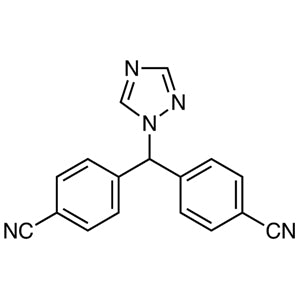
Anastrozole, with CAS number 120511-73-1, is a widely used chemical compound in life science research. It belongs to the category of enzyme inhibitors, specifically aromatase inhibitors, and plays a crucial role in biochemical and pharmacological studies. Aromatase is an enzyme responsible for converting testosterone into estradiol, a key estrogen hormone. Anastrozole functions by inhibiting this enzyme, making it an essential tool in anti-estrogen therapy research. Its ability to selectively block aromatase activity allows for precise control over estrogen levels in experimental settings, supporting a wide range of scientific investigations.
The chemical properties of Anastrozole make it a preferred choice for researchers. Its stable molecular structure enables effective interaction with the aromatase enzyme, ensuring consistent performance in laboratory conditions. The compound's selectivity in inhibiting aromatase reduces unwanted side effects, enhancing its reliability in controlled experiments. Its chemical stability also allows for long-term storage under appropriate conditions, ensuring availability for ongoing research projects. These characteristics contribute to its widespread use in both academic and industrial research environments.
In Indonesian laboratories, Anastrozole is commonly used in studies related to breast cancer, reproductive biology, and metabolic processes. Its role in controlling estrogen levels is vital for understanding hormonal mechanisms and developing targeted therapies. Researchers in Indonesia rely on Anastrozole for its precision and effectiveness, making it a key component in various scientific investigations. Its consistent performance and reliability make it a preferred choice for laboratories seeking accurate and reproducible results.
TCI brochures (PDF)
- Antimicrobials and Antitumor Agents for Research and Experimental Use 2025-04-24 · p. 16
- Pharmaceutical Ingredients for Research and Experimental Use 2026-03-09 · p. 17
- Breast Cancer Research: Anastrozole is used to study estrogen-dependent tumor growth, offering insights into hormonal therapy effectiveness.
- Reproductive Biology Studies: It helps in investigating the role of estrogen in fertility and hormonal regulation.
- Pharmacological Testing: The compound is employed to evaluate the efficacy of anti-estrogen drugs in various experimental models.
- Metabolic Process Analysis: Anastrozole aids in understanding the metabolic pathways involving estrogen and its regulatory enzymes.
- Hormonal Regulation Studies: It is used to explore the impact of estrogen inhibition on physiological functions and disease progression.
| Brand | TCI |
|---|---|
| CAS number | 120511-73-1 |
| Molecular formula | — |
| Purity | — |
| Category | Life Science > Biochemicals and Reagents > Enzymes, Enzyme Inhibitors, Enzyme Substrates |
| Pack sizes | As per supplier specifications |
| Physical form | Solid (as per standard product description) |
| Storage | Store in a cool, dry place away from light |
Anastrozole should be stored in a cool, dry environment, away from direct sunlight and moisture. It is recommended to keep the compound in a sealed container to prevent contamination and maintain its chemical integrity. Proper labeling of storage containers is essential for safe handling and easy identification. Laboratory personnel should wear appropriate personal protective equipment when handling the compound to minimize exposure. Regular monitoring of storage conditions ensures the compound remains stable and effective for research use. Adhering to standard safety protocols is crucial to maintaining a safe and efficient laboratory environment.
—
Product Categories
- Biochemicals and ReagentsEnzymes, Enzyme Inhibitors, Enzyme SubstratesEnzyme Inhibitors [Biochemicals and Reagents]
- Biochemicals and ReagentsPharmaceutical Research Reagents (for Experimental Use)Antitumor Research Reagents (for Experimental Use)
- Biochemicals and Reagents
- Cell BiologyCancer ResearchAntitumor Agents for Research
- Pharmaceutical Development and Drug Discovery ResearchPharmaceutical Research Reagents (for Experimental Use)Antitumor Research Reagents (for Experimental Use)
Produk Terkait
-
Imatinib TCI I0906
Regular price Rp 1.378.650,00Regular priceRp 979.650,00Sale price Rp 1.378.650,00 -
SunitinibMalate TCI U0095
Regular price Rp 3.074.400,00Regular priceRp 2.165.100,00Sale price Rp 3.074.400,00 -
Letrozole TCI L0248
Regular price Rp 4.531.800,00Regular priceRp 3.184.650,00Sale price Rp 4.531.800,00 -
ImatinibMesylate TCI I0936
Regular price Rp 2.173.500,00Regular priceRp 1.535.100,00Sale price Rp 2.173.500,00 -
Etoposide TCI E0675
Regular price Rp 1.087.800,00Regular priceRp 775.950,00Sale price Rp 1.087.800,00 -
TyrphostinAG835 TCI T3540
Regular price Rp 2.068.500,00Regular priceRp 1.461.600,00Sale price Rp 2.068.500,00 -
TyrphostinA1 TCI T3074
Regular price Rp 1.723.050,00Regular priceRp 1.220.100,00Sale price Rp 1.723.050,00 -
TyrphostinAG490 TCI T2962
Regular price Rp 1.431.150,00Regular priceRp 1.016.400,00Sale price Rp 1.431.150,00