

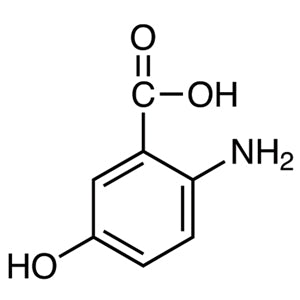
2-Amino-5-hydroxybenzoic Acid is a chemical compound widely used in laboratory settings for its versatile applications in chemical and biochemical research. This compound plays a crucial role in the synthesis of various organic molecules, including peptides and pharmaceutical compounds. Its presence in laboratory experiments allows researchers to explore molecular reactivity and functional group interactions. As a key building block in organic chemistry, it supports the development of new materials and bioactive substances.
The compound's unique molecular structure, featuring both amino and hydroxyl groups, makes it highly reactive and suitable for a range of chemical transformations. These functional groups enable it to participate in reactions such as esterification, amidation, and substitution, making it a preferred choice for synthetic chemists. Its ability to interact with other functional groups enhances its utility in complex chemical processes. Additionally, its stability under certain conditions ensures reliable performance in long-term experiments.
In Indonesian laboratories, 2-Amino-5-hydroxybenzoic Acid is commonly used in biochemical and pharmacological research. It is a staple in academic and research institutions, supporting studies on biological activity and drug development. Its availability through AMI Scientific ensures that researchers have access to this essential compound for their experiments. Its role in organic synthesis and functional group chemistry makes it a valuable resource for scientific inquiry.
Related TCI products
- Biochemical research utilizes this compound for studying molecular interactions and enzyme activity due to its functional group versatility.
- Pharmaceutical development benefits from its role in synthesizing bioactive compounds and drug precursors through its reactive amino and hydroxyl groups.
- Organic chemistry experiments rely on its ability to participate in esterification and amidation reactions, supporting the creation of complex molecules.
- Peptide chemistry applications leverage its structural compatibility with amino acid residues, aiding in the synthesis of peptide chains.
- Analytical chemistry uses it as a reference standard for identifying and quantifying similar compounds in complex mixtures.
| Brand | TCI |
|---|---|
| CAS number | 394-31-0 |
| Molecular formula | — |
| Purity | — |
| Category | Chemistry > Chemical Biology > Peptide Chemistry |
| Pack sizes | Available in standard laboratory quantities |
| Physical form | Solid powder |
| Storage | Store in a cool, dry place away from light |
This compound should be stored in a cool, dry environment, away from direct light to maintain its stability and prevent degradation. It is recommended to use airtight containers to minimize exposure to moisture and air, which could affect its chemical integrity. As a reactive compound, it should be handled with care in a well-ventilated area to avoid inhalation of vapors. Proper personal protective equipment, such as gloves and safety goggles, should be worn during handling. While it is generally stable under normal storage conditions, it is important to avoid contact with strong acids or bases to prevent unwanted chemical reactions. Its use in laboratory settings requires adherence to standard safety protocols to ensure safe and effective experimentation.
—
Product Categories
Produk Terkait
-
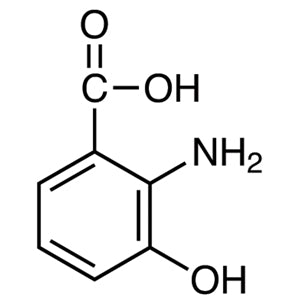
2-Amino-3-hydroxybenzoicAcid TCI A0316
Regular price From Rp 3.260.250,00Regular price -
4-Amino-3-hydroxybenzoicAcid TCI A1194
Regular price From Rp 1.298.850,00Regular price -
3-Amino-4-hydroxybenzoicAcid TCI A0859
Regular price From Rp 1.485.750,00Regular price -
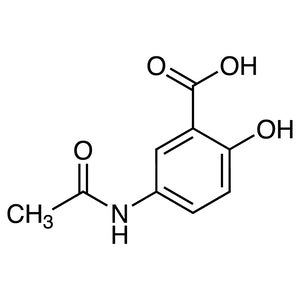
5-Acetamido-2-hydroxybenzoicAcid TCI A3540
Regular price Rp 4.559.100,00Regular price -
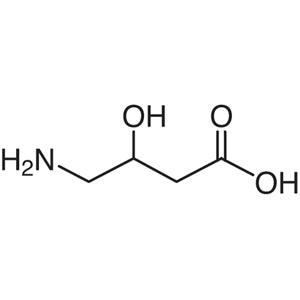
4-Amino-3-hydroxybutyricAcid TCI A0318
Regular price From Rp 1.115.100,00Regular price -
DL-2-Amino-n-octanoicAcid TCI A0382
Regular price From Rp 2.279.550,00Regular price -
(1R,2S)-1-[(tert-Butoxycarbonyl)amino]-2-vinylcyclopropanecarboxylicAcid TCI B5322
Regular price From Rp 637.350,00Regular price -
1-[(tert-Butoxycarbonyl)amino]cyclopropanecarboxylicAcid TCI B3138
Regular price From Rp 3.155.250,00Regular price



![159622-10-3 (1R,2S)-1-[(tert-Butoxycarbonyl)amino]-2-vinylcyclopropanecarboxylic Acid - AMI Scientific](http://amiscientific.com/cdn/shop/files/TCI2510B5322_7b687177-5993-48bc-b732-b8687acd11a9.jpg?v=1767861556&width=533)
![88950-64-5 1-[(tert-Butoxycarbonyl)amino]cyclopropanecarboxylic Acid - AMI Scientific](http://amiscientific.com/cdn/shop/files/TCI2510B3138_3da4dad5-c988-4e8e-86d8-9751f23eec24.jpg?v=1767431495&width=533)