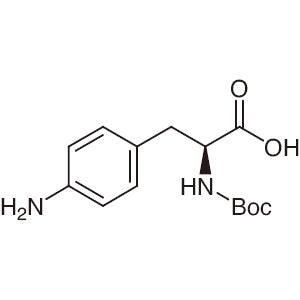
(1R,2S)-1-[(tert-Butoxycarbonyl)amino]-2-vinylcyclopropanecarboxylic Acid is a specialized organic compound used in chemical and biochemical research. This compound is essential in peptide chemistry and the synthesis of complex biological molecules. Its unique structure, combining a cyclopropane ring with an amino group, makes it a valuable reagent in organic synthesis. It is widely used in laboratories for its ability to participate in various chemical reactions, particularly those involving bond formation. Due to its structural complexity, it plays a critical role in the development of new pharmaceuticals and bioactive compounds.
This compound is preferred for its chemical stability under controlled conditions and its reactivity in forming new bonds. Its ability to undergo selective chemical transformations makes it ideal for applications requiring precision and control. The presence of the tert-butoxycarbonyl group adds to its utility, as it can be selectively removed during synthetic processes. These properties make it a popular choice among researchers working on advanced chemical and biochemical projects.
In Indonesian laboratories, this compound is commonly used in pure and applied chemistry research. It is frequently employed in academic institutions and research centers for experiments related to organic synthesis and biochemical processes. Its role in developing new compounds and understanding reaction mechanisms makes it a key reagent in both educational and industrial research settings.
TCI brochures (PDF)
- Amino Acids and Peptide Synthesis Reagents 2025-08-14 · p. 15
Related TCI products
- TCI B3138 88950-64-5 1-[(tert-Butoxycarbonyl)amino]cyclopropanecarboxylic Acid
- TCI A2131 55533-24-9 4-Amino-N-(tert-butoxycarbonyl)-L-phenylalanine
- TCI B6437 115951-16-1 1-[(tert-Butoxycarbonyl)amino]cyclohexanecarboxylic Acid
- TCI B5350 68856-96-2 N-(tert-Butoxycarbonyl)-4-methoxy-D-phenylalanine
- TCI B5011 85466-66-6 N-(tert-Butoxycarbonyl)-N-methyl-D-phenylalanine
- TCI B4877 131724-45-3 N-(tert-Butoxycarbonyl)-4-cyano-L-phenylalanine
- Peptide Synthesis: This compound is ideal for synthesizing peptides due to its amino group and cyclopropane structure, enabling precise bond formation in complex molecular structures.
- Biochemical Research: It is used in studies involving biological molecules, where its reactivity and structural features contribute to the development of new therapeutic agents.
- Organic Reaction Studies: Its ability to participate in various chemical reactions makes it suitable for investigating reaction mechanisms and reactivity in organic chemistry.
- Drug Development: The compound's structural versatility supports its use in the creation of novel pharmaceutical compounds, particularly in the early stages of drug discovery.
- Analytical Chemistry: It is employed in analytical techniques to study molecular interactions and reaction pathways, offering insights into chemical behavior under different conditions.
| Brand | TCI |
|---|---|
| CAS number | 159622-10-3 |
| Molecular formula | — |
| Purity | — |
| Category | Chemistry > Chemical Biology > Peptide Chemistry |
| Pack sizes | Available in various quantities as per supplier specifications |
| Physical form | Solid |
| Storage | Store in a cool, dry place away from moisture and air exposure |
This compound should be stored in a cool, dry environment to maintain its chemical stability. It is recommended to use airtight containers to prevent moisture and air exposure, which can affect its reactivity. Due to its sensitivity, it should be handled in a controlled laboratory setting with proper ventilation. Researchers should wear appropriate personal protective equipment, including gloves and safety goggles, when working with this compound. It is important to avoid prolonged exposure and ensure that storage conditions are consistent with standard chemical safety protocols. Proper labeling and storage practices help minimize risks and ensure the compound remains effective for research applications.
—
Product Categories
- Chemical BiologyPeptide ChemistryAmino Acid Derivatives [Peptide Chemistry]
- Chemical BiologyPeptide ChemistryUnnatural Amino Acid Derivatives
- Pharmaceutical Development and Drug Discovery Research ReagentsPeptide ChemistryAmino Acid Derivatives [Peptide Chemistry]
- Pharmaceutical Development and Drug Discovery Research ReagentsPeptide ChemistryUnnatural Amino Acid Derivatives
- Pharmaceutical Development and Drug Discovery Research ReagentsBuilding Blocks for Pharmaceutical Ingredients (for Research and Experimental Use)
- Biochemicals and ReagentsAmino AcidsN-Protected Amino Acids
- Pharmaceutical Development and Drug Discovery ResearchPeptide ChemistryAmino Acid Derivatives [Peptide Chemistry]
- Pharmaceutical Development and Drug Discovery ResearchPeptide ChemistryUnnatural Amino Acid Derivatives
- Pharmaceutical Development and Drug Discovery ResearchBuilding Blocks for Pharmaceutical Ingredients (for Research and Experimental Use)
Produk Terkait
-
1-[(tert-Butoxycarbonyl)amino]cyclopropanecarboxylicAcid TCI B3138
Regular price From Rp 3.207.750,00Regular priceRp 2.258.550,00Sale price From Rp 3.207.750,00 -
4-Amino-N-(tert-butoxycarbonyl)-L-phenylalanine TCI A2131
Regular price From Rp 2.147.250,00Regular priceRp 1.517.250,00Sale price From Rp 2.147.250,00 -
1-[(tert-Butoxycarbonyl)amino]cyclohexanecarboxylicAcid TCI B6437
Regular price From Rp 1.881.600,00Regular priceRp 1.331.400,00Sale price From Rp 1.881.600,00 -
N-(tert-Butoxycarbonyl)-4-methoxy-D-phenylalanine TCI B5350
Regular price From Rp 1.723.050,00Regular priceRp 1.220.100,00Sale price From Rp 1.723.050,00 -
N-(tert-Butoxycarbonyl)-N-methyl-D-phenylalanine TCI B5011
Regular price From Rp 1.643.250,00Regular priceRp 1.164.450,00Sale price From Rp 1.643.250,00 -
N-(tert-Butoxycarbonyl)-4-cyano-L-phenylalanine TCI B4877
Regular price From Rp 2.518.950,00Regular priceRp 1.776.600,00Sale price From Rp 2.518.950,00 -
N-(tert-Butoxycarbonyl)-4-trifluoromethyl-L-phenylalanine TCI B4369
Regular price Rp 6.306.300,00Regular priceRp 4.425.750,00Sale price Rp 6.306.300,00 -
N-(tert-Butoxycarbonyl)-L-homophenylalanine TCI B4356
Regular price Rp 717.150,00Regular priceRp 516.600,00Sale price Rp 717.150,00