

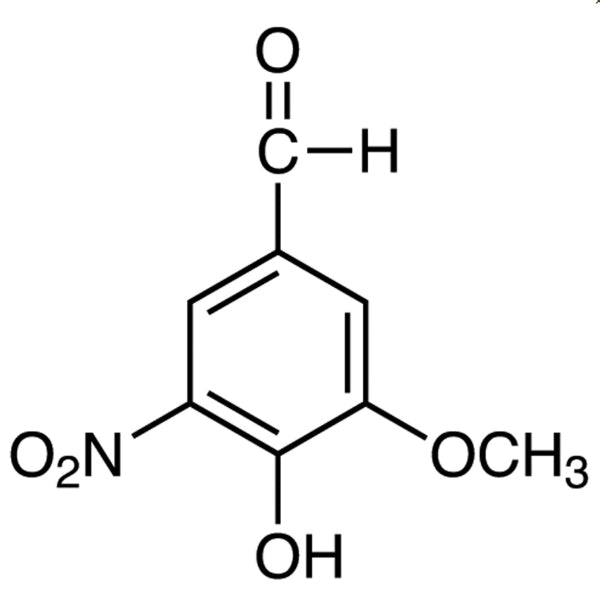
5-Nitrovanillin is a chemical compound widely used as a foundational material in various chemical reactions and organic synthesis processes. It plays a crucial role in laboratory settings, serving as a key precursor for the development of other compounds with diverse applications. This compound is particularly valuable in the synthesis of pharmaceuticals, industrial chemicals, and research materials due to its reactivity and versatility. Its ability to participate in multiple reaction types makes it indispensable for chemists and researchers working on complex molecular structures.
The compound’s stable chemical structure and high reactivity contribute to its popularity among researchers. These properties allow it to be effectively used in substitution, reduction, and oxidation reactions, making it a preferred choice for those seeking a reliable and adaptable building block. Its chemical stability ensures consistent performance across different experimental conditions, while its reactivity supports the development of a wide range of chemical products. These characteristics make it a go-to material for both academic and industrial research environments.
In Indonesian laboratories, 5-Nitrovanillin is commonly utilized in chemical and pharmaceutical research. It is frequently employed in the development of pharmaceutical compounds, cosmetic ingredients, and industrial chemicals. Its availability and competitive pricing make it a favored choice for institutions and research facilities in Indonesia. The compound’s broad applicability and reliability further enhance its value in various scientific applications.
- Organic synthesis is a primary application where 5-Nitrovanillin is used to build complex molecular structures due to its reactivity and chemical stability.
- Pharmaceutical research benefits from this compound as it serves as a precursor in the development of various medicinal compounds.
- Industrial chemical production relies on 5-Nitrovanillin for the creation of diverse chemical products used in multiple industries.
- Cosmetic formulation includes this compound as a key ingredient in the development of skincare and personal care products.
- Academic research utilizes 5-Nitrovanillin for teaching and experimental purposes, supporting both undergraduate and postgraduate studies.
| Brand | TCI |
|---|---|
| CAS number | 6635-20-7 |
| Molecular formula | — |
| Purity | — |
| Category | Chemistry > Building Blocks > Non-Heterocyclic Building Blocks |
| Pack sizes | Available in various quantities to suit different laboratory needs |
| Physical form | Solid |
| Storage | Store in a cool, dry place away from light and moisture |
5-Nitrovanillin should be stored in a cool, dry environment, away from direct sunlight and moisture to maintain its chemical stability. It is recommended to use airtight containers to prevent exposure to humidity and air, which could affect its reactivity. Proper labeling of storage containers is essential for safety and identification purposes. In laboratory settings, it is important to handle the compound with care, using appropriate personal protective equipment such as gloves and safety goggles. Avoiding contact with skin and inhalation of vapors is crucial for maintaining a safe working environment. Regular monitoring of storage conditions ensures that the compound remains in optimal condition for use in research and industrial applications.
—
Produk Terkait
-
Isovanillin TCI H0263
Regular price From Rp 1.485.750,00Regular price -
5-Iodovanillin TCI I0427
Regular price From Rp 875.700,00Regular price -
5-Bromovanillin TCI B1172
Regular price From Rp 505.050,00Regular price -
IsovanillicAcid TCI I0295
Regular price From Rp 875.700,00Regular price


