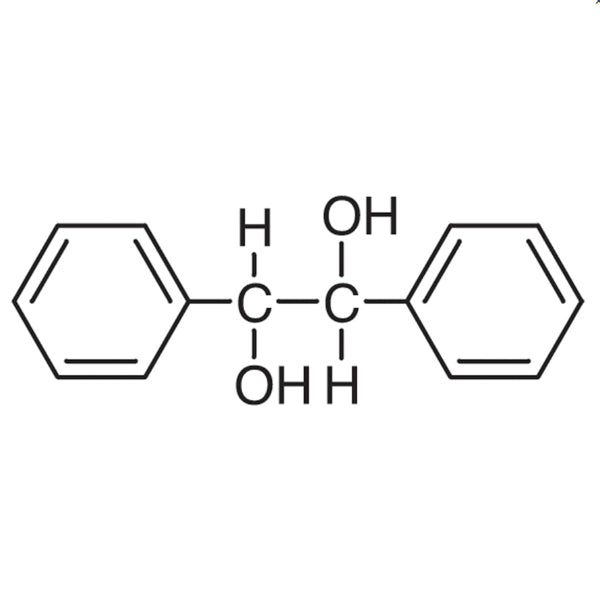
(+/-)-Hydrobenzoin (CAS 655-48-1) from TCI is 1,2-diphenyl-1,2-ethanediol supplied in racemic form, meaning an equimolar mixture of the (R,R) and (S,S) enantiomer pair. The compound carries two adjacent stereogenic centres, each bearing a phenyl group and a hydroxyl group, which together form the C2-symmetric framework so highly valued in organic chemistry. In the laboratory, hydrobenzoin serves as a synthetic intermediate, as a chiral auxiliary, and at the same time as a classic model compound for teaching and investigating the stereochemistry of vicinal diols. Pack sizes of 1 g and 5 g suit research-scale synthetic work.
The properties that make this material a preferred choice begin with the C2 symmetry of the (R,R)/(S,S) diastereomer, which simplifies the chiral environment surrounding the reaction centre so that ligands or auxiliaries derived from it deliver selectivity that is easier to predict. The two vicinal hydroxyl groups are readily converted into acetals, borate esters, phosphites, or cyclic ethers, opening routes to a broad range of ligands for catalysis. The presence of two phenyl rings contributes conformational rigidity and steric density that prove useful in controlling the spatial course of a reaction. As a racemic form, the compound is also an appropriate material for resolution and analytical method work.
In Indonesian laboratories, this building block fits naturally into organic synthesis and stereochemistry research at universities, research institutes, and industrial R&D groups. The gram-scale packaging matches method development, ligand preparation, and repeated small-batch experiments rather than production work. It is equally at home in advanced teaching laboratories, where a racemic vicinal diol gives students a tangible example of diastereomers, chiral symmetry, and the practical behaviour of stereoisomers during separation and characterisation.
Related TCI products
- Chiral auxiliary preparation — the C2-symmetric diol framework simplifies the chiral environment around a reacting centre, making the stereochemical outcome of auxiliary-directed transformations easier to predict and rationalise.
- Ligand synthesis for catalysis — the two vicinal hydroxyl groups convert readily into borate esters, phosphites, or cyclic ethers, giving access to a diverse family of ligands from a single starting material.
- Acetal and cyclic protecting-group chemistry — the 1,2-diol motif forms acetals with carbonyl partners, allowing carbonyl groups to be masked and later released during multi-step synthetic sequences.
- Synthetic intermediate in multi-step organic synthesis — the diphenyl ethanediol skeleton provides a rigid, sterically defined core that can be elaborated further in research-scale building-block chemistry.
- Stereochemistry teaching and research model — as a classic racemic vicinal diol, it demonstrates adjacent stereogenic centres, diastereomer relationships, and resolution principles in both instructional and method-development settings.
| Brand | TCI |
|---|---|
| CAS number | 655-48-1 |
| Molecular formula | — |
| Purity | — |
| Category | Chemistry > Building Blocks > Non-Heterocyclic Building Blocks |
| Pack sizes | 1 g and 5 g |
| Physical form | — |
| Storage | keep in the original tightly closed container under the conditions stated on the manufacturer's label and safety data sheet |
- Chemical identity: 1,2-diphenyl-1,2-ethanediol, racemic mixture of (R,R) and (S,S) enantiomers
Store the material in its original tightly closed container, kept dry and protected from moisture, direct sunlight, and sources of heat, following the conditions specified on the manufacturer's label and safety data sheet. Amber glass or the supplied container is suitable for gram-scale quantities; transfer portions using clean, dry spatulas to avoid contamination of the stock. Handle the compound in a well-ventilated area or fume hood, wearing safety glasses, gloves, and a laboratory coat, and avoid generating or inhaling dust. Reseal the container promptly after weighing, label any subdivided portions clearly, and dispose of residues and contaminated materials in accordance with institutional chemical waste procedures.
—
Produk Terkait
-
meso-Hydrobenzoin TCI H0816
Regular price From Rp 1.856.400,00Regular price -
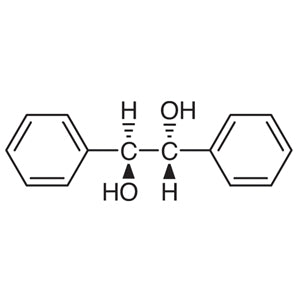
(S,S)-(-)-Hydrobenzoin TCI H0824
Regular price From Rp 2.969.400,00Regular price -
(R,R)-(+)-Hydrobenzoin TCI H0818
Regular price From Rp 1.326.150,00Regular price -
5-Bromo-2,3-dihydrobenzofuran TCI B4318
Regular price Rp 1.803.900,00Regular price -
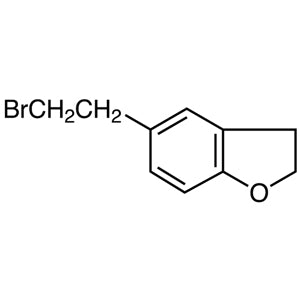
5-(2-Bromoethyl)-2,3-dihydrobenzofuran TCI B4066
Regular price From Rp 2.597.700,00Regular price -
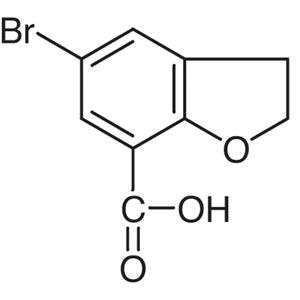
5-Bromo-2,3-dihydrobenzofuran-7-carboxylicAcid TCI B1705
Regular price From Rp 2.147.250,00Regular price -
2-Amino-4,5,6,7-tetrahydrobenzo[b]thiophene-3-carbonitrile TCI A3580
Regular price From Rp 3.155.250,00Regular price -
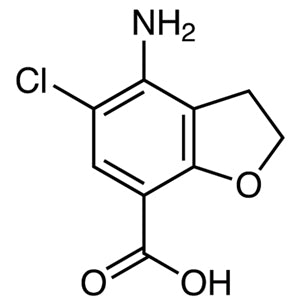
4-Amino-5-chloro-2,3-dihydrobenzofuran-7-carboxylicAcid TCI A2918
Regular price From Rp 1.353.450,00Regular price


![4651-91-6 2-Amino-4,5,6,7-tetrahydrobenzo[b]thiophene-3-carbonitrile - AMI Scientific](http://amiscientific.com/cdn/shop/files/TCI2510A3580.jpg?v=1767084527&width=533)