5-(2-Bromoethyl)-2,3-dihydrobenzofuran is a chemical compound widely used in organic reactions for the synthesis of complex heterocyclic compounds. As a building block in chemical research, it serves as a fundamental component in the development of new molecular structures. This compound is particularly valuable in laboratory settings where the creation of intricate chemical frameworks is required. Its unique molecular structure, featuring a bromoethyl group and a benzofuran ring, makes it a versatile reagent in synthetic chemistry.
The compound’s high reactivity and the presence of the bromo group make it a preferred choice for nucleophilic substitution reactions and coupling reactions. Its ability to participate in various reaction mechanisms allows chemists to design and synthesize a wide range of functional molecules. The bromoethyl substitution enhances its utility in synthetic pathways, offering multiple reaction sites for further modification. These properties make it an essential tool in both academic and industrial research environments.
In Indonesian laboratories, this compound is commonly used by researchers and educational institutions for organic chemistry studies, new compound development, and molecular structure analysis. Its role in creating complex chemical structures is critical for advancing research in pharmaceuticals, industrial chemicals, and functional materials. The demand for such reactive and structurally diverse compounds continues to grow, making it a key reagent in modern chemical synthesis.
Related TCI products
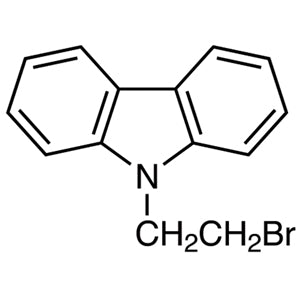
- TCI B5182 75620-93-8 9-(2-Bromoethyl)carbazole
- TCI B4318 66826-78-6 5-Bromo-2,3-dihydrobenzofuran
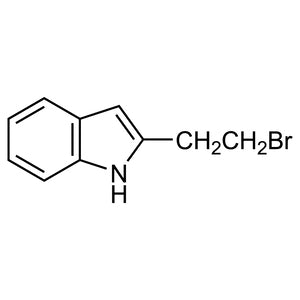
- TCI B2563 3389-21-7 3-(2-Bromoethyl)-1H-indole
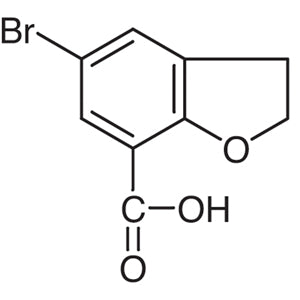
- TCI B1705 41177-72-4 5-Bromo-2,3-dihydrobenzofuran-7-carboxylic Acid
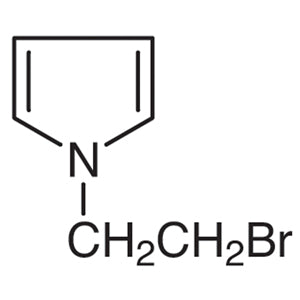
- TCI B1622 78358-86-8 1-(2-Bromoethyl)pyrrole
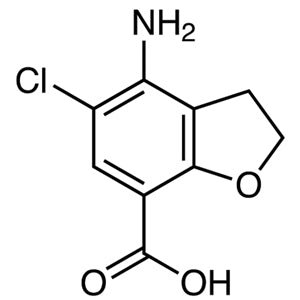
- TCI A2918 123654-26-2 4-Amino-5-chloro-2,3-dihydrobenzofuran-7-carboxylic Acid
- Organic synthesis of complex heterocyclic compounds due to its reactive bromoethyl group and benzofuran ring.
- Nucleophilic substitution reactions as a good substrate for substitution at the bromoethyl position.
- Coupling reactions to form new carbon-carbon bonds in the development of functional molecules.
- Structural studies of molecular frameworks in academic and industrial research settings.
- Development of pharmaceuticals and industrial chemicals through synthetic pathways involving this compound.
| Brand | TCI |
|---|---|
| CAS number | 127264-14-6 |
| Molecular formula | — |
| Purity | — |
| Category | Chemistry > Building Blocks > Heterocyclic Building Blocks |
| Pack sizes | Available in standard laboratory quantities as per supplier specifications |
| Physical form | Solid or liquid, depending on supplier packaging |
| Storage | Store in a cool, dry place away from light and incompatible materials |
This compound should be stored in a cool, dry environment, away from direct sunlight and sources of heat. It is recommended to use sealed containers to prevent exposure to moisture and air, which may affect its stability. Due to its bromoethyl group, it may react with certain substances, so it should be kept separate from strong bases, oxidizing agents, and other reactive materials. Proper personal protective equipment, such as gloves and safety goggles, should be worn when handling. In laboratory settings, it is important to ensure good ventilation and to follow standard chemical safety protocols to minimize risks.
—
Produk Terkait
-
9-(2-Bromoethyl)carbazole TCI B5182
Regular price From Rp 2.730.000,00Regular priceRp 1.924.650,00Sale price From Rp 2.730.000,00 -
5-Bromo-2,3-dihydrobenzofuran TCI B4318
Regular price Rp 1.856.400,00Regular priceRp 1.313.550,00Sale price Rp 1.856.400,00 -
3-(2-Bromoethyl)-1H-indole TCI B2563
Regular price Rp 2.439.150,00Regular priceRp 1.720.950,00Sale price Rp 2.439.150,00 -
5-Bromo-2,3-dihydrobenzofuran-7-carboxylicAcid TCI B1705
Regular price From Rp 2.199.750,00Regular priceRp 1.554.000,00Sale price From Rp 2.199.750,00 -
1-(2-Bromoethyl)pyrrole TCI B1622
Regular price From Rp 2.306.850,00Regular priceRp 1.628.550,00Sale price From Rp 2.306.850,00 -
4-Amino-5-chloro-2,3-dihydrobenzofuran-7-carboxylicAcid TCI A2918
Regular price From Rp 1.405.950,00Regular priceRp 998.550,00Sale price From Rp 1.405.950,00 -
5,7-Dibromo-2,3-dihydrobenzofuran TCI D2336
Regular price Rp 2.121.000,00Regular priceRp 1.498.350,00Sale price Rp 2.121.000,00 -
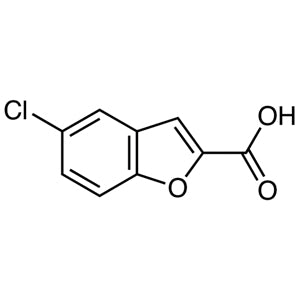
5-Chlorobenzofuran-2-carboxylicAcid TCI C2890
Regular price Rp 2.359.350,00Regular priceRp 1.665.300,00Sale price Rp 2.359.350,00