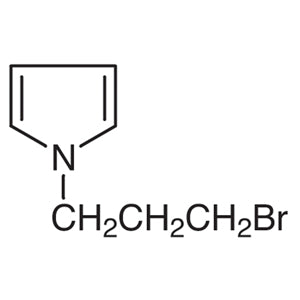
1-(2-Bromoethyl)pyrrole is a chemical compound widely used in organic reactions for the synthesis of heterocyclic compounds. As a key building block in organic chemistry, it plays a vital role in the development of complex molecules with specific biological activities. This compound is essential in the creation of pharmaceuticals, industrial chemicals, and other heterocyclic derivatives. Its unique molecular structure, featuring a pyrrole ring with a bromoethyl group attached to the nitrogen atom, makes it highly reactive and versatile for various synthetic applications.
The compound’s reactivity and stability under controlled conditions make it a preferred choice for laboratory use. Its ability to participate in substitution, addition, and ring-opening reactions allows chemists to design and synthesize a wide range of compounds. The stability of 1-(2-Bromoethyl)pyrrole in specific environments ensures that it remains effective during synthesis processes without degrading easily. These properties make it a reliable and efficient tool for researchers working on complex chemical structures.
In Indonesian laboratories, 1-(2-Bromoethyl)pyrrole is commonly used in chemical research, particularly in the synthesis of heterocyclic compounds and the development of new chemical materials. Its reactivity makes it valuable in pharmacology and biochemistry studies, where understanding the mechanisms of biological activity is crucial. The compound is a fundamental component in the pursuit of scientific innovation and discovery in the field of organic chemistry.
Related TCI products
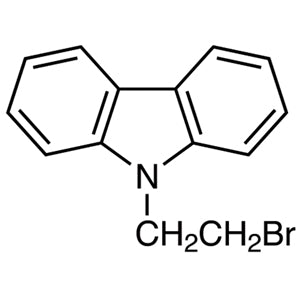
- TCI B5182 75620-93-8 9-(2-Bromoethyl)carbazole
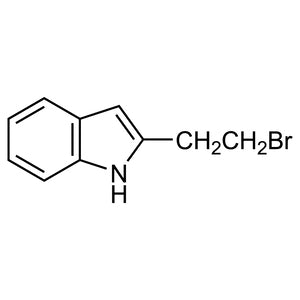
- TCI B2563 3389-21-7 3-(2-Bromoethyl)-1H-indole
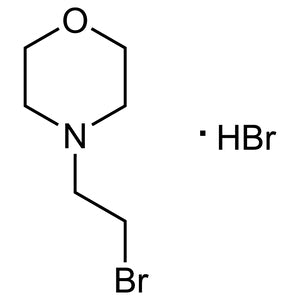
- TCI B6869 42802-94-8 4-(2-Bromoethyl)morpholine Hydrobromide
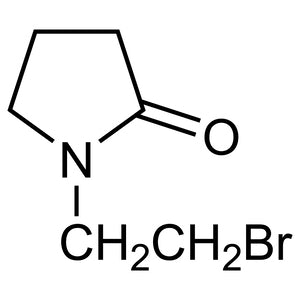
- TCI B6805 117018-99-2 1-(2-Bromoethyl)pyrrolidin-2-one
- TCI T1619 35302-72-8 2-(Trichloroacetyl)pyrrole
- TCI B1899 87630-36-2 3-Bromo-1-(triisopropylsilyl)pyrrole
- Organic synthesis of heterocyclic compounds due to its reactivity and structural versatility.
- Development of pharmaceuticals and industrial chemicals as a key building block in complex molecule synthesis.
- Research in pharmacology for studying the mechanisms of biological activity in drug development.
- Biochemical studies to understand the behavior of reactive intermediates in metabolic pathways.
- Synthesis of new chemical materials for applications in polymer science and material engineering.
| Brand | TCI |
|---|---|
| CAS number | 78358-86-8 |
| Molecular formula | — |
| Purity | — |
| Category | Chemistry > Building Blocks > Heterocyclic Building Blocks |
| Pack sizes | Available in standard laboratory quantities as per supplier specifications |
| Physical form | Liquid |
| Storage | Store in a cool, dry place away from light and incompatible substances |
This compound should be stored in a cool, dry environment, away from direct sunlight and sources of heat. It is recommended to use airtight containers made of glass or polyethylene to prevent contamination and maintain stability. Due to its reactivity, it should be handled in a well-ventilated area, preferably under a fume hood, to minimize exposure. Avoid contact with moisture and incompatible chemicals such as strong oxidizing agents. Always use appropriate personal protective equipment, including gloves and safety goggles, when handling this material. Regular monitoring of storage conditions is essential to ensure the compound remains effective for laboratory use.
—
Produk Terkait
-
9-(2-Bromoethyl)carbazole TCI B5182
Regular price From Rp 2.730.000,00Regular priceRp 1.924.650,00Sale price From Rp 2.730.000,00 -
3-(2-Bromoethyl)-1H-indole TCI B2563
Regular price Rp 2.439.150,00Regular priceRp 1.720.950,00Sale price Rp 2.439.150,00 -
4-(2-Bromoethyl)morpholineHydrobromide TCI B6869
Regular price Rp 1.988.700,00Regular priceRp 1.405.950,00Sale price Rp 1.988.700,00 -
1-(2-Bromoethyl)pyrrolidin-2-one TCI B6805
Regular price From Rp 3.207.750,00Regular priceRp 2.258.550,00Sale price From Rp 3.207.750,00 -
2-(Trichloroacetyl)pyrrole TCI T1619
Regular price From Rp 822.150,00Regular priceRp 590.100,00Sale price From Rp 822.150,00 -
3-Bromo-1-(triisopropylsilyl)pyrrole TCI B1899
Regular price From Rp 2.491.650,00Regular priceRp 1.757.700,00Sale price From Rp 2.491.650,00 -
1-(3-Bromopropyl)pyrrole TCI B1623
Regular price From Rp 5.062.050,00Regular priceRp 3.555.300,00Sale price From Rp 5.062.050,00