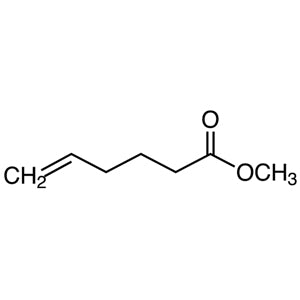
TCI H0872 Methyl 5-Hexenoate is the methyl ester of a six-carbon carboxylic acid carrying a terminal double bond at the end of its chain. This simple yet bifunctional structure makes it one of the most frequently used aliphatic building blocks in organic synthesis laboratories. With an ester group at one end of the molecule and a terminal alkene at the other, researchers can carry out transformations on each side of the molecule separately. For this reason the compound is often employed as a chain linker in the construction of larger target molecules.
The property that makes this material so sought after is the high reactivity of its terminal alkene toward a wide range of modern reactions, including olefin metathesis, hydroformylation, hydroboration, epoxidation, and thiol-ene addition. Terminal alkenes generally react faster and more selectively than internal alkenes, so reaction outcomes are easier to control. The ester group, meanwhile, remains relatively inert under many of those same reaction conditions, yet it can still be hydrolysed, reduced to an alcohol, or converted into an amide whenever required. This combination of stability and directed reactivity is what makes synthetic planning around this building block straightforward.
In Indonesian laboratories, this reagent is typically found in organic synthesis and medicinal chemistry research groups at universities and research institutes, as well as in industrial R&D units that develop fine chemicals and specialty intermediates. It is generally used at bench scale for route development and method exploration, where a reliable, well-defined bifunctional starting material shortens the path from a planned synthetic route to an isolated intermediate.
- Olefin metathesis research — the terminal alkene participates readily in cross and ring-closing metathesis, allowing chains to be joined or cyclised while the ester group survives the reaction intact.
- Hydroformylation and hydroboration studies — the terminal position of the double bond gives clearer regiochemical outcomes than internal alkenes, making this ester a convenient substrate for catalyst and selectivity screening work.
- Thiol-ene click chemistry — the unhindered terminal alkene couples efficiently with thiols, giving laboratories a direct route to sulfur-linked chain extensions from an inexpensive, well-defined starting material.
- Epoxidation and downstream ring-opening work — oxidation of the terminal alkene delivers a terminal epoxide handle that can then be opened by nucleophiles, with the ester retained for later modification.
- Multi-step target synthesis as a chain linker — the two independently addressable ends let chemists build a larger molecule stepwise, converting the ester to an alcohol or amide only at the desired stage.
| Brand | TCI (Tokyo Chemical Industry) |
|---|---|
| CAS number | 2396-80-7 |
| Molecular formula | — |
| Purity | — |
| Category | Chemistry > Building Blocks > Non-Heterocyclic Building Blocks |
| Pack sizes | available in the standard TCI catalogue pack sizes for this item |
| Physical form | — |
| Storage | keep in a cool, dark place in a tightly sealed container |
- Catalogue code: H0872
Store the product in a cool, dark, and well-ventilated area, tightly closed in its original supplier container to limit exposure to air and moisture. As with other unsaturated esters, prolonged contact with air and light should be avoided, so bottles are best resealed promptly after each withdrawal. Handle in a fume hood using nitrile gloves, safety goggles, and a laboratory coat, and keep the material away from open flames, ignition sources, and strong oxidising agents. Transfer with clean, dry glassware, and always consult the manufacturer's safety data sheet before first use and before scaling up any procedure.
—
Produk Terkait
-
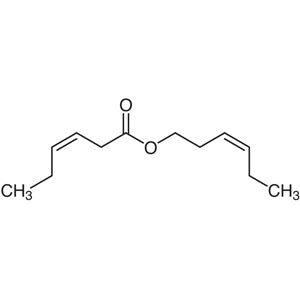
cis-3-Hexenylcis-3-Hexenoate TCI H0677
Regular price Rp 717.150,00Regular price -
Ethyltrans-2-Hexenoate TCI E0787
Regular price Rp 2.730.000,00Regular price