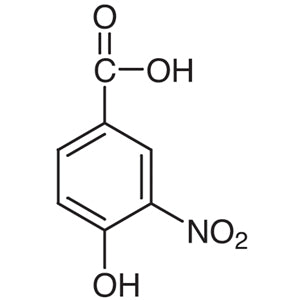
TCI H0910 4-Hydroxy-3-nitrobenzoic Acid is a substituted benzoic acid that carries both a hydroxyl group and a nitro group on the same aromatic ring, positioned adjacent to one another. This arrangement of three functional groups with distinctly different electronic characters produces a small molecule with rich yet predictable reactivity. In the laboratory, the compound is widely used as a synthetic starting material, as a hapten precursor in immunology research, and as a building block for dyes and light-absorbing compounds, because the nitro and hydroxyl groups together form a strong chromophore system.
The characteristic that makes this compound a preferred choice is the differing reactivity of its three groups. The carboxylic acid group is readily activated into an active ester, acid chloride, or amide, which makes the molecule practical to conjugate onto proteins, resins, and other carrier molecules. The nitro group is a strong electron-withdrawing substituent that increases the acidity of the neighbouring phenol, and it can also be reduced to an amine, opening further synthetic routes toward aminophenol derivatives and heterocyclic systems. The phenolic hydroxyl group itself can be alkylated or protected, giving a tiered flexibility that makes the material versatile across many synthetic plans.
In Indonesian laboratories, this building block is typically found in university and institutional organic synthesis groups, in bioconjugation and immunoassay development work, and in research on dyes and light-absorbing materials. It is normally purchased in research-scale quantities, weighed out on an analytical balance inside a fume hood, and kept in its original container between uses so that the remaining material stays suitable for subsequent reaction steps and derivative preparation.
Related TCI products
- Organic synthesis starting material: the three mutually distinct functional groups allow chemists to plan stepwise, selective transformations toward more elaborate aromatic targets.
- Hapten precursor for immunology research: the carboxylic acid is readily activated and conjugated to carrier proteins, giving a defined small-molecule epitope for antibody work.
- Dye and chromophore building block: the adjacent nitro and hydroxyl groups form a strong light-absorbing system useful in preparing coloured and light-responsive compounds.
- Aminophenol derivative preparation: reduction of the nitro group yields an amine, opening synthetic routes to aminophenol structures and downstream heterocyclic systems.
- Solid-phase and resin conjugation: activation of the carboxylic acid to an active ester or acid chloride permits attachment to resins and other carrier molecules.
| Brand | TCI |
|---|---|
| CAS number | 616-82-0 |
| Molecular formula | — |
| Purity | — |
| Category | Chemistry > Building Blocks > Non-Heterocyclic Building Blocks |
| Pack sizes | available in standard research-scale packs as offered by the manufacturer |
| Physical form | solid organic compound |
| Storage | keep in the tightly closed original container, protected from light and moisture |
Store the material in its original tightly closed container in a cool, dry place away from direct sunlight, moisture, and sources of heat or ignition. Amber glass or the supplier's own container is suitable, and the cap should be re-sealed immediately after each weighing to limit moisture uptake. Handle the solid inside a fume hood while wearing safety goggles, gloves, and a laboratory coat, and avoid generating or inhaling dust. As an acidic nitroaromatic compound, it should be kept separate from strong bases and strong reducing agents. Consult the manufacturer's safety data sheet before use and dispose of residues through the laboratory's chemical waste stream.
—
Produk Terkait
-
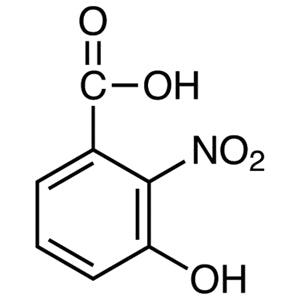
3-Hydroxy-2-nitrobenzoicAcid TCI H1324
Regular price From Rp 1.378.650,00Regular price -
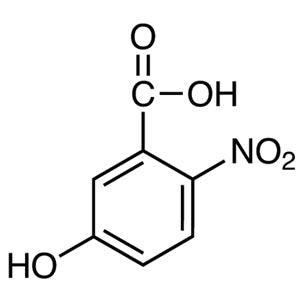
5-Hydroxy-2-nitrobenzoicAcid TCI H1321
Regular price From Rp 1.565.550,00Regular price -
3-Hydroxy-4-nitrobenzoicAcid TCI H0635
Regular price Rp 1.803.900,00Regular price -
3-Bromo-4-nitrobenzoicAcid TCI B4786
Regular price From Rp 1.618.050,00Regular price -
2-Bromo-5-nitrobenzoicAcid TCI B3841
Regular price From Rp 1.565.550,00Regular price -
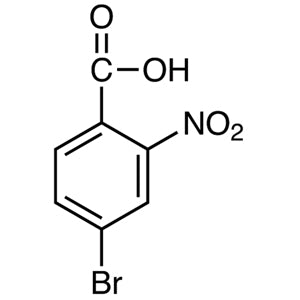
4-Bromo-2-nitrobenzoicAcid TCI B3810
Regular price From Rp 1.298.850,00Regular price -
4-Bromo-3-nitrobenzoicAcid TCI B3689
Regular price Rp 1.829.100,00Regular price -
2-Bromo-4-nitrobenzoicAcid TCI B3607
Regular price From Rp 903.000,00Regular price