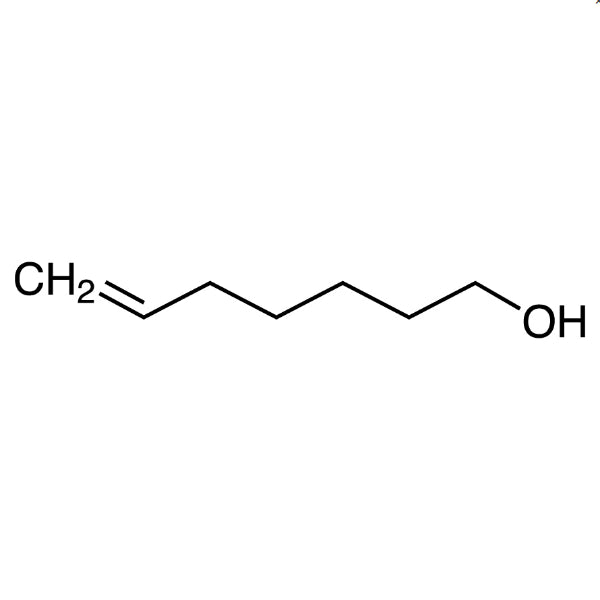
TCI H0949 6-Hepten-1-ol is a straight-chain seven-carbon alcohol carrying a primary hydroxy group at one end and a terminal double bond at the other. This bifunctional structure, with the two groups held well apart along the chain, makes it a highly useful building block in the organic synthesis laboratory, because a researcher can work on one end of the molecule without disturbing the other. The compound is frequently used as a flexible tether for joining two molecular fragments together, as a starting material for the construction of medium-sized rings, and as a test substrate in studies of olefin reaction methodology.
The property that drives its selection is the separation of reactivity between its two functional groups. The primary hydroxy group is readily oxidised to an aldehyde or a carboxylic acid, easily esterified, etherified, or converted into a leaving group for substitution chemistry. The terminal alkene, meanwhile, is well suited to ring-closing metathesis, hydroboration, hydroformylation, epoxidation, and radical addition reactions. Because the two are separated by a sufficiently long methylene chain, a reaction carried out at one group generally does not interfere with the other, so synthetic sequences can be planned in whichever order best suits the target.
In Indonesian laboratories, this material is typically encountered in university and institute research groups working on organic synthesis, natural product chemistry, and reaction methodology, as well as in industrial research units developing fine chemical intermediates. It is generally handled at bench scale for multi-step synthetic routes, method development, and the preparation of reference substrates, where a well-defined bifunctional starting material shortens the route to a target molecule.
TCI brochures (PDF)
- Lipids 2025-12-17 · p. 16
- Ring-closing metathesis studies: the terminal alkene and the distal hydroxy group allow the compound to be converted into dienes that close to medium-sized rings, a common test of catalyst performance.
- Flexible linker synthesis: the seven-carbon chain connects two molecular fragments while keeping them far enough apart for each end to be functionalised independently without cross-reaction.
- Selective oxidation chemistry: the primary hydroxy group can be oxidised to the corresponding aldehyde or carboxylic acid while the terminal olefin is left available for later transformation.
- Hydroboration and hydroformylation work: the unhindered terminal double bond gives clean anti-Markovnikov addition, making it a convenient substrate for developing and benchmarking these reactions.
- Protecting-group and substitution studies: the primary alcohol is readily esterified, etherified, or converted into a leaving group, providing a simple platform for teaching and testing substitution methodology.
| Brand | TCI (Tokyo Chemical Industry) |
|---|---|
| CAS number | 4117-10-6 |
| Molecular formula | — |
| Purity | — |
| Category | Chemistry > Building Blocks > Non-Heterocyclic Building Blocks |
| Pack sizes | supplied in standard TCI research-scale packs; please confirm the available size when ordering |
| Physical form | — |
| Storage | keep in a cool, dark place in a tightly closed container |
- Catalogue number: H0949
Store the container tightly closed in a cool, dark, and well-ventilated place, away from heat sources, open flames, and strong oxidising agents. Amber glass bottles with chemically resistant closures are suitable, and the original manufacturer packaging should be retained wherever possible. Because the material contains a terminal double bond, prolonged exposure to air and light is best avoided; sealing under an inert atmosphere after use helps preserve quality. Handle in a fume hood using safety glasses, gloves, and a laboratory coat, avoid contact with skin and eyes, and consult the manufacturer safety data sheet before use. Dispose of residues and contaminated materials through the laboratory's chemical waste stream.
—
Produk Terkait
-
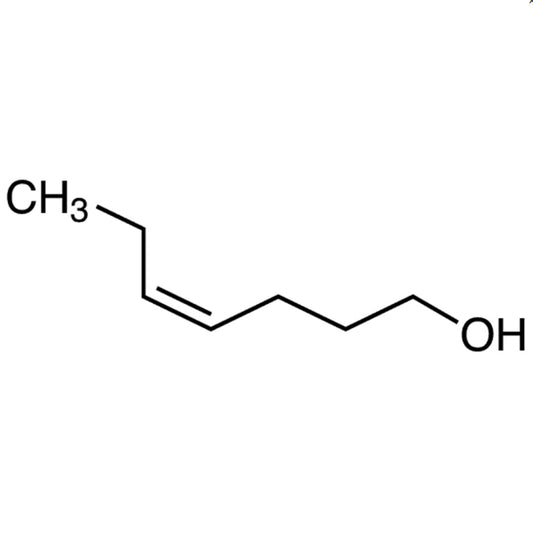
cis-4-Hepten-1-ol TCI H0833
Regular price From Rp 1.856.400,00Regular price -
trans-2-Hepten-1-ol TCI H0682
Regular price Rp 2.466.450,00Regular price -
6-Methyl-5-hepten-2-one TCI M0252
Regular price Rp 637.350,00Regular price -
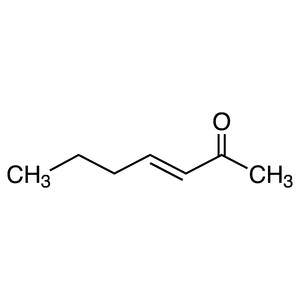
3-Hepten-2-one TCI H0838
Regular price Rp 2.650.200,00Regular price