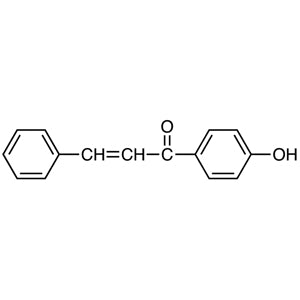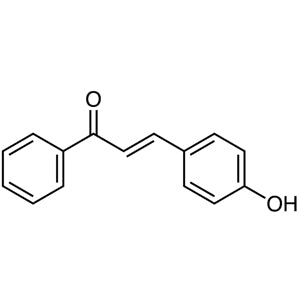
TCI H0955 (E)-4-Hydroxychalcone is a chalcone bearing a hydroxy group at the para position of the aromatic ring derived from the aldehyde portion of the molecule, and it is supplied with a clearly defined E double-bond geometry. This certainty of geometry matters because the E and Z forms of a chalcone can display distinctly different chemical and biological behaviour, so material with an unambiguous configuration is highly valued in research that demands reproducibility. In the laboratory the compound serves as a non-heterocyclic building block for the synthesis of flavonoid derivatives, as a substrate in methodology studies, and as a model compound in investigations of the biological activity of conjugated phenolic compounds.
The property that makes this material a preferred choice is its conjugated enone system, which acts as a Michael acceptor and allows the addition of a wide range of nucleophiles such as amines, hydrazines, and thiols under comparatively mild reaction conditions. The phenolic hydroxy group sits on a different ring than in the related 4'-hydroxychalcone product, giving a different pattern of electron distribution, which is why these two positional isomers are so often compared side by side in structure–activity relationship studies. The extended conjugation across the aromatic rings and the enone bridge also gives the molecule its characteristic optical and electronic behaviour, supporting its use where a well-characterised conjugated scaffold is required.
In Indonesian laboratories this type of building block is typically used in university and institutional research groups working on natural product chemistry and organic synthesis, where chalcones are a common starting point for preparing flavonoid analogues. It is also drawn upon in synthetic methodology work and in screening studies of phenolic compounds. Because the defined configuration supports reproducible results, it suits teaching laboratories, thesis-level research, and research and development groups that need a dependable, well-defined reference scaffold.
TCI brochures (PDF)
- Polyphenols 2024-12-05 · p. 2
- Flavonoid derivative synthesis: the chalcone skeleton is the direct precursor to many flavonoid classes, so this defined-geometry material gives a reliable entry point into cyclisation and derivatisation routes.
- Michael addition studies: the conjugated enone acts as a Michael acceptor toward amines, hydrazines, and thiols, letting researchers explore nucleophilic additions under relatively mild reaction conditions.
- Structure–activity relationship research: the para-hydroxy substitution on the aldehyde-derived ring is routinely compared with the 4'-hydroxy isomer to probe how electron distribution influences observed activity.
- Synthetic methodology development: the compound serves as a well-defined substrate for testing new reactions and catalytic systems, since its E configuration removes geometric ambiguity from the results.
- Biological activity modelling: as a model conjugated phenolic compound, it supports investigations into how extended conjugation and a free phenolic hydroxy group affect biological behaviour.
| Brand | TCI (Tokyo Chemical Industry) |
|---|---|
| CAS number | 38239-55-3 |
| Molecular formula | — |
| Purity | — |
| Category | Chemistry > Building Blocks > Non-Heterocyclic Building Blocks |
| Pack sizes | supplied in the standard research-scale pack sizes offered for this catalogue item; please confirm the available option when ordering. |
| Physical form | — |
| Storage | keep in the closed original container in a cool, dry place, protected from light. |
- Product code: H0955
Store the material in its original tightly closed container in a cool, dry, and well-ventilated area, away from direct sunlight and sources of heat or ignition. Amber glass or the supplier's original packaging is suitable, since the extended conjugation of the molecule makes protection from light advisable. Handle in a fume hood using standard laboratory personal protective equipment, including safety glasses, a lab coat, and chemical-resistant gloves, and avoid generating dust or contact with skin and eyes. Keep separate from strong oxidising agents and strong bases, and use clean, dry spatulas to prevent contamination of the stock. Always consult the manufacturer's Safety Data Sheet before use, and dispose of residues and contaminated materials through the laboratory's chemical waste procedures.
—
Product Categories
Produk Terkait
-
4'-Hydroxychalcone TCI H0945
Regular price Rp 1.220.100,00Regular price -
(E)-2'-Hydroxychalcone TCI H0385
Regular price Rp 2.625.000,00Regular price -
(E)-2-Hydroxychalcone TCI H0234
Regular price From Rp 1.193.850,00Regular price -
4-Methoxychalcone TCI M1409
Regular price Rp 3.207.750,00Regular price -
4-Butyl-4'-hydroxychalcone TCI B2741
Regular price Rp 3.922.800,00Regular price -
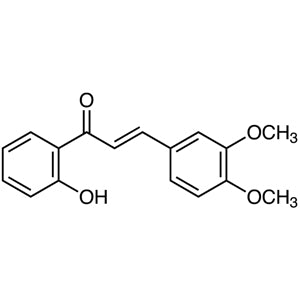
(E)-2'-Hydroxy-3,4-dimethoxychalcone TCI H1598
Regular price Rp 8.162.700,00Regular price -
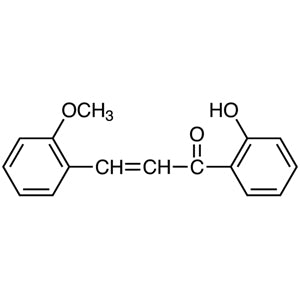
2'-Hydroxy-2-methoxychalcone TCI H1493
Regular price Rp 2.889.600,00Regular price -
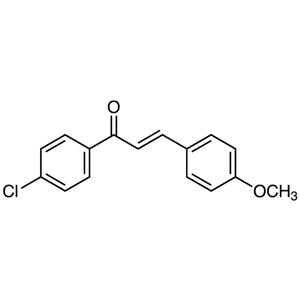
(E)-4'-Chloro-4-methoxychalcone TCI C3280
Regular price From Rp 2.916.900,00Regular price