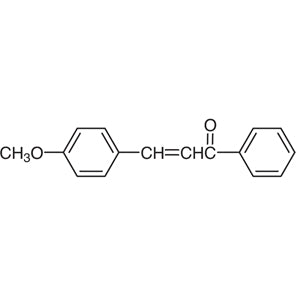
4-Methoxychalcone is a chemical compound classified under the category of building blocks, specifically within the non-heterocyclic group. It plays a crucial role in laboratory settings by serving as a foundational molecule for the synthesis of more complex compounds. Its aromatic structure and functional groups make it a versatile component in organic chemistry, enabling researchers to construct diverse molecular frameworks through various chemical reactions. This compound is widely used in both academic and industrial research environments for its ability to participate in condensation, substitution, and reduction reactions.
One of the key properties that make 4-Methoxychalcone a preferred choice is its stable chemical structure and moderate reactivity. These characteristics allow for controlled chemical transformations without excessive degradation, ensuring reliable results in synthetic processes. Additionally, its good solubility in organic solvents such as ethyl acetate and ethanol facilitates easy handling and manipulation in laboratory experiments. This solubility profile is particularly beneficial for researchers working on compound synthesis and purification.
In Indonesian laboratories, 4-Methoxychalcone is commonly utilized by chemists and pharmacologists engaged in the development of bioactive compounds. Its aromatic structure and methoxy substituent make it a valuable tool in the design of new molecules with potential pharmaceutical applications. It is especially favored in research projects that require aromatic compounds with specific functional groups, contributing to advancements in both organic chemistry and medicinal research.
TCI brochures (PDF)
- Polyphenols 2024-12-05 · p. 2
- Organic synthesis projects benefit from 4-Methoxychalcone due to its ability to participate in condensation reactions, enabling the creation of complex aromatic structures.
- Pharmacological research utilizes this compound to develop new bioactive molecules with potential therapeutic applications in drug discovery.
- Material science applications leverage its chemical stability and solubility to create functional materials with tailored properties.
- Analytical chemistry experiments use 4-Methoxychalcone as a reference standard for spectral analysis and chromatographic studies.
- Environmental studies incorporate this compound to investigate the behavior of aromatic compounds in various chemical environments.
| Brand | TCI |
|---|---|
| CAS number | 959-33-1 |
| Molecular formula | — |
| Purity | — |
| Category | Chemistry > Building Blocks > Non-Heterocyclic Building Blocks |
| Pack sizes | Available in various quantities as per supplier specifications |
| Physical form | Solid, typically in crystalline form |
| Storage | Store in a cool, dry place away from light and moisture |
4-Methoxychalcone should be stored in a cool, dry environment, away from direct light and moisture to maintain its chemical stability. It is recommended to use airtight containers made of glass or polyethylene to prevent contamination and degradation. Due to its moderate reactivity, it should be handled with care, using appropriate personal protective equipment such as gloves and safety goggles. In laboratory settings, it is important to ensure proper ventilation when working with this compound to minimize exposure. Its solubility in organic solvents means it should be stored separately from incompatible substances to prevent unintended reactions. Always follow standard laboratory safety protocols when handling and storing this compound.
—
Product Categories
Produk Terkait
-
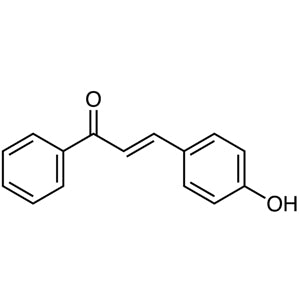
(E)-4-Hydroxychalcone TCI H0955
Regular price Rp 1.220.100,00Regular price -
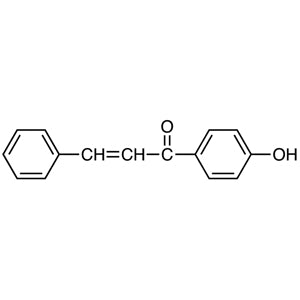
4'-Hydroxychalcone TCI H0945
Regular price Rp 1.220.100,00Regular price -
(E)-2'-Hydroxychalcone TCI H0385
Regular price Rp 2.625.000,00Regular price -
(E)-2-Hydroxychalcone TCI H0234
Regular price From Rp 1.193.850,00Regular price -
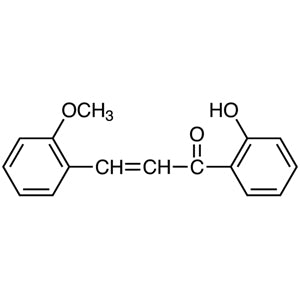
2'-Hydroxy-2-methoxychalcone TCI H1493
Regular price Rp 2.889.600,00Regular price -
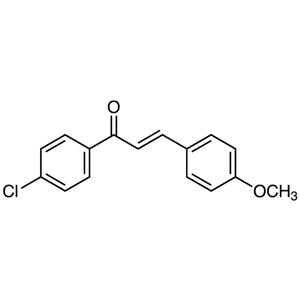
(E)-4'-Chloro-4-methoxychalcone TCI C3280
Regular price From Rp 2.916.900,00Regular price -
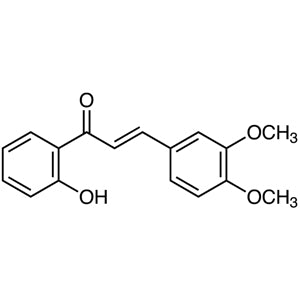
(E)-2'-Hydroxy-3,4-dimethoxychalcone TCI H1598
Regular price Rp 8.162.700,00Regular price -
4-Butyl-4'-hydroxychalcone TCI B2741
Regular price Rp 3.922.800,00Regular price