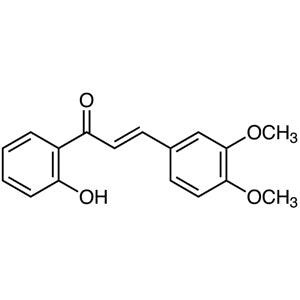
(E)-2'-Hydroxy-3,4-dimethoxychalcone is a chemical compound widely used in organic chemistry and pharmacological research. It belongs to the chalcone family, which is a key structural motif in many bioactive molecules. In the laboratory, this compound serves as a building block for the synthesis of more complex compounds with specific biological activities. Its versatility makes it an essential tool for researchers aiming to develop new drugs or explore the properties of organic molecules. Due to its structural characteristics, it is frequently employed in synthetic pathways that require functional group modifications or cross-coupling reactions.
The compound's chemical properties make it a preferred choice for various synthetic applications. It features two methoxy groups and one hydroxyl group, which contribute to its reactivity and ability to participate in a wide range of chemical transformations. These functional groups allow it to undergo substitution and condensation reactions under controlled conditions, making it suitable for the synthesis of derivatives with enhanced biological activity. Its stability under certain reaction conditions ensures reliable results in laboratory experiments, further enhancing its utility in organic synthesis.
In Indonesian laboratories, this compound is commonly used by chemists and pharmacologists in the development of new compounds. Its availability in the local market supports research efforts focused on biological and pharmacological studies. Researchers rely on this compound to explore its potential in creating molecules with anti-inflammatory or antioxidant properties, contributing to advancements in both academic and industrial research settings.
Related TCI products
- TCI M1409 959-33-1 4-Methoxychalcone
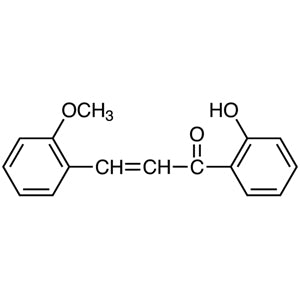
- TCI H1493 42220-77-9 2'-Hydroxy-2-methoxychalcone
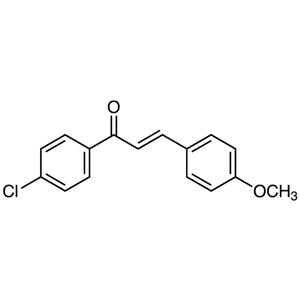
- TCI C3280 85502-87-0 (E)-4'-Chloro-4-methoxychalcone
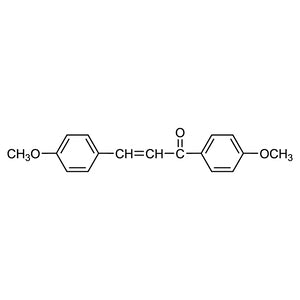
- TCI B6793 2373-89-9 4,4'-Dimethoxychalcone
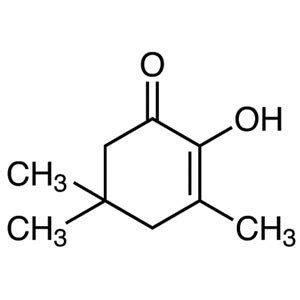
- TCI T2723 4883-60-7 2-Hydroxy-3,5,5-trimethyl-2-cyclohexen-1-one
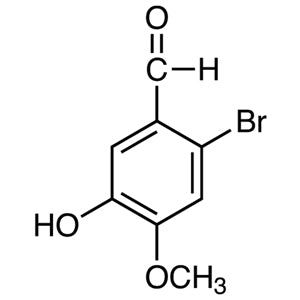
- TCI B4681 2973-59-3 2-Bromo-5-hydroxy-4-methoxybenzaldehyde
- Organic synthesis is a primary application where this compound is used as a versatile building block for creating complex molecules with desired biological properties.
- Pharmacological research benefits from its use in the development of new drug candidates with anti-inflammatory and antioxidant activities.
- Structural chemistry studies utilize this compound to investigate the reactivity of functional groups in aromatic systems.
- Medicinal chemistry applications involve its use in the synthesis of derivatives with potential therapeutic applications.
- Analytical chemistry laboratories use it as a reference standard for spectroscopic and chromatographic analyses.
| Brand | TCI |
|---|---|
| CAS number | 79140-20-8 |
| Molecular formula | — |
| Purity | — |
| Category | Chemistry > Building Blocks > Non-Heterocyclic Building Blocks |
| Pack sizes | Available in various quantities as per supplier specifications |
| Physical form | Solid |
| Storage | Store in a cool, dry place away from light and moisture |
This compound should be stored in a cool, dry environment, away from direct light and moisture to maintain its chemical stability. It is recommended to use airtight containers made of glass or polyethylene to prevent contamination and degradation. Due to its reactivity, it should be handled with care using appropriate personal protective equipment, such as gloves and safety goggles. In laboratory settings, it is important to ensure proper ventilation when working with this compound to minimize exposure. Avoid contact with incompatible materials, and always follow standard safety protocols to ensure safe handling and storage.
—
Produk Terkait
-
4-Methoxychalcone TCI M1409
Regular price Rp 3.207.750,00Regular price -
2'-Hydroxy-2-methoxychalcone TCI H1493
Regular price Rp 2.889.600,00Regular price -
(E)-4'-Chloro-4-methoxychalcone TCI C3280
Regular price From Rp 2.916.900,00Regular price -
4,4'-Dimethoxychalcone TCI B6793
Regular price From Rp 2.386.650,00Regular price -
2-Hydroxy-3,5,5-trimethyl-2-cyclohexen-1-one TCI T2723
Regular price Rp 1.273.650,00Regular price -
2-Bromo-5-hydroxy-4-methoxybenzaldehyde TCI B4681
Regular price Rp 4.293.450,00Regular price -
4-Bromo-3-hydroxy-2-naphthoicAcid TCI B3229
Regular price From Rp 2.174.550,00Regular price -
7-Bromo-3-hydroxy-2-naphthoicAcid TCI B3180
Regular price From Rp 769.650,00Regular price