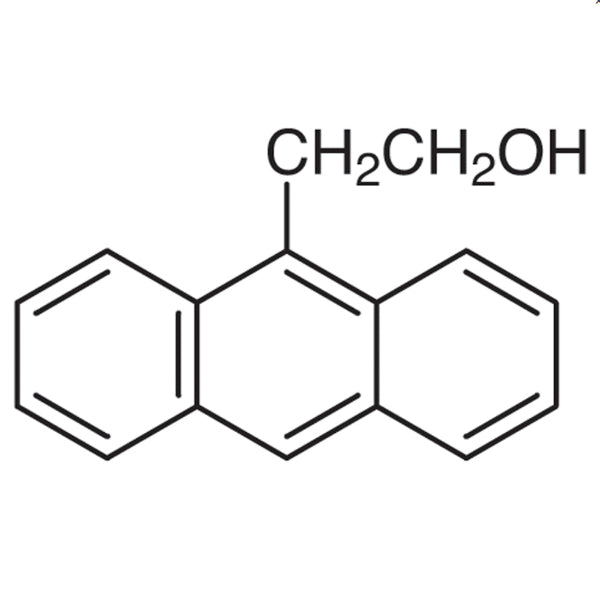
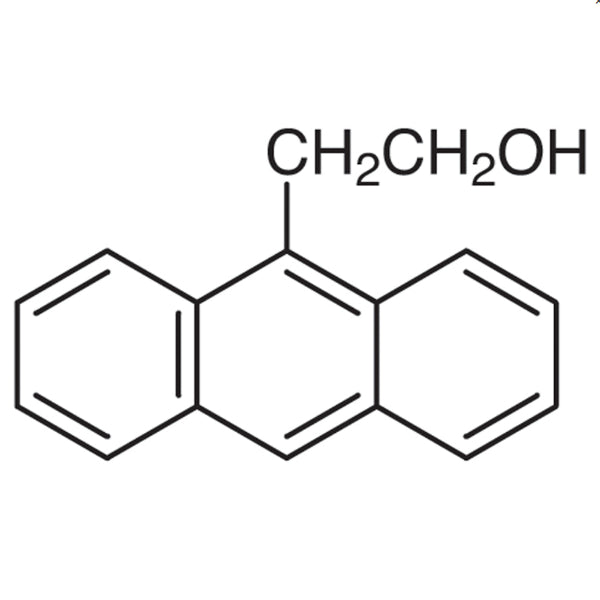
9-(2-Hydroxyethyl)anthracene is an anthracene derivative bearing a hydroxyethyl side chain at the 9-position, the most reactive meso position on the fused three-ring aromatic framework. Anthracene itself is widely recognised as a strong fluorophore with a highly characteristic absorption and emission pattern. In the laboratory, this compound serves both as a functional building block and as a ready-to-attach fluorescent label, because the hydroxyl group at the end of the side chain provides an easily manipulated chemical attachment point without disturbing the luminescent core.
The property that makes it a preferred choice is the combination of a photoactive anthracene core with a versatile aliphatic hydroxyl group. The anthracene core delivers bright blue fluorescence with a clearly resolved vibronic band structure, making it easy to identify on a spectrofluorometer. The same core is also known to undergo reversible photochemical dimerisation at the 9 and 10 positions under ultraviolet irradiation, a property that underpins many photoresponsive materials and self-healing systems. Meanwhile, the primary hydroxyl on the ethyl chain can be esterified, etherified, or converted into an acrylate.
In Indonesian laboratories, this material is typically used in university and institutional research groups working on organic synthesis, photochemistry, and functional materials. It is usually ordered in small research quantities for the preparation of fluorescent probes, for tethering an anthracene reporter onto a larger molecular scaffold, or for coursework and thesis projects that require a well-behaved fluorophore. Its handling fits the routine practice of a standard synthetic or analytical laboratory bench.
Related TCI products
- TCI B1904 34824-20-9 1,8-Bis(hydroxymethyl)anthracene
- TCI H0750 22863-82-7 2-(Hydroxymethyl)anthracene
- TCI H0670 1468-95-7 9-(Hydroxymethyl)anthracene
- TCI T1679 3645-00-9 2-Hydroxyethyl Methyl Terephthalate
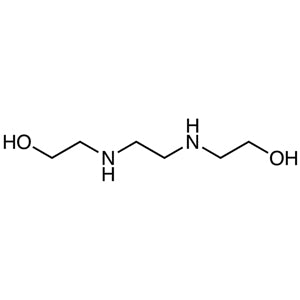
- TCI B3807 4439-20-7 N,N'-Bis(2-hydroxyethyl)ethylenediamine
- TCI B3429 959-26-2 Bis(2-hydroxyethyl) Terephthalate
- Fluorescent probe synthesis: the anthracene core supplies bright, easily recognised blue emission while the terminal hydroxyl allows the reporter to be tethered onto a target scaffold.
- Photoresponsive material development: the reversible photodimerisation at the 9 and 10 positions under ultraviolet light gives researchers a switchable crosslinking motif to build into polymer systems.
- Monomer preparation for functional polymers: converting the primary hydroxyl into an acrylate produces a polymerisable unit that carries the fluorescent anthracene group into the resulting chain.
- General non-heterocyclic building block chemistry: esterification and etherification of the primary alcohol proceed under standard conditions, making it a convenient handle for extending molecular architectures.
- Fluorescence spectroscopy reference work: the well-defined vibronic band structure of the anthracene chromophore makes it straightforward to identify and track on a spectrofluorometer during method development.
| Brand | TCI |
|---|---|
| CAS number | 54060-73-0 |
| Molecular formula | — |
| Purity | — |
| Category | Chemistry > Building Blocks > Non-Heterocyclic Building Blocks |
| Pack sizes | available in standard research pack sizes; please confirm the currently listed options when ordering |
| Physical form | — |
| Storage | store in a cool, dry place, protected from light |
- Product code: H0970
Store the container in a cool, dry, well-ventilated area away from direct sunlight and other ultraviolet sources, since the anthracene core is photochemically active and prolonged light exposure may promote unwanted dimerisation. Keep the material in its original tightly closed container, or in an amber glass bottle if transferred, and close it promptly after each use to limit moisture uptake. Handle in a fume hood using gloves, safety glasses, and a laboratory coat, and follow the standard chemical waste and spill procedures of your institution. Consult the manufacturer's safety data sheet before first use.
—
Produk Terkait
-
1,8-Bis(hydroxymethyl)anthracene TCI B1904
Regular price Rp 9.673.650,00Regular price -
2-(Hydroxymethyl)anthracene TCI H0750
Regular price From Rp 9.301.950,00Regular price -
9-(Hydroxymethyl)anthracene TCI H0670
Regular price From Rp 3.232.950,00Regular price -
2-HydroxyethylMethylTerephthalate TCI T1679
Regular price From Rp 1.803.900,00Regular price -
N,N'-Bis(2-hydroxyethyl)ethylenediamine TCI B3807
Regular price Rp 3.498.600,00Regular price -
Bis(2-hydroxyethyl)Terephthalate TCI B3429
Regular price From Rp 928.200,00Regular price -
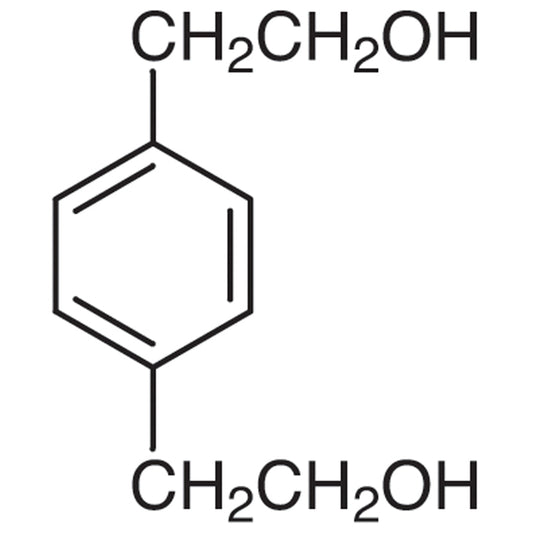
1,4-Bis(2-hydroxyethyl)benzene TCI B2295
Regular price Rp 10.865.400,00Regular price -
N,N-Bis(2-hydroxyethyl)-p-toluenesulfonamide TCI B2263
Regular price Rp 2.730.000,00Regular price