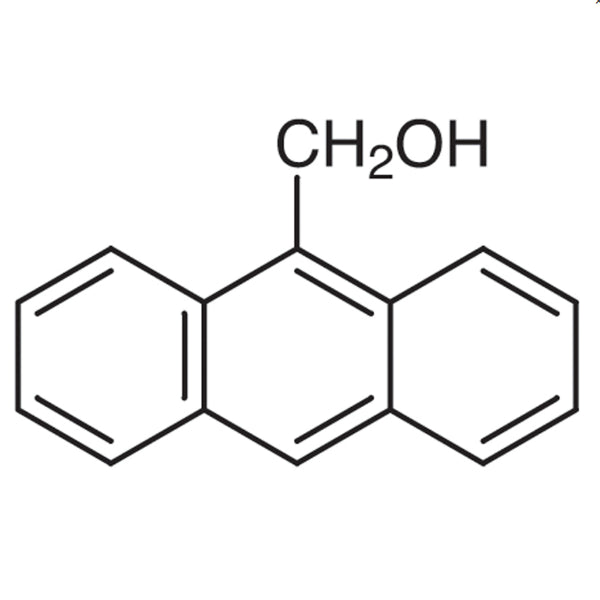
9-(Hydroxymethyl)anthracene is a chemical compound widely used as a building block in the synthesis of complex molecules. This compound features an aromatic structure with a hydroxymethyl group attached at the ninth position, making it a versatile reagent in various chemical reactions. Its role in the laboratory is critical for constructing molecular frameworks, particularly in organic chemistry and pharmacology. Due to its stability and reactivity, it is frequently employed in synthetic pathways where structural modifications are required.
The compound's aromatic structure provides a stable foundation, while its hydroxymethyl substituent enables participation in a range of reactions, including Friedel-Crafts, substitution, and oxidation processes. These properties make it a preferred choice for researchers aiming to develop new compounds with specific functionalities. Its predictable chemical behavior simplifies synthesis and reaction control, ensuring reliable results in experimental settings.
In Indonesian laboratories, 9-(Hydroxymethyl)anthracene is commonly used in scientific research and educational institutions focused on organic chemistry and pharmacy. Researchers and students rely on this compound for experiments requiring a reactive yet stable building block. Its applications span from academic studies to industrial research, supporting advancements in chemical synthesis and drug development.
Related TCI products
- TCI B1904 34824-20-9 1,8-Bis(hydroxymethyl)anthracene
- TCI H0750 22863-82-7 2-(Hydroxymethyl)anthracene
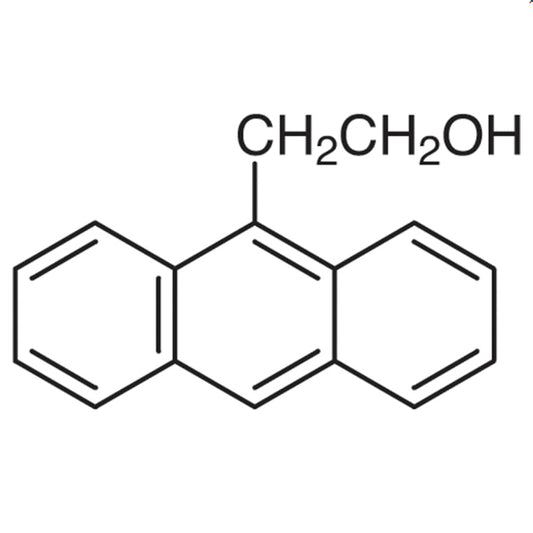
- TCI H0970 54060-73-0 9-(2-Hydroxyethyl)anthracene
- TCI B4057 19184-65-7 2-(Bromomethyl)-2-(hydroxymethyl)-1,3-propanediol
- TCI B3399 5859-93-8 2,6-Bis(hydroxymethyl)naphthalene
- TCI B2682 2425-41-4 5,5-Bis(hydroxymethyl)-2-phenyl-1,3-dioxane
- Organic synthesis applications benefit from its aromatic structure and hydroxymethyl substituent, enabling the creation of complex molecular frameworks.
- Pharmaceutical research utilizes this compound to develop new drugs through structural modifications and functional group manipulations.
- Educational institutions incorporate it into curriculum-based experiments to teach chemical synthesis and reaction mechanisms.
- Analytical chemistry applications leverage its predictable chemical behavior for controlled reaction conditions and reproducible results.
- Industrial research and development use it as a key intermediate in the production of specialized chemical products and materials.
| Brand | TCI |
|---|---|
| CAS number | 1468-95-7 |
| Molecular formula | — |
| Purity | — |
| Category | Chemistry > Building Blocks > Non-Heterocyclic Building Blocks |
| Pack sizes | Available in standard laboratory quantities |
| Physical form | Solid |
| Storage | Store in a cool, dry place away from light and moisture |
This compound should be stored in a cool, dry environment, away from direct light and moisture to maintain its chemical integrity. It is recommended to use airtight containers made of glass or inert plastic to prevent contamination and degradation. Due to its aromatic nature, it may require careful handling to avoid exposure to air or moisture, which could affect its reactivity. In laboratory settings, it should be kept in a secure location, away from incompatible substances. Proper labeling and storage conditions are essential to ensure safety and maintain the compound's effectiveness in chemical reactions. Always follow standard laboratory safety protocols when handling this material.
—
Produk Terkait
-
1,8-Bis(hydroxymethyl)anthracene TCI B1904
Regular price Rp 9.673.650,00Regular price -
2-(Hydroxymethyl)anthracene TCI H0750
Regular price From Rp 9.301.950,00Regular price -
9-(2-Hydroxyethyl)anthracene TCI H0970
Regular price From Rp 6.599.250,00Regular price -
2-(Bromomethyl)-2-(hydroxymethyl)-1,3-propanediol TCI B4057
Regular price From Rp 1.644.300,00Regular price -
2,6-Bis(hydroxymethyl)naphthalene TCI B3399
Regular price From Rp 3.419.850,00Regular price -
5,5-Bis(hydroxymethyl)-2-phenyl-1,3-dioxane TCI B2682
Regular price Rp 6.943.650,00Regular price -
2,6-Bis(hydroxymethyl)-1,4-dimethoxybenzene TCI B2618
Regular price Rp 2.837.100,00Regular price -
2,2'-Bis(hydroxymethyl)diphenylEther TCI B1643
Regular price From Rp 3.763.200,00Regular price