5,5-Bis(hydroxymethyl)-2-phenyl-1,3-dioxane is a chemical compound widely used as a building block in the synthesis of complex molecules. This compound is particularly valuable in organic chemistry laboratories where the introduction of hydroxymethyl groups is essential. Its structural versatility allows it to participate in various chemical reactions, making it a key component in the development of new compounds. As a fundamental reagent, it supports a wide range of synthetic strategies and is essential for researchers aiming to create more complex molecular structures.
The compound’s stability and reactivity make it a preferred choice for chemical synthesis. Its hydroxymethyl groups provide multiple reactive sites, enabling further functionalization through substitution, oxidation, or reduction reactions. This flexibility allows chemists to tailor the compound to specific synthetic needs, enhancing its utility in both academic and industrial settings. The molecule’s ability to undergo various transformations contributes to its widespread use in the creation of heterocyclic and complex organic compounds.
In Indonesian laboratories, 5,5-Bis(hydroxymethyl)-2-phenyl-1,3-dioxane is commonly used in organic chemistry research, especially in the development of pharmaceuticals and industrial chemicals. Researchers in educational institutions and research centers rely on this compound for experiments that require precise molecular manipulation. Its role in the synthesis of bioactive compounds and functional materials underscores its importance in modern chemical research.
Related TCI products
- Organic synthesis of heterocyclic compounds due to its hydroxymethyl groups enabling functional group modification
- Development of pharmaceutical intermediates through substitution and oxidation reactions
- Creation of complex molecular structures in academic research for structural diversity
- Use in industrial chemical synthesis for the production of specialty chemicals
- Support in the design of bioactive molecules for drug discovery and development
| Brand | TCI |
|---|---|
| CAS number | 2425-41-4 |
| Molecular formula | — |
| Purity | — |
| Category | Chemistry > Building Blocks > Non-Heterocyclic Building Blocks |
| Pack sizes | Available in various quantities as per supplier specifications |
| Physical form | Solid or liquid depending on the specific product variant |
| Storage | Store in a cool, dry place away from direct sunlight |
This compound should be stored in a cool, dry environment, away from direct sunlight and sources of heat. It is recommended to use airtight containers to prevent moisture absorption, which could affect its chemical stability. Proper labeling of storage containers is essential for safety and traceability. In laboratory settings, it should be handled with appropriate personal protective equipment, such as gloves and safety goggles, to minimize exposure. Due to its reactivity, it should be stored separately from strong oxidizing or reducing agents to prevent unwanted chemical interactions. Regular monitoring of storage conditions ensures the compound remains in optimal condition for use in research applications.
—
Produk Terkait
-
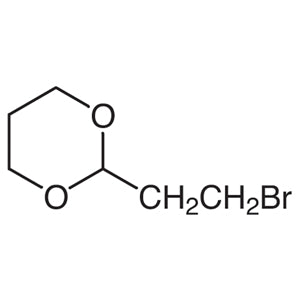
2-(2-Bromoethyl)-1,3-dioxane TCI B1182
Regular price From Rp 1.298.850,00Regular priceRp 924.000,00Sale price From Rp 1.298.850,00 -
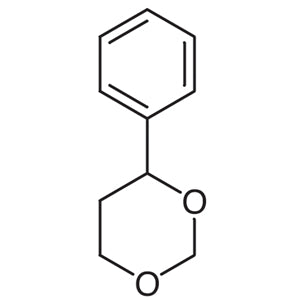
4-Phenyl-1,3-dioxane TCI P0166
Regular price Rp 795.900,00Regular priceRp 572.250,00Sale price Rp 795.900,00 -
1,4-Dioxane-2,3-diol TCI D2066
Regular price Rp 1.856.400,00Regular priceRp 1.313.550,00Sale price Rp 1.856.400,00 -
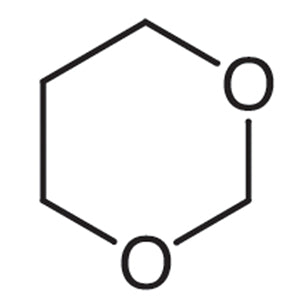
1,3-Dioxane TCI D0859
Regular price From Rp 2.597.700,00Regular priceRp 1.816.500,00Sale price From Rp 2.597.700,00 -
2-(Bromomethyl)-2-(hydroxymethyl)-1,3-propanediol TCI B4057
Regular price From Rp 1.644.300,00Regular priceRp 1.149.750,00Sale price From Rp 1.644.300,00 -
2,6-Bis(hydroxymethyl)naphthalene TCI B3399
Regular price From Rp 3.419.850,00Regular priceRp 2.390.850,00Sale price From Rp 3.419.850,00 -
2,6-Bis(hydroxymethyl)-1,4-dimethoxybenzene TCI B2618
Regular price Rp 2.837.100,00Regular priceRp 1.983.450,00Sale price Rp 2.837.100,00 -
1,8-Bis(hydroxymethyl)anthracene TCI B1904
Regular price Rp 9.673.650,00Regular priceRp 6.764.100,00Sale price Rp 9.673.650,00