3-Hydroxyxanthen-9-one, bearing CAS number 3722-51-8, is a xanthone derivative built on a tricyclic framework in which two benzene rings are bridged by an oxygen atom and a carbonyl group. The compound carries a hydroxyl group at the third position, producing a planar molecule with an extended conjugated system. In the laboratory, this material serves as a heterocyclic building block used to construct more complex xanthone derivatives, a class of compounds that attracts research attention because it occurs widely among the secondary metabolites of tropical plants.
The properties that make it a preferred choice among researchers are the combination of a rigid, planar xanthone framework with a single phenolic hydroxyl group that is ready for functionalisation. The extended conjugated system of the xanthone core gives the compound characteristic light absorption and emission behaviour, which is why members of this class are frequently taken as the starting point for developing optical probes. The carbonyl group at position nine acts as both an electron acceptor and a hydrogen-bond acceptor, while the hydroxyl group acts as a donor. The clearly defined structure and reagent-grade purity supplied by TCI make the spectroscopic data obtained from it easier to interpret.
In Indonesian laboratories, this building block is typically encountered in synthetic organic chemistry and natural product research groups, particularly those working on xanthone scaffolds related to the secondary metabolites of tropical flora. It is handled at bench scale for stepwise derivatisation, for reference material in structure elucidation work, and for preparing candidate compounds that are subsequently characterised by spectroscopic methods before being passed on for further study.
- Synthesis of substituted xanthone derivatives — the single free phenolic hydroxyl group provides a clearly defined reaction site, so alkylation, acylation, and related derivatisation steps proceed at a predictable position on the framework.
- Natural product model studies — because the xanthone skeleton occurs widely in the secondary metabolites of tropical plants, this compound serves as a structurally simple reference point for work on more elaborate plant-derived analogues.
- Development of optical probe candidates — the extended conjugation across the xanthone core produces characteristic absorption and emission behaviour, making this scaffold a common starting point for building fluorescent reporter molecules.
- Hydrogen-bonding and molecular recognition experiments — the position-nine carbonyl acts as an acceptor while the position-three hydroxyl acts as a donor, giving the molecule complementary interaction sites in one rigid frame.
- Spectroscopic reference and method development — the clearly defined structure and reagent-grade quality mean spectra are straightforward to assign, which helps when validating analytical methods or training new laboratory personnel.
| Brand | TCI (catalogue number H1269) |
|---|---|
| CAS number | 3722-51-8 |
| Molecular formula | — |
| Purity | — |
| Category | Chemistry > Building Blocks > Heterocyclic Building Blocks |
| Pack sizes | available in the standard research pack sizes offered by TCI for this catalogue item; please confirm the size required when ordering |
| Physical form | — |
| Storage | store in a tightly closed container in a cool, dry place away from light |
- Chemical name: 3-Hydroxyxanthen-9-one
Keep the container tightly closed and store it in a cool, dry place, protected from light and away from strong oxidising agents. The original supplier container is the most suitable primary packaging; if the material is subdivided, use clean amber glass vials with chemically resistant closures and label them with the compound name and CAS number. Handle the solid in a fume hood or well-ventilated area to avoid generating or inhaling dust, and wear safety glasses, gloves, and a laboratory coat. Avoid skin and eye contact, wash hands after handling, and consult the manufacturer's safety data sheet before first use and before disposal.
—
Produk Terkait
-
TCI B5774 5,10-Bis(4,4,5,5-tetramethyl-1,3,2-dioxaborolan-2-yl)naphtho[1,2-c:5,6-c']bis([1,2,5]oxadiazole)
Regular price Rp 10.255.350,00Regular price -
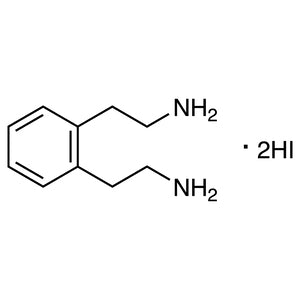
Dihydroiodide TCI B6569
Regular price From Rp 1.936.200,00Regular price -
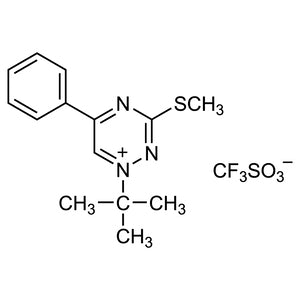
Trifluoromethanesulfonate TCI B7003
Regular price From Rp 1.936.200,00Regular price
![5,10-Bis(4,4,5,5-tetramethyl-1,3,2-dioxaborolan-2-yl)naphtho[1,2-c:5,6-c']bis([1,2,5]oxadiazole) - TCI B5774 - AMI Scientific](http://amiscientific.com/cdn/shop/files/TCI2510B5774.jpg?v=1769180228&width=533)