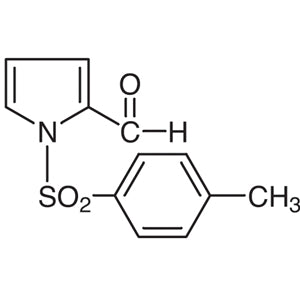
8-Hydroxy-1,1,7,7-tetramethyljulolidine-9-carboxaldehyde is a complex organic compound widely used in synthetic chemistry applications. As a heterocyclic building block, it serves as a versatile starting material for the synthesis of various bioactive compounds. Its unique molecular structure, featuring a julolidine ring with hydroxyl and carboxaldehyde substituents, makes it a valuable reagent in organic synthesis. This compound is commonly utilized in laboratories for creating molecules with specific functional groups and structural features, supporting research in pharmaceutical and chemical sciences.
The compound's chemical stability under controlled reaction conditions makes it a preferred choice for synthetic processes requiring precision. Its ability to participate in multiple chemical reactions, such as condensation and substitution, enhances its utility in diverse synthetic pathways. The solid form of the compound facilitates easy handling and storage, while its reactivity allows for integration into complex reaction schemes. These properties make it a reliable and efficient reagent for researchers working on advanced organic synthesis projects.
In Indonesian laboratories, this compound is frequently used in organic chemistry research, particularly in academic and research institutions. Its role in the synthesis of bioactive compounds aligns with the growing demand for specialized synthetic materials in both educational and industrial research settings. The availability of this compound supports the development of new chemical entities and contributes to the advancement of scientific research in Indonesia.
- Organic synthesis research as a key building block for creating complex molecular structures.
- Pharmaceutical development for the synthesis of bioactive compounds with therapeutic potential.
- Academic teaching and experimentation in chemistry courses focusing on heterocyclic compounds.
- Industrial chemical research for the production of specialized organic intermediates.
- Drug discovery projects requiring precise functional group modifications and molecular design.
| Brand | TCI |
|---|---|
| CAS number | 115662-09-4 |
| Molecular formula | — |
| Purity | — |
| Category | Chemistry > Building Blocks > Heterocyclic Building Blocks |
| Pack sizes | Available in standard laboratory quantities |
| Physical form | Solid |
| Storage | Store in a cool, dry place away from light and moisture |
This compound should be stored in a cool, dry environment, away from direct light and moisture to maintain its chemical stability. It is recommended to use airtight containers to prevent exposure to air and humidity, which may affect its reactivity. In laboratory settings, proper ventilation should be ensured when handling the compound to minimize inhalation risks. Researchers should wear appropriate personal protective equipment, such as gloves and safety goggles, to ensure safe handling. The compound is not classified as hazardous under standard laboratory conditions, but standard safety protocols should be followed to ensure safe usage and storage.
—
Produk Terkait
-
Julolidine TCI J0007
Regular price From Rp 1.961.400,00Regular price -
Indole-6-carboxaldehyde TCI I0743
Regular price From Rp 2.359.350,00Regular price -
Imidazole-2-carboxaldehyde TCI I0809
Regular price From Rp 769.650,00Regular price -
Indole-2-carboxaldehyde TCI I0852
Regular price From Rp 3.949.050,00Regular price -
Tetrahydro-2H-pyran-4-carboxaldehyde TCI T4039
Regular price Rp 2.466.450,00Regular price -
5-(p-Tolyl)isoxazole-3-carboxaldehyde TCI T3454
Regular price Rp 3.763.200,00Regular price -
1-Tritylimidazole-4-carboxaldehyde TCI T2204
Regular price From Rp 452.550,00Regular price -
1-(p-Toluenesulfonyl)pyrrole-2-carboxaldehyde TCI T1607
Regular price Rp 4.268.250,00Regular price