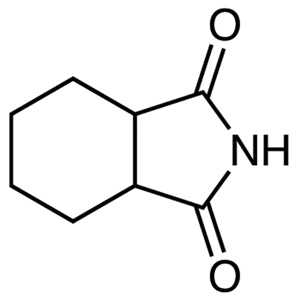
Hexahydrophthalimide is a saturated cyclic imide derived from a cyclohexane framework bearing two carbonyl groups bound to a single nitrogen atom. This structure makes it a building block frequently used in organic synthesis laboratories, serving either as a protected nitrogen source or as a rigid core that can be functionalized further. Unlike the more common aromatic phthalimide, this fully hydrogenated version has an aliphatic skeleton, which gives it different solubility and conformational characteristics — and that difference is often the principal reason researchers select it for a particular molecular design.
The characteristics that make it a preferred choice are the presence of a relatively acidic imide nitrogen, which is readily deprotonated and alkylated, together with a cyclohexane ring that contributes conformational rigidity without introducing an aromatic system. This property is useful when researchers wish to avoid aromatic stacking interactions or want to reduce excessive lipophilicity in a target molecule. Its two carbonyl groups can also be opened by hydrolysis or reduced to a cyclic amine, opening routes toward a wide range of downstream derivatives. Its stability at room temperature adds to its practicality as a bench reagent.
In Indonesian laboratories, this compound is typically encountered in university and institutional synthesis groups working on intermediate preparation, in research programs that build nitrogen-containing scaffolds, and in method development work where a non-aromatic imide is needed as a reference structure. It is handled as a standard research-grade building block, ordered in quantities suited to bench-scale reactions rather than production use, and stored alongside other organic synthesis reagents in the laboratory chemical store.
- Protected nitrogen source in organic synthesis, where the imide nitrogen masks an amine functionality until it is released at a later stage of the reaction sequence.
- N-alkylation chemistry, taking advantage of the relatively acidic imide proton that can be removed under basic conditions and then substituted with a chosen alkyl group.
- Construction of rigid non-aromatic scaffolds, where the cyclohexane ring supplies conformational constraint to a target molecule without contributing an aromatic ring system.
- Preparation of cyclic amine derivatives, since reduction of the two carbonyl groups converts the imide into an amine framework suitable for further elaboration.
- Structure–property studies comparing aliphatic and aromatic imides, where the fully hydrogenated framework serves as the reference compound for solubility and lipophilicity comparisons.
| Brand | TCI |
|---|---|
| CAS number | 1444-94-6 |
| Molecular formula | — |
| Purity | — |
| Category | Chemistry > Building Blocks > Non-Heterocyclic Building Blocks |
| Pack sizes | available in standard research-scale packaging; please confirm the currently listed sizes when ordering |
| Physical form | — |
| Storage | stable at room temperature; keep the container tightly closed |
- Catalogue number: H1363
Store the container tightly closed in a cool, dry, well-ventilated area away from moisture and from incompatible reagents such as strong oxidising agents, strong acids, and strong bases. The original manufacturer packaging is the most suitable container; if the material is transferred, use a clean, chemically compatible, well-sealed vessel with a clear label showing the substance name and CAS number. Handle the solid in a fume hood or a well-ventilated workspace to limit dust formation, and wear standard laboratory personal protective equipment including a laboratory coat, chemical-resistant gloves, and safety goggles. Avoid inhalation of dust and contact with skin and eyes, wash hands thoroughly after handling, and consult the manufacturer's safety data sheet before first use.
—
Produk Terkait
-
N-(4-Bromophenyl)phthalimide TCI B2707
Regular price From Rp 2.730.000,00Regular price -
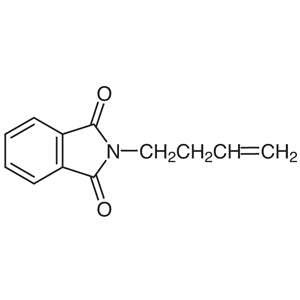
N-(3-Buten-1-yl)phthalimide TCI B1881
Regular price Rp 7.897.050,00Regular price -
PhthalimidePotassiumSalt TCI P0403
Regular price From Rp 557.550,00Regular price -
Phthalimide TCI P0402
Regular price From Rp 530.250,00Regular price -
N-(2-Hydroxyethyl)phthalimide TCI H0245
Regular price From Rp 689.850,00Regular price -
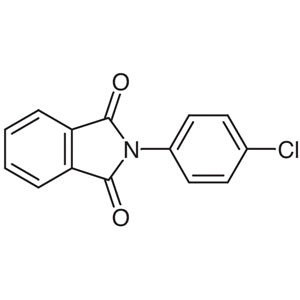
N-(4-Chlorophenyl)phthalimide TCI C1958
Regular price From Rp 1.378.650,00Regular price -
cis-1,2,3,6-Tetrahydrophthalimide TCI T2801
Regular price From Rp 505.050,00Regular price -
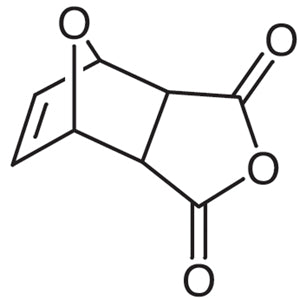
exo-3,6-Epoxy-1,2,3,6-tetrahydrophthalicAnhydride TCI E0392
Regular price From Rp 1.565.550,00Regular price