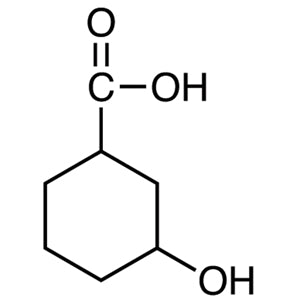
3-Hydroxycyclohexanecarboxylic Acid, supplied as a mixture of cis and trans isomers, is an alicyclic building block that carries two different functional groups on a single cyclohexane ring. The carboxylic acid group and the hydroxyl group, separated by two carbon atoms, make this a bifunctional compound of considerable value for constructing three-dimensional molecular frameworks. In synthetic laboratories, building blocks of this kind are used to introduce conformational rigidity and non-aromatic character into target molecules, a quality increasingly sought after in modern active compound design.
The characteristic that makes this material a preferred choice is the presence of two reactive points that can be addressed sequentially. The carboxylic acid group is ready for conversion into esters, amides, or acid chlorides, while the hydroxyl group can be esterified, etherified, oxidised to a ketone, or activated as a leaving group. The 1,3 spacing between the two groups also permits lactone formation under suitable conditions. Supplying the compound as a cis and trans mixture offers a practical advantage for exploratory work, since researchers can investigate reactivity first before deciding whether diastereomer separation is necessary.
In Indonesian laboratories, this building block is typically encountered in university and institutional synthetic chemistry groups, in medicinal chemistry programmes exploring saturated ring scaffolds, and in research units developing new synthetic routes. It is generally purchased in small research quantities for method development and route scouting rather than for production work, and is handled in fume hoods alongside other organic intermediates within standard laboratory synthesis workflows.
Related TCI products
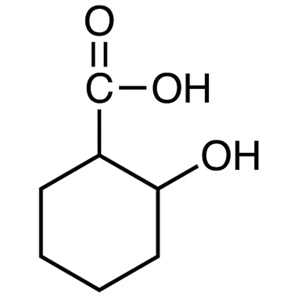
- TCI H1409 609-69-8 2-Hydroxycyclohexanecarboxylic Acid (cis- and trans- mixture)
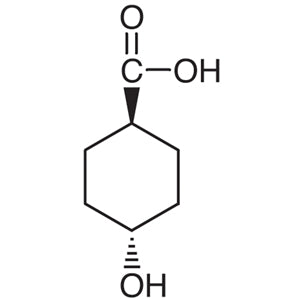
- TCI H1175 3685-26-5 trans-4-Hydroxycyclohexanecarboxylic Acid
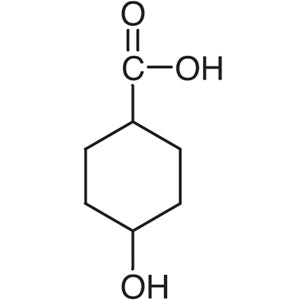
- TCI H0960 17419-81-7 4-Hydroxycyclohexanecarboxylic Acid (cis- and trans- mixture)
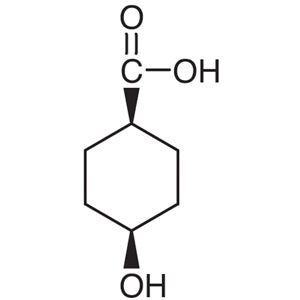
- TCI H0980 3685-22-1 cis-4-Hydroxycyclohexanecarboxylic Acid
- TCI T2278 118-56-9 3,3,5-Trimethylcyclohexyl Salicylate (cis- and trans- mixture)
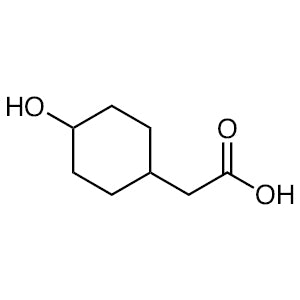
- TCI H1753 99799-09-4 2-(4-Hydroxycyclohexyl)acetic Acid (cis- and trans- mixture)
- Bifunctional scaffold construction — the separate carboxyl and hydroxyl groups allow chemists to build molecules from two independent directions on one rigid cyclohexane core.
- Amide and ester library synthesis — the carboxylic acid group readily converts to amides or esters, enabling the rapid preparation of analogue sets around a saturated ring.
- Introduction of three-dimensional character — the non-aromatic cyclohexane framework adds conformational rigidity and sp3 content to target structures under investigation in compound design.
- Lactonisation studies — the 1,3 relationship between the hydroxyl and carboxyl groups permits intramolecular lactone formation under appropriate conditions, useful for ring-forming methodology work.
- Selective functional group manipulation — the hydroxyl group can be etherified, oxidised to a ketone, or activated as a leaving group while the acid is protected.
| Brand | TCI |
|---|---|
| CAS number | 606488-94-2 |
| Molecular formula | — |
| Purity | — |
| Category | Chemistry > Building Blocks > Non-Heterocyclic Building Blocks |
| Pack sizes | available in standard TCI research-scale packaging; please confirm the currently offered sizes when ordering |
| Physical form | — |
| Storage | keep in a cool, dry place in a tightly closed original container |
- Isomeric composition: mixture of cis and trans isomers
Store the container tightly closed in a cool, dry, well-ventilated area, away from direct sunlight, moisture, and incompatible materials such as strong oxidising agents and strong bases. Keep the material in its original supplier container or in a chemically compatible, clearly labelled alternative, and reseal promptly after each use to limit moisture uptake. Handle in a fume hood using safety glasses, gloves, and a laboratory coat, avoiding the generation of dust and any contact with skin or eyes. Consult the manufacturer's safety data sheet before first use, and dispose of residues and contaminated materials through the laboratory's chemical waste stream in accordance with local regulations.
—
Produk Terkait
-
2-HydroxycyclohexanecarboxylicAcid(cis-andtrans-mixture) TCI H1409
Regular price From Rp 6.970.950,00Regular price -
trans-4-HydroxycyclohexanecarboxylicAcid TCI H1175
Regular price From Rp 3.949.050,00Regular price -
4-HydroxycyclohexanecarboxylicAcid(cis-andtrans-mixture) TCI H0960
Regular price From Rp 4.213.650,00Regular price -
cis-4-HydroxycyclohexanecarboxylicAcid TCI H0980
Regular price From Rp 4.373.250,00Regular price -
3,3,5-TrimethylcyclohexylSalicylate(cis-andtrans-mixture) TCI T2278
Regular price From Rp 664.650,00Regular price -
2-(4-Hydroxycyclohexyl)aceticAcid(cis-andtrans-mixture) TCI H1753
Regular price From Rp 1.060.500,00Regular price -
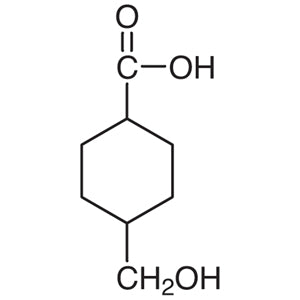
4-(Hydroxymethyl)cyclohexanecarboxylicAcid(cis-andtrans-mixture) TCI H1015
Regular price Rp 4.347.000,00Regular price -
Methyltrans-4-Hydroxycyclohexanecarboxylate TCI M1991
Regular price From Rp 717.150,00Regular price