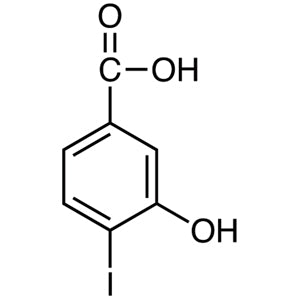
3-Hydroxy-4-iodobenzoic Acid is a chemical compound widely used as a building block in the synthesis of complex organic molecules. Its molecular structure contains both hydroxyl and iodine groups, making it a versatile reagent in various chemical reactions. In the laboratory, this compound plays a crucial role in organic synthesis, particularly in the development of new pharmaceuticals and bioactive compounds. Due to its functional groups, it can participate in multiple reaction pathways, including nucleophilic substitution, esterification, and hydrolysis.
The presence of the iodine group, which is highly electronegative, contributes to the compound’s reactivity. This makes it an ideal candidate for reactions that require high reactivity and functional group manipulation. Its ability to undergo various chemical transformations makes it a preferred choice for researchers working on synthetic routes that require precise control over molecular structure. The compound’s versatility and reactivity are key factors in its widespread use across different fields of chemistry.
In Indonesian laboratories, 3-Hydroxy-4-iodobenzoic Acid is commonly used in organic chemistry research, particularly in academic and research institutions. It is frequently applied in projects related to drug synthesis, bioactive compound development, and industrial chemical production. Its availability and chemical properties make it a valuable resource for scientists and researchers in Indonesia.
TCI brochures (PDF)
- Iodinated Phenol/Benzoic Acid/Benzaldehyde Building Blocks 2024-11-15 · p. 1
- Organic synthesis projects benefit from this compound due to its reactive hydroxyl and iodine groups, allowing for diverse chemical transformations.
- Pharmaceutical research utilizes this material for the development of new drugs, as its functional groups can be modified to create bioactive molecules.
- Bioactive compound synthesis relies on this reagent for its ability to participate in nucleophilic substitution and esterification reactions.
- Industrial chemical production incorporates this compound for its versatility in creating complex molecular structures.
- Academic research in chemistry uses this material to explore reaction mechanisms and synthetic pathways in organic chemistry.
| Brand | TCI |
|---|---|
| CAS number | 58123-77-6 |
| Molecular formula | — |
| Purity | — |
| Category | Chemistry > Building Blocks > Non-Heterocyclic Building Blocks |
| Pack sizes | Available in various quantities as per standard laboratory supply |
| Physical form | Solid |
| Storage | Store in a cool, dry place away from light and moisture |
This compound should be stored in a cool, dry environment, away from direct light and moisture to maintain its chemical integrity. It is recommended to use airtight containers to prevent exposure to humidity and air. Due to its reactivity, it should be handled with care, using appropriate personal protective equipment such as gloves and safety goggles. It is important to ensure that the storage area is well-ventilated to minimize any potential risks. Proper labeling of containers is essential for safe handling and to prevent accidental exposure. Laboratories should follow standard safety protocols to ensure safe use and storage of this compound.
—
Produk Terkait
-
5-Bromo-2-iodobenzoicAcid TCI B4296
Regular price Rp 1.696.800,00Regular price -
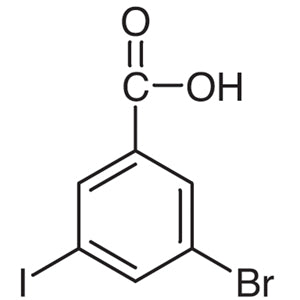
3-Bromo-5-iodobenzoicAcid TCI B1807
Regular price From Rp 1.273.650,00Regular price -
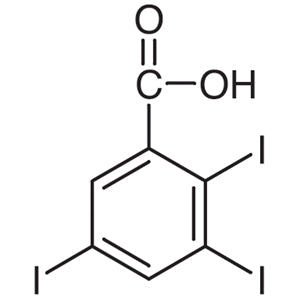
2,3,5-TriiodobenzoicAcid TCI T0451
Regular price From Rp 1.220.100,00Regular price -
4-IodobenzoicAcid TCI I0054
Regular price From Rp 505.050,00Regular price -
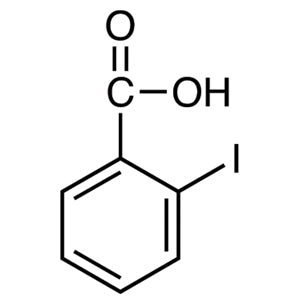
2-IodobenzoicAcid TCI I0053
Regular price From Rp 980.700,00Regular price -
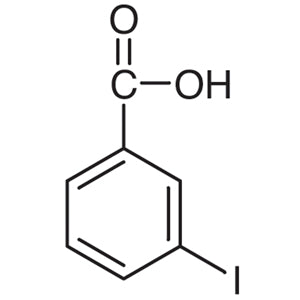
3-IodobenzoicAcid TCI I0052
Regular price From Rp 875.700,00Regular price -
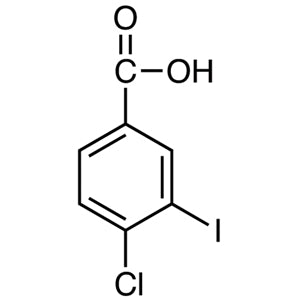
4-Chloro-3-iodobenzoicAcid TCI C3484
Regular price From Rp 530.250,00Regular price -
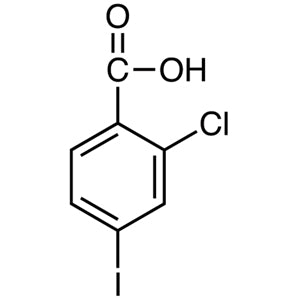
2-Chloro-4-iodobenzoicAcid TCI C3281
Regular price From Rp 1.060.500,00Regular price