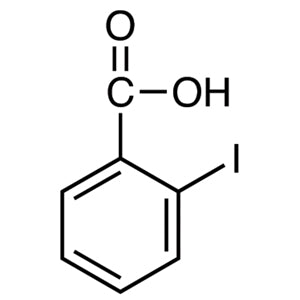
2-Iodobenzoic Acid from TCI is a benzoic acid bearing an iodine atom at the ortho position relative to the carboxyl group. The close proximity of these two functional groups is exactly what gives this compound its distinctive standing in organic chemistry, because the two can act together to form a hypervalent iodine system. In the laboratory, 2-Iodobenzoic Acid is best known as the starting material for preparing hypervalent iodine based oxidising reagents, which are used to convert alcohols selectively into aldehydes and ketones, a transformation required very frequently in the stepwise synthesis of complex molecules.
The property that makes this compound the preferred choice is the ability of the ortho iodine atom to interact with the carboxyl oxygen, so that the iodine atom can be oxidised to a higher oxidation state and then stabilised in a cyclic form. This behaviour is the very foundation of modern periodinane reagent chemistry. Beyond that role, the compound also serves as a benzyne precursor through formation of a diazonium salt, as well as a building block for isocoumarins, lactones, and a range of fused heterocyclic systems.
As a stable crystalline solid, this material is convenient to handle on the bench, is readily purified by recrystallisation, and does not demand complicated storage conditions. In Indonesian laboratories it fits naturally into university and institutional synthetic organic chemistry work, where reliable, easily stored building blocks are valued for multi-step preparations and where reagent precursors that can be purified in-house reduce dependence on more demanding logistics.
TCI brochures (PDF)
- Iodinated Phenol/Benzoic Acid/Benzaldehyde Building Blocks 2024-11-15 · p. 1
- Preparation of hypervalent iodine oxidising reagents, since the ortho iodine can be oxidised to a higher oxidation state and held in a stable cyclic arrangement.
- Selective oxidation of alcohols to aldehydes and ketones, a transformation reached through the periodinane reagents derived from this acid in stepwise synthesis.
- Benzyne generation via diazonium salt formation, where the ortho relationship between the iodine and the carboxyl group makes this compound a recognised precursor.
- Synthesis of isocoumarins and lactones, for which the adjacent carboxyl and iodine substituents provide the ring-forming handles required by these frameworks.
- Construction of fused heterocyclic compounds, drawing on the same pair of reactive ortho substituents as a versatile building block in complex molecule assembly.
| Brand | TCI |
|---|---|
| CAS number | 88-67-5 |
| Molecular formula | — |
| Purity | — |
| Category | Chemistry > Building Blocks > Non-Heterocyclic Building Blocks |
| Pack sizes | — |
| Physical form | stable crystalline solid |
| Storage | no complicated storage conditions required; pack sizes available on request |
- Catalogue number: I0053
Store the material in its original tightly closed container, kept in a cool, dry and well ventilated place away from direct sunlight and sources of heat. Glass bottles with chemically resistant closures are suitable, and containers should be reclosed promptly after each use to limit moisture pickup. Handle the solid in a fume hood using a laboratory coat, safety glasses and chemical resistant gloves, and avoid generating dust when weighing. Because the compound is a stable crystalline solid, no elaborate storage arrangement is needed, and material can be repurified by recrystallisation if required. Consult the manufacturer safety data sheet before use and dispose of residues according to institutional chemical waste procedures.
—
Produk Terkait
-
5-Bromo-2-iodobenzoicAcid TCI B4296
Regular price Rp 1.696.800,00Regular price -
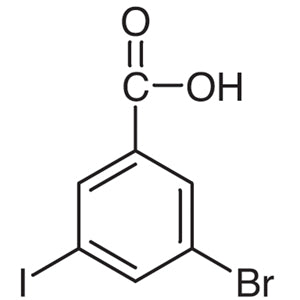
3-Bromo-5-iodobenzoicAcid TCI B1807
Regular price From Rp 1.273.650,00Regular price -
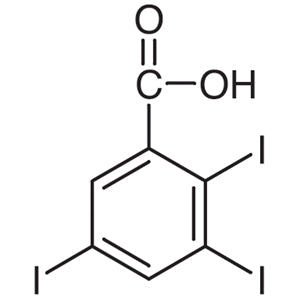
2,3,5-TriiodobenzoicAcid TCI T0451
Regular price From Rp 1.220.100,00Regular price -
4-IodobenzoicAcid TCI I0054
Regular price From Rp 505.050,00Regular price -
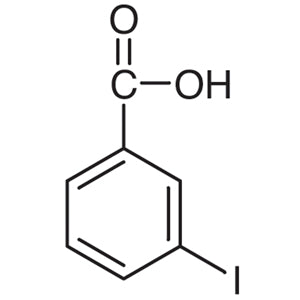
3-IodobenzoicAcid TCI I0052
Regular price From Rp 875.700,00Regular price -
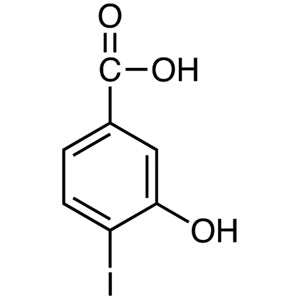
3-Hydroxy-4-iodobenzoicAcid TCI H1496
Regular price From Rp 848.400,00Regular price -
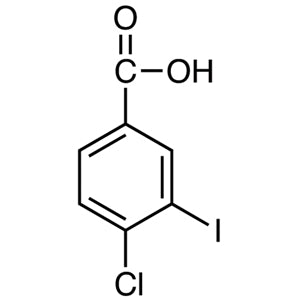
4-Chloro-3-iodobenzoicAcid TCI C3484
Regular price From Rp 530.250,00Regular price -
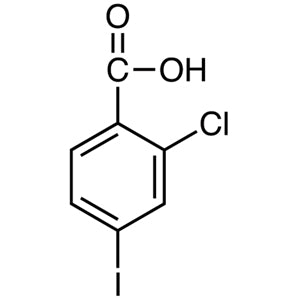
2-Chloro-4-iodobenzoicAcid TCI C3281
Regular price From Rp 1.060.500,00Regular price