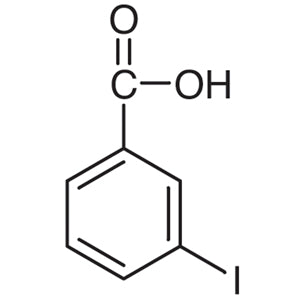
3-Iodobenzoic Acid from TCI is a benzoic acid bearing an iodine atom at the meta position of the aromatic ring. The compound serves as a versatile building block that offers two separate points of attack: a carboxyl group that can be converted into esters, amides, or acid chlorides, and an iodine atom ready to enter transition-metal-catalysed coupling reactions. In the laboratory, this combination is exploited to construct branched aromatic frameworks with angular geometry, which is useful when researchers want to avoid simple linear structures and obtain a more directed molecular shape.
The characteristics that make it a preferred choice are the stability of its crystalline solid form, which makes storage and weighing straightforward, combined with the consistently high reactivity of the C–I bond. The meta position means that the iodine atom is not directly affected by the electron-withdrawing effect of the carboxyl group as strongly as in the ortho or para isomers, so its reaction behaviour is relatively predictable. The carboxyl group itself is a highly flexible synthetic handle, suitable both for forming amide bonds using coupling reagents and for coordinating with metal ions in the construction of coordination frameworks.
In Indonesian laboratories, this material is typically used in synthetic organic chemistry research groups at universities and in research institute settings, where it supports the preparation of intermediates and the assembly of substituted aromatic scaffolds. It is handled as a bench reagent for small-scale synthesis and method development work, weighed out as needed from its container and used alongside standard coupling catalysts, solvents, and purification equipment already present in a general synthesis laboratory.
TCI brochures (PDF)
- Iodinated Phenol/Benzoic Acid/Benzaldehyde Building Blocks 2024-11-15 · p. 2
- Transition-metal-catalysed cross-coupling: the reactive carbon–iodine bond at the meta position readily undergoes oxidative addition, making the compound a dependable aryl halide partner in coupling chemistry.
- Amide bond formation: the free carboxyl group can be activated with standard coupling reagents, allowing researchers to attach amine fragments while leaving the iodine available for later transformation.
- Esterification and acid chloride preparation: the carboxyl handle converts cleanly into esters or acid chlorides, giving a straightforward route to protected or activated derivatives for further synthetic steps.
- Construction of angular aromatic scaffolds: the meta substitution pattern introduces a defined bend into the growing framework, useful when a linear geometry would not give the intended molecular shape.
- Coordination framework assembly: the carboxyl group coordinates to metal ions, so the compound can act as an organic linker while the iodine substituent remains as a functional site.
| Brand | TCI |
|---|---|
| CAS number | 618-51-9 |
| Molecular formula | — |
| Purity | — |
| Category | Chemistry > Building Blocks > Non-Heterocyclic Building Blocks |
| Pack sizes | available in standard TCI catalogue pack sizes; please confirm the packing option when ordering. |
| Physical form | crystalline solid |
| Storage | keep in the original tightly closed container, in a cool, dry, well-ventilated place. |
Store the material in a cool, dry, and well-ventilated area, keeping the container tightly closed to prevent moisture uptake and contamination. The original supplier container is the most suitable option; if transfer is required, use a clean, dry, chemically compatible container that is clearly labelled with the compound name and CAS number. As with any aromatic organohalide reagent, handle the solid inside a fume hood and wear appropriate personal protective equipment, including safety goggles, a laboratory coat, and chemically resistant gloves. Avoid generating dust during weighing, keep the compound away from strong oxidising agents and strong bases, and close the container promptly after each use. Dispose of residues and contaminated consumables in accordance with the laboratory's chemical waste procedures.
—
Produk Terkait
-
5-Bromo-2-iodobenzoicAcid TCI B4296
Regular price Rp 1.696.800,00Regular price -
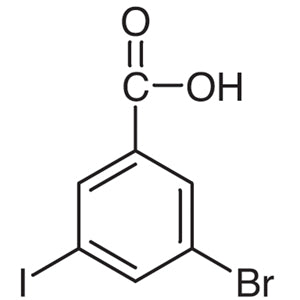
3-Bromo-5-iodobenzoicAcid TCI B1807
Regular price From Rp 1.273.650,00Regular price -
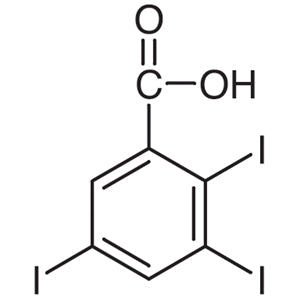
2,3,5-TriiodobenzoicAcid TCI T0451
Regular price From Rp 1.220.100,00Regular price -
4-IodobenzoicAcid TCI I0054
Regular price From Rp 505.050,00Regular price -
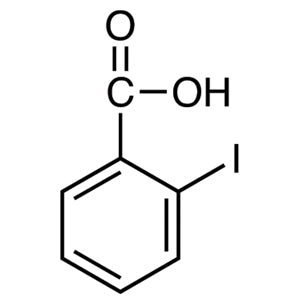
2-IodobenzoicAcid TCI I0053
Regular price From Rp 980.700,00Regular price -
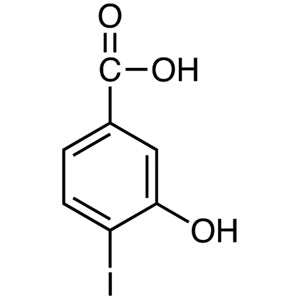
3-Hydroxy-4-iodobenzoicAcid TCI H1496
Regular price From Rp 848.400,00Regular price -
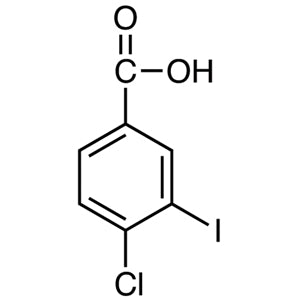
4-Chloro-3-iodobenzoicAcid TCI C3484
Regular price From Rp 530.250,00Regular price -
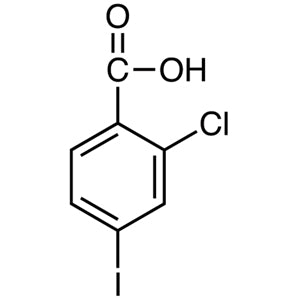
2-Chloro-4-iodobenzoicAcid TCI C3281
Regular price From Rp 1.060.500,00Regular price