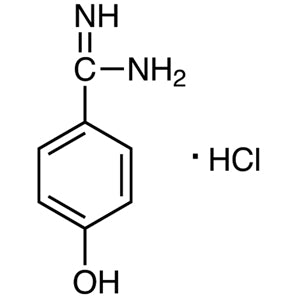
4-Hydroxybenzamidine Hydrochloride is a chemical compound widely used in laboratory settings for its versatility and reactivity. As a key building block in organic chemistry, it plays a crucial role in the synthesis of complex molecules, particularly in the development of pharmaceuticals and bioactive compounds. Its structural characteristics allow it to participate in various chemical reactions, making it a valuable tool for researchers aiming to create new materials or functional compounds. This compound is commonly found in academic and industrial laboratories, where it is used to support a wide range of experimental processes.
The compound is known for its chemical stability and ability to interact with a variety of functional groups, which makes it a preferred choice in synthetic chemistry. It dissolves well in organic solvents, facilitating efficient processing and purification steps in laboratory workflows. Its solubility and reactivity contribute to its effectiveness in both small-scale and large-scale chemical syntheses. Additionally, its predictable behavior under different reaction conditions ensures reliable results, which is essential for scientific research.
In Indonesian laboratories, 4-Hydroxybenzamidine Hydrochloride is extensively used in organic chemistry, pharmacology, and materials science research. Its availability in the local market supports local scientists and institutions by reducing the need for costly imports. This accessibility enhances research capabilities and promotes the development of new scientific discoveries within the country.
Related TCI products
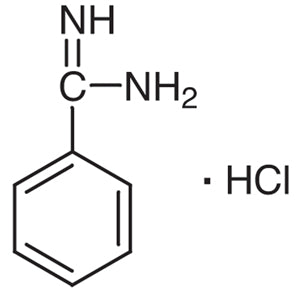
- TCI B0013 1670-14-0 Benzamidine Hydrochloride
- TCI M2612 51721-68-7 4-Methoxybenzamidine Hydrochloride
- TCI B4161 55368-42-8 4-Bromobenzamidine Hydrochloride
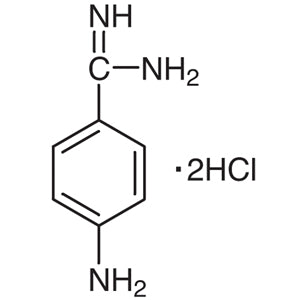
- TCI A2115 2498-50-2 4-Aminobenzamidine Dihydrochloride
- TCI N0989 15723-90-7 4-Nitrobenzamidine Hydrochloride
- TCI M2714 6326-27-8 4-Methylbenzamidine Hydrochloride
- Pharmaceutical synthesis for the development of new drug compounds due to its reactivity and structural versatility.
- Organic chemistry research for the creation of complex molecules and functional groups in synthetic pathways.
- Heterocyclic compound formation as a building block in the synthesis of biologically active molecules.
- Material science applications in the development of polymers and advanced chemical materials.
- Biochemical experiments to study molecular interactions and biological activity in various systems.
| Brand | TCI |
|---|---|
| CAS number | 38148-63-9 |
| Molecular formula | — |
| Purity | — |
| Category | Chemistry > Building Blocks > Non-Heterocyclic Building Blocks |
| Pack sizes | Available in various quantities as per standard laboratory supply formats |
| Physical form | Solid powder |
| Storage | Store in a cool, dry place away from moisture and direct sunlight |
4-Hydroxybenzamidine Hydrochloride should be stored in a cool, dry environment to maintain its chemical stability. It is recommended to keep the compound in a sealed container to prevent exposure to moisture, which could affect its purity and reactivity. Avoid storing it in areas with high humidity or direct sunlight to minimize degradation. In a laboratory setting, it is important to handle the compound with proper personal protective equipment, such as gloves and safety goggles, to ensure safe handling. The compound is generally non-hazardous under normal conditions but should be treated with care during synthesis and experimentation to maintain laboratory safety standards.
—
Produk Terkait
-
BenzamidineHydrochloride TCI B0013
Regular price From Rp 1.749.300,00Regular price -
4-MethoxybenzamidineHydrochloride TCI M2612
Regular price From Rp 1.881.600,00Regular price -
4-BromobenzamidineHydrochloride TCI B4161
Regular price From Rp 743.400,00Regular price -
4-AminobenzamidineDihydrochloride TCI A2115
Regular price From Rp 2.227.050,00Regular price -
4-NitrobenzamidineHydrochloride TCI N0989
Regular price From Rp 2.545.200,00Regular price -
4-MethylbenzamidineHydrochloride TCI M2714
Regular price From Rp 1.140.300,00Regular price -
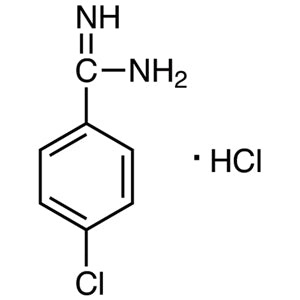
4-ChlorobenzamidineHydrochloride TCI C3090
Regular price From Rp 1.326.150,00Regular price -
3,5-Dichloro-N-(3,4-dichlorophenyl)-2-hydroxybenzamide TCI T4359
Regular price From Rp 1.167.600,00Regular price