L-glycero-alpha-D-manno-heptopyranose 1,2,3,4,6,7-hexaacetate is a complex chemical compound widely used in chemical biology and glycoscience research. This compound is a hexaacetylated derivative of heptose, a type of sugar with a seven-carbon backbone. Its unique molecular structure makes it a valuable tool for studying enzymatic reactions, particularly those involving glycosylation and enzyme activity. In laboratory settings, it serves as a substrate or inhibitor, enabling researchers to investigate molecular interactions with high precision.
The compound’s hexaacetylation at multiple positions provides it with enhanced stability and resistance to degradation, which is crucial for long-term storage and consistent experimental results. This stability ensures that the compound maintains its integrity under various experimental conditions, making it a reliable choice for reproducible research. Its molecular specificity also allows for targeted studies in biochemical pathways, contributing to the accuracy of scientific findings.
In Indonesian laboratories, this compound is frequently used in research focused on enzyme mechanisms, particularly in pharmacology, biochemistry, and medicinal chemistry. Researchers from educational and research institutions rely on it to gain deeper insights into biological processes. Its application supports the development of new therapeutic strategies and the understanding of metabolic pathways, making it an essential component in advanced scientific studies.
Advantages (TCI brochure)
- Hexaacetyl ester of heptose commonly located in cell walls of Gram-negative bacteria
- Applicable to the synthesis of LPSs (LipoPolysaccharides)
- Affordable, crystalline and bench-stable derivative of L-glycero-D-manno heptose
TCI brochures (PDF)
- Enzyme Kinetics Studies: This compound is ideal for studying enzyme activity and substrate specificity due to its precise molecular structure and stability.
- Glycosylation Research: It serves as a model substrate for investigating glycosylation processes and their role in cellular functions.
- Drug Development: Its use in medicinal chemistry helps in the design of glycosylated compounds for therapeutic applications.
- Biochemical Pathway Analysis: The compound aids in mapping metabolic pathways by acting as a controlled variable in enzymatic reactions.
- Structural Biology Investigations: Its well-defined structure supports research into protein-ligand interactions and molecular recognition.
From the TCI brochure
- Starting point for short routes to parent LD-heptose
- Chromogenic probes, e.g. for screening heptose processing enzymes
- Donor and acceptor building blocks for assembly of bacterial oligosaccharides
- Synthesis of oligosaccharide: trisaccharide of the inner core region of Citrobacter PCM 187 LPS and a spacer-linked derivative
| Brand | TCI |
|---|---|
| CAS number | 104486-80-8 |
| Molecular formula | — |
| Purity | — |
| Category | Chemistry > Chemical Biology > Glycoscience |
| Pack sizes | 100g, 500g |
| Physical form | White crystalline powder |
| Storage | Store at room temperature in a dry, cool place away from light |
Data from the TCI brochure
| Kemasan | 20mg / 100mg |
|---|
Source: TCI brochure GG017 (2026-04-07)
This compound should be stored in a dry, cool environment, away from direct sunlight and moisture. It is recommended to use airtight containers to prevent exposure to humidity, which may affect its stability. Due to its chemical nature, it should be handled with appropriate personal protective equipment, such as gloves and safety goggles, to ensure safety in the laboratory. It is not flammable, but it should be kept away from incompatible substances. Regular monitoring of storage conditions is advised to maintain its integrity and effectiveness for research purposes. Proper labeling and storage practices help in maintaining a safe and efficient laboratory environment.
—
Produk Terkait
-
Tobramycin TCI T2503
Regular price From Rp 2.889.600,00Regular price -
L-Threitol TCI T1647
Regular price Rp 3.392.550,00Regular price -
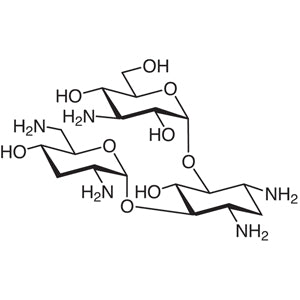
StreptomycinSulfate[forProteinResearch] TCI S0834
Regular price From Rp 505.050,00Regular price -
StreptomycinSulfate TCI S0585
Regular price From Rp 769.650,00Regular price -
SucroseFattyAcidEster TCI S0112
Regular price From Rp 610.050,00Regular price -
Saponin TCI S0019
Regular price From Rp 1.220.100,00Regular price -
ParomomycinSulfate TCI P2092
Regular price From Rp 1.035.300,00Regular price -
KanamycinMonosulfate TCI K0047
Regular price Rp 1.220.100,00Regular price
![3810-74-0 Streptomycin Sulfate [for Protein Research] - AMI Scientific](http://amiscientific.com/cdn/shop/files/TCI2510S0834.jpg?v=1767139030&width=533)