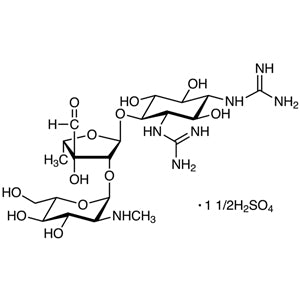
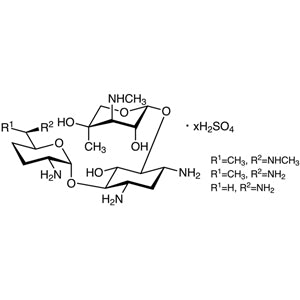
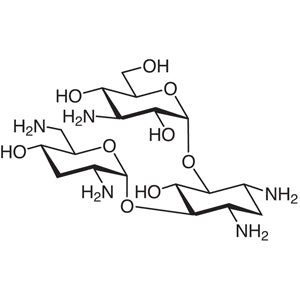
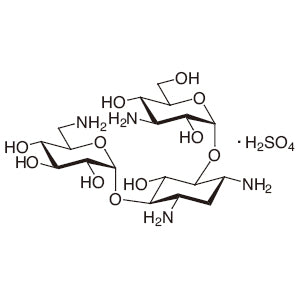
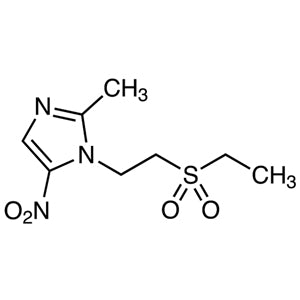
Paromomycin Sulfate is a chemical compound widely used in laboratory settings for its role in chemical and biological research, particularly in glycoscience and antibiotic studies. As a sulfate salt, it is commonly employed in experiments involving molecular structure analysis and antimicrobial activity testing. This compound is essential for researchers working in the field of chemical biology, where it helps in understanding the interactions between organic molecules and biological systems. Its presence in Indonesian laboratories supports a wide range of scientific investigations, from basic research to applied studies.
One of the key properties that make Paromomycin Sulfate a preferred choice is its high solubility in water, which simplifies its use in various chemical reactions and biological assays. Its stability under certain conditions ensures reliable results over time, making it suitable for long-term experiments. Additionally, its ability to bind with proteins allows it to participate in biochemical processes, enhancing its utility in both analytical and experimental research. These characteristics contribute to its widespread use in laboratories focused on organic chemistry and molecular biology.
In Indonesian laboratories, Paromomycin Sulfate is commonly used in research related to chemistry and biology, especially in academic and industrial settings. It is frequently found in studies involving antibiotic mechanisms, molecular structure analysis, and biochemical interactions. Its availability in different packaging options ensures that researchers can select the most appropriate form for their specific experimental needs. The controlled chemical properties of this compound also support safe and efficient use in laboratory environments.
TCI brochures (PDF)
- Plant Research Reagents 2026-02-24 · p. 15
- Antimicrobials and Antitumor Agents for Research and Experimental Use 2025-04-24 · p. 4
- Reagents for Glyco Chemistry & Biology 5th Edition · p. 125
- Pharmaceutical Ingredients for Research and Experimental Use 2026-03-09 · p. 4
- Antimicrobial Activity Testing: Paromomycin Sulfate is ideal for assessing the effectiveness of antibiotics against various bacterial strains due to its known antimicrobial properties.
- Molecular Structure Analysis: Its chemical properties make it suitable for studies involving the structural characterization of organic compounds and glycosides.
- Biochemical Interaction Studies: The compound's ability to bind with proteins makes it valuable in research exploring biochemical pathways and molecular interactions.
- Organic Chemistry Research: It is frequently used in experiments that require the study of organic compounds and their behavior in different chemical environments.
- Glycoscience Investigations: Paromomycin Sulfate plays a key role in research focused on the synthesis and analysis of glycosidic compounds and their biological functions.
| Brand | TCI |
|---|---|
| CAS number | 1263-89-4 |
| Molecular formula | — |
| Purity | — |
| Category | Chemistry > Chemical Biology > Glycoscience |
| Pack sizes | Available in various packaging options to suit different experimental needs |
| Physical form | Powder or crystalline solid (as per standard product description) |
| Storage | Store in a cool, dry place away from direct sunlight |
Paromomycin Sulfate should be stored in a cool, dry location, away from direct sunlight and moisture to maintain its chemical stability. It is recommended to use airtight containers to prevent exposure to humidity, which could affect its solubility and effectiveness. In laboratory settings, it should be handled with appropriate safety measures, such as wearing gloves and safety goggles, to ensure safe usage. While it is generally stable under normal storage conditions, it should be kept away from incompatible substances to avoid any potential chemical reactions. Proper storage and handling practices help preserve the integrity of the compound and ensure its suitability for scientific research.
—
Product Categories
- GlycoscienceSugars (Other) [Glycoscience]
- Biochemicals and ReagentsAntibioticsAntibiotics (Chemical Structure Class)
- Biochemicals and ReagentsAntibioticsAntibiotics (by Application)
- Biochemicals and ReagentsCarbohydrates
- Biochemicals and ReagentsPharmaceutical Research Reagents (for Experimental Use)Antimicrobial Ingredients (for Research and Experimental Use)
- Biochemicals and ReagentsPharmaceutical Research Reagents (for Experimental Use)Antiparasitic Ingredients, Antiprotozoal Ingredients, Antihelminthic Ingredients (for Research and Experimental Use)
- Biochemicals and Reagents
- MicrobiologyAntibioticsAntibiotics (Chemical Structure Class)
- MicrobiologyAntibioticsAntibiotics (by Application)
- Molecular BiologyPlant BiotechnologyPlant Tissue Culture
- Pharmaceutical Development and Drug Discovery ResearchPharmaceutical Research Reagents (for Experimental Use)Antimicrobial Ingredients (for Research and Experimental Use)
- Pharmaceutical Development and Drug Discovery ResearchPharmaceutical Research Reagents (for Experimental Use)Antiparasitic Ingredients, Antiprotozoal Ingredients, Antihelminthic Ingredients (for Research and Experimental Use)
- Pharmaceutical Development and Drug Discovery ResearchAntibioticsAntibiotics (Chemical Structure Class)
- Pharmaceutical Development and Drug Discovery ResearchAntibioticsAntibiotics (by Application)
Produk Terkait
-
StreptomycinSulfate TCI S0585
Regular price From Rp 822.150,00Regular priceRp 590.100,00Sale price From Rp 822.150,00 -
GentamicinSulfate TCI G0383
Regular price From Rp 1.988.700,00Regular priceRp 1.405.950,00Sale price From Rp 1.988.700,00 -
FradiomycinSulfate TCI F0649
Regular price Rp 2.041.200,00Regular priceRp 1.442.700,00Sale price Rp 2.041.200,00 -
Tobramycin TCI T2503
Regular price From Rp 2.942.100,00Regular priceRp 2.072.700,00Sale price From Rp 2.942.100,00 -
KanamycinMonosulfate TCI K0047
Regular price Rp 1.272.600,00Regular priceRp 905.100,00Sale price Rp 1.272.600,00 -
Tinidazole TCI T3058
Regular price From Rp 795.900,00Regular priceRp 572.250,00Sale price From Rp 795.900,00 -
2-Methyl-5-nitroimidazole-1-ethanol TCI M0924
Regular price From Rp 2.252.250,00Regular priceRp 1.590.750,00Sale price From Rp 2.252.250,00 -
DoxycyclineHyclate TCI D4116
Regular price From Rp 2.439.150,00Regular priceRp 1.720.950,00Sale price From Rp 2.439.150,00